
PRP is not automatically the right answer to a patchy or thinning beard because the visible pattern can result from alopecia areata, infection, scarring, medication, nutritional problems, or naturally sparse growth. By the end, you can identify the checks that belong before treatment, understand what improvement could realistically mean, and compare PRP with diagnosis-specific options.
Key takeaways
- Compare dated photos before calling uneven growth hair loss.
- Rule out alopecia areata, infection, scarring, and hormonal causes first.
- PRP may improve density, but it cannot create missing follicles.
- Judge results only after the planned treatment and observation period.
Is your beard actually losing hair, or has it always been sparse?
Start with the timeline: a beard that has always grown unevenly is not the same as active hair loss. Compare dated photographs taken in similar lighting, with similar beard length and grooming. A recent trim, fuller growth, or changed styling can make density look different without any follicle loss.
1. A smooth, sharply defined bald patch points toward alopecia areata, especially when the skin looks normal. Hair may regrow spontaneously, but recurrent patches need medical assessment rather than immediate PRP for patchy beard.
2. Scaling, pustules, crusting, tenderness, or broken hairs suggest tinea barbae or folliculitis. Fungal infection needs antifungal treatment; PRP does not treat the fungus.
3. Shiny skin, missing follicular openings, burns, or trauma raise concern for scarring alopecia. Destroyed follicles cannot be revived with a beard hair loss treatment such as PRP.
Repeated pulling, plucking, or tight grooming can also produce traction-related thinning. Diffuse loss without clear patches can relate to thyroid or other hormonal problems, iron or vitamin B12 deficiency, or another nutritional issue. Naturally sparse growth usually remains similar across photographs and lacks inflammation, broken hairs, or a new outline.
Do not choose PRP for beard thinning until the cause is identified. A dermatologist can examine the pattern and decide whether fungal testing, blood tests, or further investigation is needed.
What must a dermatologist check before PRP for beard thinning?
A dermatologist should examine the beard before any PRP injection if the loss is new, rapidly spreading, inflamed, painful, scaly, or unexplained. PRP for beard thinning can delay the correct beard hair loss treatment when the cause has not been identified.
1. Inspect the skin with the beard trimmed enough to see follicular openings. Check for inflammation, scale, pustules, crusting, tenderness, broken hairs, discharge, and shiny skin. Missing follicular openings raise concern for scarring, where PRP cannot restore destroyed follicles.
2. Use dermoscopy when the pattern is unclear. It can help distinguish alopecia areata from tinea barbae, folliculitis, traction-related damage, and scarring alopecia.
3. Order targeted tests when the examination points to a specific cause. These can include a fungal examination, bacterial evaluation, skin biopsy, thyroid testing, iron studies, vitamin B12 testing, or hormone assessment. The clinician should also review platelet disorders, anaemia, immune-mediated disease, anticoagulants, antiplatelet drugs, and relevant medicines before drawing blood or injecting.
4. Treat the diagnosis before considering PRP. Suspected tinea barbae requires antifungal treatment; PRP does not treat the fungus. Limited alopecia areata may call for intralesional corticosteroid injections, while recurrent or extensive disease may require other immune-directed treatment.
Do not inject PRP into untreated infection or active inflammatory or scarring disease. It can delay effective care and aggravate inflammation or permanent damage.
What does the evidence say PRP can realistically improve?
PRP hair treatment for beard hair loss does not yet have enough beard-specific evidence to count as a predictable restoration procedure. Published facial-hair evidence consists mainly of case reports, small case series, and extrapolation from the stronger but separate scalp PRP literature.
Platelet growth factors provide a biological rationale, not proof that dormant beard follicles will reactivate or permanently destroyed follicles will return.
The realistic possibilities are:
- Less shedding, thicker existing hairs, gradual new growth from viable follicles, and better visual coverage.
- A reasonable trial for diagnosed, relatively recent, non-scarring thinning when follicular openings remain.
- No new follicles in naturally hairless skin, and no restoration of follicles destroyed by scarring.
- PRP beard hair treatment is not a proven universal solution for every PRP for patchy beard case.
| Option | Best fit | Important limitation |
|---|---|---|
| PRP | Non-scarring thinning with viable follicles | Beard trials are small, protocols are not standardised, and response is uncertain |
| Intralesional corticosteroids | Limited alopecia areata patches | Established dermatology treatment; PRP is not an evidence-equivalent replacement |
| Topical minoxidil | Selected beard enhancement or thinning cases | Off-label; can cause irritation, unwanted hair, palpitations, or dizziness |
| Beard transplantation | Stable, permanent follicle loss | Surgery with donor limits, graft-survival risks, angle mismatch, scarring, and possible ingrown hairs |
If scarring, infection, or active alopecia areata caused the loss, treat that diagnosis before paying for PRP.
What happens during PRP beard treatment, and when should you judge it?
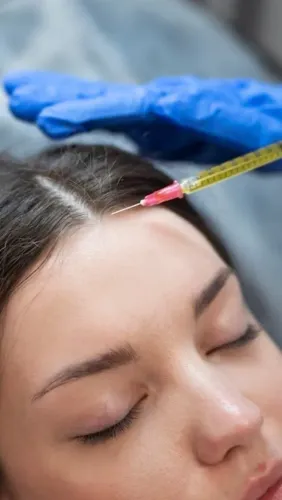
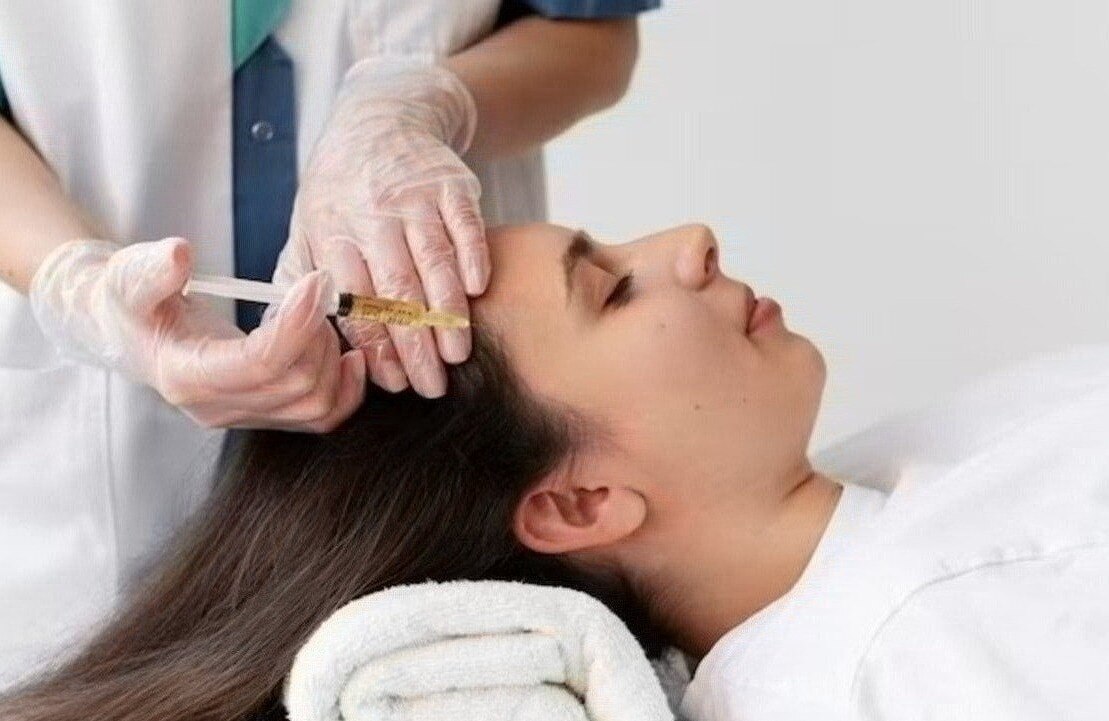
A PRP beard hair treatment starts with a blood draw, followed by centrifugation to separate platelet-rich plasma from other blood components. The clinician then injects the concentrate across affected beard skin, with topical or local anaesthetic offered when needed.
1. Ask whether the sample undergoes a single-spin or double-spin process, and how the platelet concentrate is prepared. “PRP” does not identify a standardised treatment: ask about platelet concentration, leukocyte content, activation method, injection depth, injection volume, sterility, and the interval between sessions.
2. Expect temporary injection pain, tenderness, swelling, bruising, or redness. Infection, prolonged inflammation, excessive bleeding, and nerve or vessel injury are uncommon but possible, particularly with poor sterile technique or bleeding problems.
3. Follow the clinic’s aftercare instructions, including restrictions on touching the area, strenuous exercise, heat exposure, or irritating skin products. Review anticoagulants, antiplatelet medicines, platelet disorders, anaemia, active infection, immune-mediated disease, and other medicines beforehand. Do not stop an anticoagulant or antiplatelet drug without advice from the prescribing clinician.
4. Scalp protocols often use about three sessions spaced 3–4 weeks apart, and clinics adapt that pattern for PRP for beard thinning. It is not a validated beard-specific schedule.
Judge change gradually over the beard hair-growth cycle using consistent photographs, dermoscopy, or density measurements; discuss the review date, nonresponse plan, and possible maintenance without assuming lasting results.
How can you decide whether PRP is worth pursuing?
PRP is most worth pursuing as an informed trial when a dermatologist has diagnosed relatively recent, non-scarring thinning and viable follicles remain. You must also accept uncertain improvement, several visits, short-term recovery, and possible maintenance; PRP is not a guaranteed beard hair loss treatment.
1. Confirm the cause before booking. A completely hairless area without follicular openings, untreated tinea barbae or folliculitis, active scarring, unexplained sudden loss, and untreated inflammatory disease argue against PRP. Treat infection or inflammation first, and investigate hormonal, nutritional, traction-related, or alopecia areata causes.
2. Check whether the clinic can measure change. Request standardized baseline photographs with fixed lighting, camera distance, and beard length. Ask for dermoscopic follicle findings when the diagnosis or follicle survival is uncertain.
3. Get the protocol in writing. The plan should name platelet concentration, leukocyte content, activation method, injection depth and volume, sterility measures, planned session interval, and the total review point. Scalp schedules of about three sessions spaced 3–4 weeks apart are not validated rules for beard loss.
4. Define failure before treatment starts. Ask when density will be judged inadequate, what happens after nonresponse, and whether another diagnosis or beard transplantation will be considered.
A consultation at SMART LOOK CLINIC in Nashik should be judged by these clinical answers and the supervising practitioner’s diagnosis-based recommendation, not by the word PRP alone. PRP hair treatment for beard hair loss may be reasonable for selected patients, but PRP beard hair treatment is not a proven universal solution.
Related services
PRP Therapy PRP Therapy (Platelet Rich Plasma) PRP Therapy (Platelet Rich Plasma) At Smart Look Clinic, Dr. Kiran Deshmukh offers advanced PRP Therapy, one of the most effective non-surgical... View service → |
PRP Loss still troubling you? Treat you hair loss with PRP Hair Treatment 𝐁𝐞𝐬𝐭 𝐒𝐮𝐜𝐜𝐞𝐬𝐬 𝐑𝐚𝐭𝐞 I 𝐀𝐟𝐟𝐨𝐫𝐝𝐚𝐛𝐥𝐞 𝐒𝐞𝐫𝐯𝐢𝐜𝐞𝐬 I... View service → |
Frequently asked questions
How can you tell whether your beard is losing hair?
Compare dated photographs taken in similar lighting, with similar beard length and grooming. A beard that has always been uneven is different from new patchiness, widening gaps, or smooth bald spots.
What should a dermatologist check before PRP for beard thinning?
The examination should look for alopecia areata, fungal infection, inflammation, scarring, medication effects, and other causes of sudden loss. Ask whether dermoscopy or blood tests are needed for your symptoms.
What can PRP realistically improve in a beard?
PRP may support existing, weakened follicles and improve density in selected cases. It cannot create follicles in scarred skin or reliably fill every naturally sparse area.
What happens during PRP beard treatment, and when should you judge it?
Blood is drawn and processed, then concentrated platelets are injected into the affected beard areas. Assess progress after the complete treatment plan and several months of follow-up, not immediately after an injection.
How do you decide whether PRP for a patchy beard is worth pursuing?
Consider PRP when the cause is treatable, follicles remain active, expectations are realistic, and you accept repeated visits and delayed results. Get a diagnosis before comparing it with other beard hair loss treatments.