
Uneven eyebrows are not a single condition: one brow may be thinner after years of threading, while a smooth empty patch could reflect alopecia areata, scarring, dermatitis, or thyroid-related loss. You can judge whether PRP is a sensible option by identifying the likely cause, checking whether usable follicles remain, and agreeing on measurable results before treatment begins.
Key takeaways
- Identify disease, trauma, or scarring before choosing PRP.
- PRP cannot restore follicles destroyed by permanent scarring.
- Compare eyebrow density using consistent photographs and time intervals.
- Choose treatment after a follicle and scalp assessment in Nashik.
What is causing the uneven eyebrow pattern?
PRP for uneven eyebrow growth does not identify why one brow looks thinner. It may stimulate surviving follicles, but it will not correct untreated disease, repeated trauma, or permanent scarring.
1. Establish the timeline and trigger. Ask when the loss began and whether it is progressing. Over-plucking, waxing, threading, rubbing, and trichotillomania can create localized thinning; naturally different brow shapes and aging can create stable asymmetry. Record previous cosmetic procedures and any new medicines.
2. Examine the skin and pattern. Smooth skin with a rapidly appearing patch, especially alongside scalp or beard patches, raises concern for alopecia areata. Redness, scale, itching, crusting, or discharge points toward dermatitis or infection. Shiny skin, altered texture, or a scar line suggests permanent follicle damage.
3. Check for wider causes. Ask about fatigue, cold intolerance, weight change, constipation, heat intolerance, autoimmune symptoms, and hair loss elsewhere. Thyroid disease, iron deficiency, nutritional problems, and autoimmune conditions can affect eyebrow density, so blood tests should follow the history and examination rather than an identical panel for everyone.
4. Confirm what remains. A gentle pull test and dermoscopy can show active shedding, miniaturised hairs, broken shafts, or scarring that ordinary photographs miss. PRP can be offered before the diagnostic question is answered, but it cannot replace this assessment; treating the wrong cause wastes time and can delay effective care.
Do viable follicles remain beneath the sparse or empty area?
PRP eyebrow density treatment is more plausible when fine, light, or miniaturised eyebrow hairs still emerge from the sparse zone. Those hairs indicate surviving follicles that might respond; a completely bare patch offers far less for PRP for sparse eyebrows to stimulate.
Follicles may have been permanently destroyed by a burn, surgery, severe trauma, or inflammatory scarring alopecia. Smooth shiny skin, altered texture, a visible scar line, or eyebrow loss after an injury calls for examination for scarring and possible biopsy before any injection.
A clinician should work through these steps:
- Inspect the skin and brow hairs with magnification or dermoscopy. Look for follicle openings, fine regrowth, scaling, redness, broken hairs, and scarring.
- Investigate a rapidly appearing smooth patch, especially if similar areas affect the scalp or beard. This pattern can indicate alopecia areata, for which a dermatologist may consider intralesional corticosteroids or other established treatments instead of using PRP as a substitute.
- Order blood tests only when the history or examination supports a systemic cause. Thyroid testing, ferritin and iron studies, nutritional evaluation, or autoimmune testing may fit symptoms such as fatigue, weight change, diffuse loss, restricted diet, or other autoimmune signs.
A normal-looking surface does not prove that follicles remain, and a few pale hairs do not prove they can recover. Stop ongoing plucking, waxing, threading, or rubbing before judging treatment; repeated mechanical removal can maintain the sparse pattern.
What happens during eyebrow PRP, and why do protocols differ?
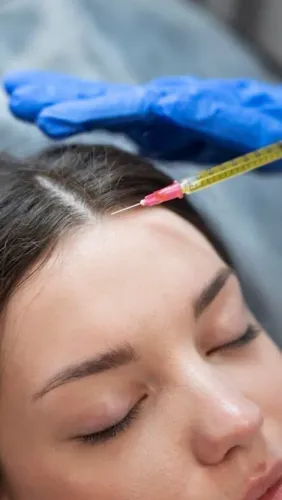
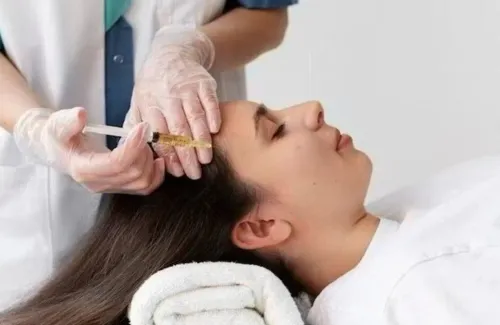
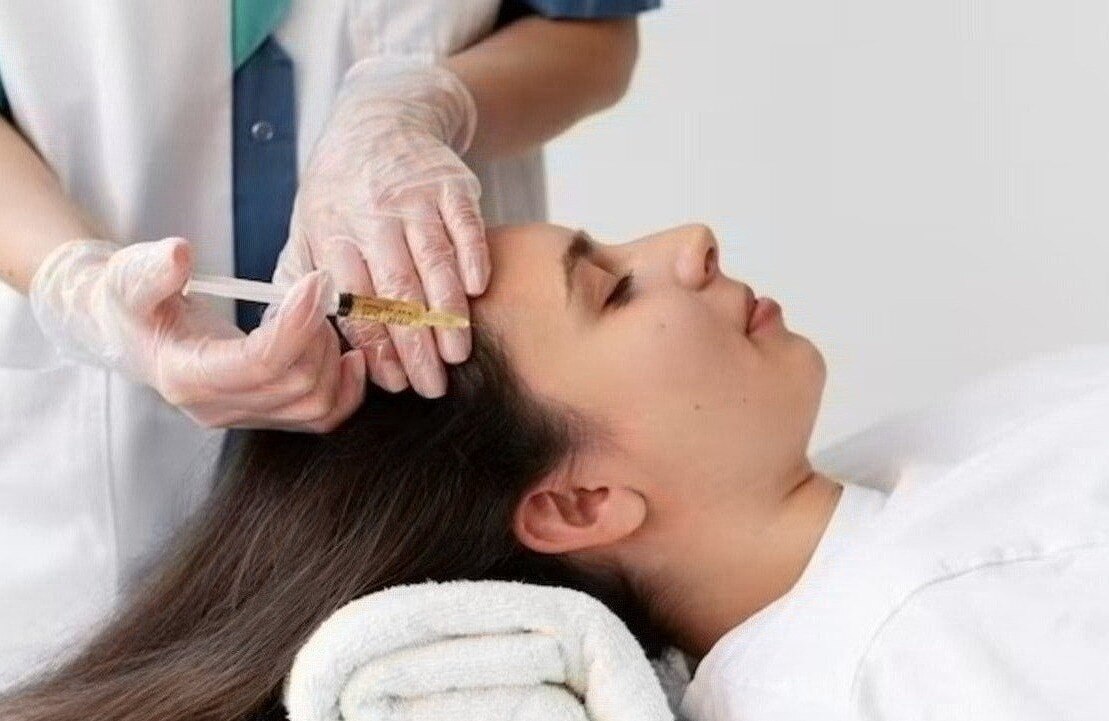
An eyebrow PRP visit starts with medical review, medicine checks, and a blood draw. The sample is centrifuged to separate platelet-rich plasma, while the clinician marks selected brow areas.
After topical or local anaesthetic, shallow injections place the plasma along those areas; sterile technique and eye protection matter because the needle works close to the eye.
Ask these questions before accepting a protocol:
- What platelet concentration and leukocyte content will the preparation contain?
- Will the plasma be activated, and if so, by which method?
- What injection volume and depth will be used?
- How many sessions are planned, how far apart, and when would maintenance occur?
- What happens if no regrowth appears at the review date?
| Protocol feature | Why it differs | What to clarify |
|---|---|---|
| Platelet concentration | PRP is not one standard product | Planned concentration |
| Leukocyte content | More white cells can change the preparation’s inflammatory profile | Leukocyte-rich or leukocyte-poor |
| Activation method | Activation changes how growth factors are released | Activator used, or none |
| Volume and depth | These affect tissue exposure and eye-area risk | Amount per brow and injection depth |
| Schedule | Hair protocols often use about three sessions several weeks apart, sometimes followed by maintenance | Eyebrow evidence has no single correct schedule |
Expect temporary tenderness, swelling, bruising, or pinpoint bleeding. Infection and an injection complication near the eye are uncommon but possible. If you take anticoagulants or antiplatelet medicines, never stop them without advice from the prescribing clinician. The phrase prp hair treatment for uneven eyebrows in Nashik therefore describes no reproducible dose or guaranteed result.
How will you know whether PRP actually improved eyebrow density?
A real improvement requires matching measurements, not a flattering photograph. Before PRP eyebrow density treatment, map each brow and record hair count where feasible, shaft thickness, the sparse zone’s width and height, and left-right symmetry.
- Photograph both brows with the same camera, distance, lighting, facial position, brow shape, and no makeup.
- Record the date and review the same growth phase; do not compare a freshly shaped brow with an untrimmed one.
- Use dermoscopy when available to document fine hairs, follicle openings, and shaft-thickness changes that ordinary photographs can miss.
| Apparent change | What can create it | Evidence that supports real growth |
|---|---|---|
| Fuller-looking outline | Threading, waxing, trimming, or a different brow shape | The same untouched brow shape shows more individual shafts |
| Darker or denser photograph | Makeup, stronger lighting, altered camera distance, or image processing | Standardized photographs show the change under identical conditions |
| New fine hairs | Temporary vellus hairs or hairs missed at baseline | Dermoscopy confirms increased terminal hairs or sustained shaft thickening |
Set a named review date, such as the clinician-agreed assessment after the planned observation period. PRP cannot be called successful because a few fine hairs appeared; density, coverage, thickness, and symmetry must improve against the baseline. If nothing changes by that date, request diagnostic review rather than accepting endless maintenance injections.
How should you choose eyebrow hair-loss treatment in Nashik?
Choose the provider whose diagnosis and follow-up plan are clearest, not the clinic closest to you. For eyebrow hair loss treatment in Nashik, Nashik itself does not determine effectiveness; diagnosis, viable follicles, operator experience, sterile practice, protocol, and follow-up matter more.
Before selecting PRP, ask:
- What is the working diagnosis, and what evidence shows follicles remain?
- Why do I need thyroid, iron, nutritional, or other blood tests?
- Will you take standardised photographs without makeup, using the same lighting and facial position?
- What are the platelet concentration, injection depth and volume, session interval, and total number of sessions?
- How long will the complete visit take, including numbing and observation?
- What aftercare applies, and when is the named review date?
- What happens if no regrowth occurs?
| Option | Best fit | Main limitation |
|---|---|---|
| PRP hair treatment for uneven eyebrows in Nashik | Fine surviving hairs with a confirmed non-scarring cause | Cannot replace diagnosis or restore destroyed follicles |
| Dermatologist-led treatment | Alopecia areata, thyroid disease, dermatitis, infection, or suspected scarring | Requires investigation before cosmetic treatment |
| Eyebrow transplant or camouflage | Absent or permanently scarred follicles | Transplant involves surgery; camouflage needs maintenance |
SMART LOOK CLINIC can be compared with other providers only after checking these details and confirming referral to a dermatologist when needed. Smooth shiny skin, a scar line, or injury-related loss makes transplant or camouflage more sensible than treating PRP as a universal solution.
Related service
Eyebrow Transplant Perfectly shaped eyebrows enhance your facial expressions and overall look. At Smart Look Clinic, Dr. View service → |
Frequently asked questions
What causes an uneven eyebrow pattern?
Uneven eyebrows can result from natural asymmetry, repeated plucking, skin disease, trauma, or scarring. Identifying the cause comes before treatment.
Do viable follicles remain under sparse or empty eyebrow areas?
A clinical examination can help determine whether follicles remain. PRP may support surviving follicles but cannot replace follicles destroyed by scarring.
What happens during eyebrow PRP, and why do protocols differ?
Blood is collected, processed to concentrate platelets, and injected into the eyebrow area. Protocols differ in preparation, injection technique, session spacing, and the condition being treated.
How can you tell whether PRP improved eyebrow density?
Use consistent photographs, lighting, camera distance, and brow position before treatment and during follow-up. Compare the same areas over the planned review period.
How should you choose eyebrow hair-loss treatment in Nashik?
Choose after an examination identifies the cause and confirms whether follicles survive. Ask how PRP compares with medical treatment, camouflage, or eyebrow transplantation for your pattern.