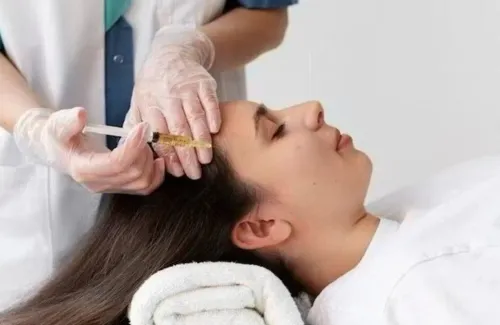

Thinning hair can result from male-pattern loss, temporary shedding, medication effects, nutritional problems, or an inflammatory scalp condition, and each cause changes the right next step. By the end, you will be able to judge whether FUE suits your pattern, donor area, expectations, and long-term hair-loss plan before discussing graft numbers.
Key takeaways
- Confirm the diagnosis before planning grafts; not every shedding condition suits transplantation.
- Stable donor hair and a realistic hairline design support natural FUE results.
- Diffuse thinning requires closer assessment because transplanted and existing hairs overlap.
- Compare surgeon involvement, diagnosis, graft planning, aftercare, and safety practices between Nashik clinics.
Is the hair loss suitable for transplant treatment?
Begin with a diagnosis, not an FUE graft plan. Male-pattern hair loss can resemble telogen effluvium, alopecia areata, medication-related shedding, nutritional deficiency, or scarring alopecia. The treatment and transplant outlook differ sharply between these conditions.
1. Review the history: timing of shedding, family pattern, medicines, recent illness, diet, and symptoms such as itching, pain, redness, or scaling.
2. Examine the scalp and donor area, then use dermoscopy to look for miniaturisation, broken hairs, inflammation, follicular openings, and uneven density. Blood tests or a scalp biopsy should be selected from the history and examination, not ordered as a fixed package.
3. Identify and treat active inflammation or scarring before elective transplantation. Transplanting into an undiagnosed scarring process can produce poor graft survival and delay treatment of the disease.
FUE redistributes your existing follicles; it creates no new follicles and does not stop untreated native hair from miniaturising. For confirmed male-pattern loss, a clinician may discuss finasteride or topical minoxidil to protect or improve native hair. Both require continued use, and finasteride carries sexual and psychiatric adverse-effect warnings that deserve a proper risk discussion.
This diagnosis-first process is the correct starting point for anyone researching fue hair transplant for thinning hair in nashik. If diffuse thinning affects the donor zone, confirm that durable follicles remain before considering surgery.
Can FUE create a natural result for a receding hairline?
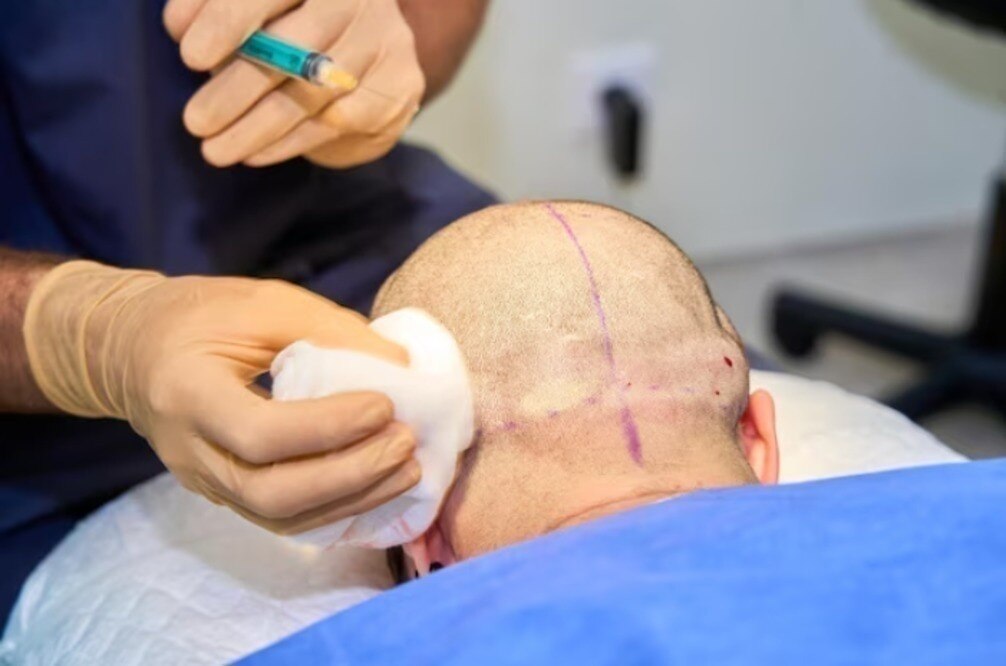
Yes—FUE can create a natural result for a receding hairline when the donor area is stable, the recession pattern is diagnosed, and the design allows for future androgenetic hair loss. The surgeon removes individual follicular units with a punch and places them into recipient sites.
FUE leaves multiple small round scars, which can show with very short hair, rather than the linear scar associated with strip surgery.
A natural hairline needs a gradual transition. Finer, often single-hair grafts belong at the front edge, with progressively larger or denser follicular units behind them. Place multi-hair grafts directly on the hairline and the result can look pluggy, even when the total graft count is high.
A conservative hairline protects your donor supply and your appearance as native hair changes. A low, dense design can consume a large share of finite donor follicles; if androgenetic loss continues behind the transplanted zone, the isolated front strip can look unnatural.
That is why FUE for receding hairline treatment should be planned around future loss, not only today’s density.
Ask how the surgeon will preserve donor reserve, what happens if recession progresses, and why the proposed graft range fits your donor density, hair calibre, scalp contrast, recipient area, and hairstyle. A promised graft count alone cannot establish a natural result.
Why is diffuse thinning harder to plan than a bald patch?
A clearly defined bald patch gives the surgeon a measurable recipient area and a simpler density target. FUE for diffuse thinning is less predictable because transplanted grafts sit among native hairs that may continue to miniaturise, making the required number and final contrast harder to judge.
The donor region also needs examination for diffuse unpatterned hair loss (DUPHL); miniaturisation there means the apparent donor supply may not be durable.
| Planning factor | Clearly defined bald patch | Diffuse thinning |
|---|---|---|
| Donor supply | Density and follicular-unit composition are easier to measure | Density, single- versus multi-hair units, and miniaturisation must be mapped |
| Appearance | The gap provides a visible target | Hair calibre, scalp-to-hair contrast, and existing native hairs affect coverage |
| Graft requirement | Recipient size offers a clearer estimate | Recipient size, hairstyle, and desired density can change the estimate substantially |
| Long-term reserve | Remaining donor follicles are easier to allocate | Reserve must cover possible progression and future procedures |
Visible baldness alone cannot produce a reliable graft number. Adding density now uses follicles that cannot be replaced; preserving donor reserve can leave you with less immediate fullness but more options if loss progresses. If native hair is still thinning, a clinician may discuss medical stabilisation before or alongside surgery.
Finasteride or topical minoxidil can support ongoing management when appropriate, but both require continued use and neither is a permanent equivalent to transplantation.
What risks, recovery stages, and results should you expect?
A successful FUE result depends on donor management, graft survival, site design, and future hair-loss planning—not only the number of grafts placed.
FUE is not scarless or risk-free. Excessive donor harvesting can leave visible depletion and multiple small round scars. Follicle transection during extraction, poor graft storage or handling, incorrect recipient-site angle or depth, low graft survival, or unnatural hair direction can reduce density or make the result look artificial.
Infection, folliculitis, and prolonged numbness are additional risks.
- Immediately after surgery, expect redness, swelling, crusting, tenderness, and small wounds in the donor and recipient areas. Follow washing, sleeping, medication, exercise, and sun-exposure instructions precisely; rubbing or picking can damage grafts.
- During the first weeks, transplanted hairs can shed. Nearby native hairs can also shed, a reaction called shock loss. Early shedding does not show the final outcome.
- Visible growth develops over several months as new hairs emerge and thicken. Assess the result around 9 to 12 months; crown growth can take longer.
- Native hair loss can continue behind or between transplanted hairs, creating a thin appearance later. Ask what follow-up schedule applies, who reviews progress, which aftercare instructions are written for you, and what medical or surgical plan addresses further native-hair loss.
How should you compare FUE hair restoration in Nashik clinics?
Compare evidence, not a promised graft number. For fue hair restoration in Nashik, verify the operating surgeon’s medical registration and ask whether that surgeon personally examines you, plans the procedure, performs extraction and recipient-site creation, and supervises implantation. A clinic brand or sales representative cannot answer those surgical questions.
Use this consultation checklist:
- Request the diagnosis, documented donor density, follicular-unit composition, and miniaturisation findings, including whether diffuse unpatterned hair loss affects the donor area.
- Ask for the planned graft range and its assumptions: donor measurements, recipient area, hair calibre, coverage goal, and future reserve.
- Demand a strategy for progressive native-hair loss, including how a receding hairline or diffuse thinning will be managed if loss continues.
- Review standardised before-and-after cases involving men with comparable receding or diffuse patterns. Ask to see donor photographs, not only frontal views.
- Ask how the team reduces follicle transection, keeps grafts hydrated and temperature-controlled during storage, sets recipient-site direction and depth, and monitors graft survival.
| Evidence to compare | What it reveals | Warning sign |
|---|---|---|
| Surgeon-led consultation | Diagnosis and surgical accountability | Sales-only assessment |
| Donor and recipient records | Whether graft planning fits your supply | Fixed package count |
| Comparable full-view cases | Density, direction, and donor conservation | Frontal photos only |
A consultation with SMART LOOK CLINIC is useful when it supplies this evidence-based assessment rather than steering you toward a package. Nashik does not change FUE’s biological indications, limitations, scarring, or need for long-term planning.
Frequently asked questions
Is FUE suitable for every man with thinning hair?
No. First distinguish male-pattern hair loss from telogen effluvium, alopecia areata, medication-related shedding, nutritional deficiency, and scarring alopecia. Transplant suitability depends on the diagnosis, donor hair, scalp health, and hair-loss stability.
Can FUE create a natural result for a receding hairline?
Yes, when the surgeon designs a conservative hairline that matches your age, facial proportions, donor supply, and future hair-loss risk. Single-hair grafts and appropriate direction and angle help the hairline look natural.
Why is FUE for diffuse thinning harder to plan?
Diffuse thinning affects areas that still contain existing hairs, so extraction and placement must protect them. The plan also needs to account for continued loss and the density available in the donor area.
What risks and recovery stages should you expect after FUE?
Expect temporary redness, swelling, scabbing, tenderness, and shedding during recovery. Risks include infection, follicle damage, poor growth, an unnatural hairline, and donor-area overharvesting. Ask for a written aftercare plan and review schedule.
How should you compare FUE hair restoration in Nashik clinics?
Compare who diagnoses you and performs each stage, how donor supply and hair loss are assessed, whether graft numbers are justified, what complications are explained, and how follow-up is handled. Review clinical planning rather than choosing on price alone.