
PRP may improve the thickness or growth environment of existing beard follicles, but it cannot create follicles in permanently hairless or scarred skin. By the end, you will know which beard patterns justify investigation, what a properly planned treatment involves, and how to compare a PRP recommendation with other options.
Key takeaways
- PRP may strengthen weak beard hairs but cannot guarantee new follicle growth.
- Diagnose sudden, sharply bordered, or inflamed beard loss before treatment.
- Expect multiple sessions and assess results only after several months.
- Compare provider credentials, diagnosis, protocols, pricing, and alternatives in Nashik.
Can PRP improve beard growth, and what does the evidence actually show?
PRP may improve the calibre of weak, miniaturised beard hairs, but it cannot be assumed to create a fuller beard. Direct evidence for beard treatment remains limited: most published PRP trials and meta-analyses study scalp androgenetic alopecia, so transferring those findings to facial hair overstates what is known.
Your goal matters:
- Thicken weak existing hairs: PRP is most biologically plausible when viable follicles remain but produce fine, sparse hairs.
- Support follicles affected by a diagnosed hair-loss disorder: treating the disorder itself may be more important than injecting PRP.
- Fill a permanently empty area: PRP cannot create a follicle where scarring has destroyed it or surgery has removed it.
A shiny scarred patch, naturally hairless area or missing follicular openings changes the discussion. You may need treatment for scarring disease or a beard-transplantation consultation, not repeated injections. A facial examination and dermoscopy can help determine whether follicles remain before you commit to treatment.
The phrase PRP hair treatment for beard growth in Nashik describes a service location, not proof of superior results in Nashik. Likewise, PRP for beard growth in Nashik does not establish a proven beard-specific protocol. Ask for a documented diagnosis, the intended endpoint and an alternative plan if no improvement appears.
A realistic endpoint might be thicker existing hairs or modest coverage, not a promise of a fully dense beard.
Which sparse or patchy beard patterns need diagnosis before PRP?
A sparse beard needs diagnosis before PRP when the pattern is new, rapidly changing, inflamed, itchy, painful, or sharply patchy. Genetic sparsity and later beard development usually show gradual, fairly even thinness; a disease can require treatment before any beard hair PRP treatment in Nashik is considered.
| Pattern | Clues | What it changes |
|---|---|---|
| Genetic or age-related sparsity | Gradual, diffuse thinness with follicular openings present | PRP discussion may focus on weak viable hairs |
| Alopecia areata | Sharply defined, smooth hairless patches | Treat the autoimmune disorder before injections |
| Tinea barbae | Plaques, pustules, crusting, scale, or broken hairs | Needs fungal testing and antifungal treatment, not routine PRP |
| Folliculitis or contact dermatitis | Pus-filled bumps, tenderness, redness, burning, or rash | Control infection or inflammation first |
| Trichotillomania | Uneven broken hairs and a history of pulling or twisting | Address the pulling behaviour and its cause |
| Scarring alopecia | Shiny skin or missing follicular openings | PRP cannot recreate destroyed follicles |
| Systemic or medication-related loss | Changes after medicines, thyroid or hormonal symptoms, anaemia, or restricted diet | Targeted blood tests and medical treatment may come first |
The consultation should document onset, progression, shaving practices, itching, pain, medicines, and family history. Examine the beard and scalp, inspect follicular openings, and use dermoscopy; order fungal testing, blood tests for suspected thyroid, hormonal or nutritional problems, or a biopsy when findings justify it.
Do not inject an undiagnosed infected or inflamed patch. A stable, naturally hairless area or shiny scar needs a different discussion, such as treating scarring disease or considering transplantation.
How does beard PRP differ from scalp PRP during the appointment?
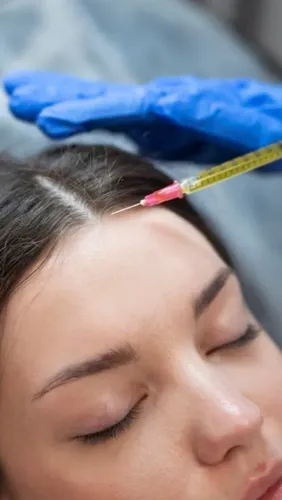
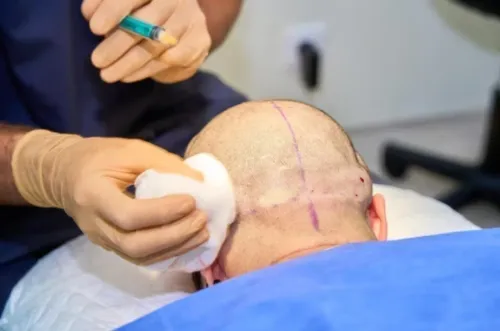
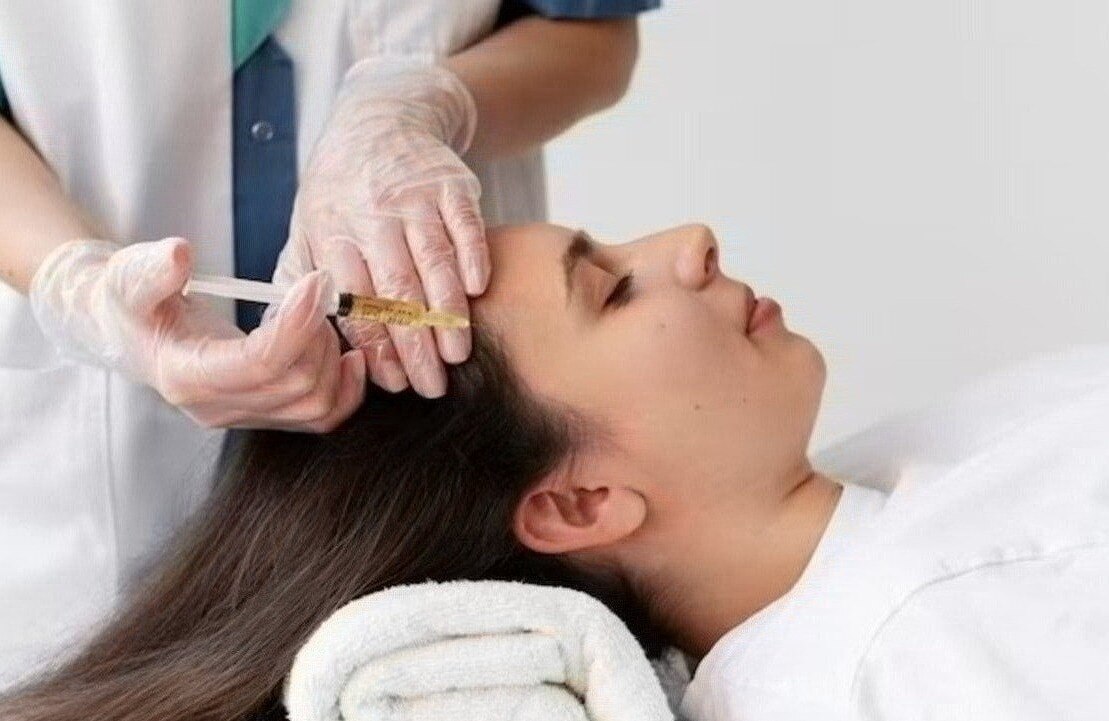
Beard PRP should follow a facial injection plan, not a scalp grid. After medical review, the clinician draws blood, spins it in a centrifuge, separates the platelet-rich plasma, and cleanses the face before marking the moustache, cheeks, jawline or chin.
The contours of beard skin and nearby nerves and blood vessels determine needle choice, depth, spacing and technique.
| Area | Scalp PRP | Beard PRP |
|---|---|---|
| Treatment map | Scalp grid | Moustache, cheeks, jawline or chin |
| Injection plan | Scalp thickness and grid spacing | Facial contours, follicle pattern, nerves and vessels |
| Needle technique | Adapted to scalp tissue | Adapted to facial depth and sensitive structures |
| Pain control | Discussed for scalp comfort | Cream, cooling or another option may alter the facial procedure plan |
Before agreeing to beard hair PRP treatment in Nashik, ask:
- Is the preparation leukocyte-rich or leukocyte-poor, and is it activated or unactivated?
- How many blood tubes, injections and treatment sites are planned?
- Will the clinician use local anaesthetic cream, cooling or another pain-control method?
- What instructions apply after treatment? Keep the area clean, avoid unnecessary rubbing and follow restrictions on products or shaving.
- Which symptoms require contact? Report increasing redness, pus, severe pain or fever promptly.
A protocol copied from scalp PRP can miss facial anatomy and create uneven coverage. The appointment should document the marked area and injection plan so later photographs compare the same beard regions rather than temporary swelling with a normal-looking face.
How many sessions are needed, and when should you judge the result?
A fixed three-session package is not a proven standard for PRP for beard growth in Nashik. No universally accepted beard PRP dose, platelet concentration, injection depth, session interval or preparation method exists, and scalp research cannot establish one beard protocol.
Request the plan in writing:
- The beard-specific number of sessions and the spacing between them.
- The expected appointment length, including blood collection, preparation and injections.
- Whether the product is leukocyte-rich or leukocyte-poor, activated or unactivated, and how many tubes and injections are planned.
- The review date, the outcome being measured and the alternative if improvement does not occur.
Judge the result after an appropriate growth period, not immediately after treatment. Beard follicles cycle slowly; scalp studies commonly assess change at three to six months or longer. Swelling, pinpoint bleeding, tenderness or temporary shedding can occur early and cannot prove success or failure.
Use matching photographs taken in the same lighting, angle, distance and hair length, then combine them with a clinical examination. Do not compare a swollen post-injection face with a later image.
Pain, bruising and swelling are common short-term effects; infection and rare nerve or vascular injury require prompt medical attention. Tell the clinician about active skin infection, significant anaemia, a platelet disorder, systemic illness, or anticoagulant or antiplatelet medicines. Never stop a prescribed medicine without the prescriber’s advice.
How should you compare PRP beard providers and alternatives in Nashik?
Compare protocols, not package names or price alone. A useful consultation records the diagnosis, examines follicular openings and explains the evidence limits. It should define the intended outcome—thicker existing hairs, improved density or filling a gap—and state what happens if no improvement appears.
| Option | What the provider should establish | When it fits |
|---|---|---|
| PRP | Preparation, injections, photographs and review schedule | Viable but miniaturised follicles |
| Cause-directed treatment | Tests and treatment for the identified disorder | Alopecia areata, tinea barbae, folliculitis, thyroid disease, nutritional deficiency or scarring |
| Beard transplant | Donor supply, graft design and limitations | Stable absence of follicles |
Ask these questions before choosing prp beard restoration in nashik:
- Who performs the facial injections, and what experience do they have with moustache, cheek, jaw and chin anatomy?
- How is blood collected and handled under sterile conditions? Which centrifuge, tube system and number of tubes are used?
- Is the preparation leukocyte-rich or leukocyte-poor, and is it activated?
- How many injections and sessions are planned, at what interval, and what adverse effects require review?
- How will photographs control lighting, angle, beard length and timing? What follow-up is included?
Alopecia areata, infection or inflammation deserves treatment before PRP. A shiny scarred patch or stable follicle absence makes beard transplantation the relevant discussion. At SMART LOOK CLINIC, use these questions with Dr. Kiran Deshmukh to test whether the plan matches your examination, evidence and actual goal.
Frequently asked questions
Can PRP improve beard growth, and what does the evidence show?
PRP may improve the calibre of weak, miniaturised beard hairs, but direct evidence for beard treatment remains limited. Most published studies examine scalp androgenetic alopecia, so those results cannot be transferred directly to facial hair.
Which sparse or patchy beard patterns need diagnosis before PRP?
Seek diagnosis before PRP for sudden loss, sharply defined round patches, redness, scaling, pain, scarring, or one-sided changes. These patterns can indicate conditions such as alopecia areata, fungal infection, dermatitis, or scarring.
How does beard PRP differ from scalp PRP?
Beard PRP involves mapping facial growth patterns and injecting a smaller, more visible treatment area around the cheeks, jawline, moustache, or chin. Facial skin, nerves, vessels, and cosmetic symmetry require treatment planning distinct from scalp PRP.
How many PRP beard sessions are needed, and when should you judge results?
Providers commonly plan a series of sessions spaced several weeks apart, followed by observation. Judge the result after several months, because beard hairs grow slowly and early changes do not prove lasting density.
How should you compare beard PRP providers and alternatives in Nashik?
Ask who performs the procedure, how the diagnosis is made, what preparation and injection protocol is used, how many sessions are proposed, and what follow-up includes. Compare PRP with medical treatment, observation, or beard transplant when PRP is unlikely to address the cause or density goal.