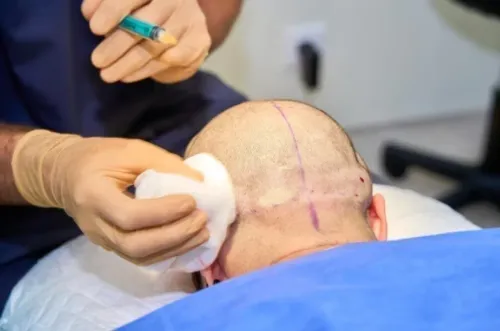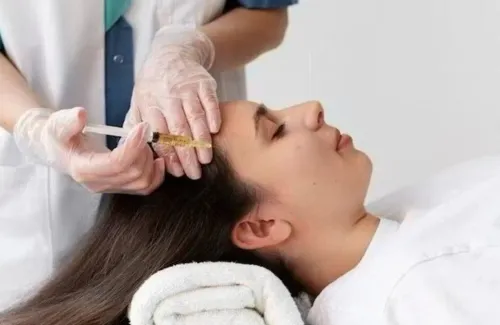

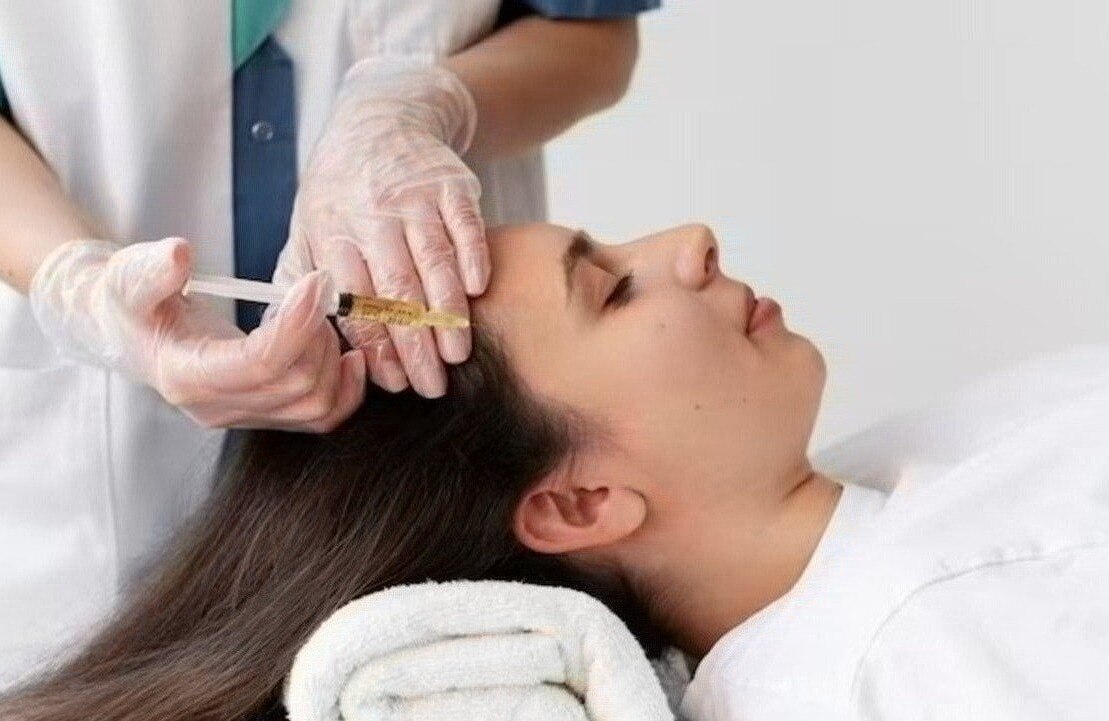
Sudden shedding is often linked to an event two or three months earlier, but patchy loss, scalp inflammation, or eyebrow loss needs a different assessment. You will be able to distinguish likely telogen effluvium from conditions needing prompt care, compare trigger-based treatment with PRP, and prepare specific questions for a Nashik consultation.
Key takeaways
- Check for a trigger 2–3 months before shedding began.
- Request scalp examination and targeted blood tests before choosing PRP.
- Correct the cause before considering injections for sudden hair shedding.
- Compare diagnosis, sterile technique, PRP preparation, and follow-up at Nashik clinics.
First identify whether the shedding fits acute telogen effluvium
Acute telogen effluvium usually starts 2–3 months after fever, infection, surgery, severe stress, rapid weight loss, childbirth, or a new medicine. Hair sheds diffusely from across the scalp rather than forming one clear bald area. The shedding phase commonly lasts 3–6 months, followed by gradual regrowth after the trigger is corrected.
Sudden diffuse shedding is not automatically pattern hair loss. Before considering PRP for sudden hair shedding, identify the trigger and confirm the diagnosis; hair transplantation is not an appropriate first response because it redistributes donor follicles without treating an active systemic cause. A hair fall treatment for sudden loss should begin with assessment, not injections.
| Finding | What it suggests | What to do |
|---|---|---|
| Diffuse shedding after a trigger | Acute telogen effluvium | Arrange clinical assessment and monitor regrowth |
| Patchy bald spots or eyebrow or eyelash loss | Alopecia areata or another focused disorder | Seek prompt dermatological assessment |
| Scalp pain, burning, redness, scale, pustules, or crusting | Infection or inflammatory scalp disease | Seek prompt dermatological assessment |
| Shiny skin without visible follicle openings | Possible scarring alopecia | Seek prompt dermatological assessment |
These warning signs do not fit uncomplicated telogen effluvium. Prompt evaluation matters because scarring disease can permanently destroy follicles, while infection and inflammation need targeted treatment.
What examination and tests should come before treatment?
Before choosing a hair fall treatment for sudden loss, establish what changed, when it changed, and whether the follicles or scalp show disease.
1. Take a precise history. Record the exact shedding start date, then ask about fever or infection, surgery, severe stress, rapid weight loss, restrictive diet, new medicines, pregnancy, childbirth, menstrual changes, and family pattern hair loss. Ask about itching, pain, burning, redness, scale, pustules, crusting, and eyebrow or eyelash loss.
This history guides a safe sudden hair thinning treatment rather than an automatic injection.
2. Perform a hair-pull test and inspect the entire scalp. Gentle traction over several areas that releases numerous hairs supports active shedding, but it does not identify the cause alone. Look for diffuse thinning, patchy baldness, inflammation, broken hairs, and shiny skin lacking follicle openings.
The last finding raises concern for scarring alopecia, where delayed treatment can cause permanent loss.
3. Use trichoscopy when the diagnosis remains uncertain. It can show diffuse shedding in telogen effluvium, shaft diameter variation and miniaturised hairs in androgenetic alopecia, and yellow dots or exclamation-mark hairs in alopecia areata. Perifollicular scale or redness suggests inflammatory disease; absent follicular openings supports scarring alopecia. There is no universal hair-loss blood panel.
Based on the history, testing may include a complete blood count, ferritin or iron studies, thyroid testing, or investigations for a suspected nutritional or systemic condition.
When does PRP make sense for sudden shedding?
PRP makes more sense for androgenetic alopecia than for acute telogen effluvium. For PRP for sudden hair shedding, evidence is limited, so it remains an optional treatment rather than a proven way to stop an acute episode.
It cannot replace finding and correcting the trigger, such as illness, surgery, restrictive dieting, childbirth, or a new medicine.
| Condition | Evidence | Common study pattern |
|---|---|---|
| Androgenetic alopecia | Stronger, though protocols and study quality vary | Three treatments about one month apart; maintenance is sometimes studied |
| Acute telogen effluvium | Much less established | No validated PRP schedule for stopping the episode |
Results are difficult to compare because studies use different platelet concentrations, leukocyte levels, activation methods, injection depths, treatment intervals, and session counts. A three-session schedule is a convention from pattern-hair-loss studies, not a guaranteed plan for sudden shedding.
Any decision about PRP hair treatment for sudden shedding in Nashik should follow a documented diagnosis and discussion of alternatives. Temporary pain, tenderness, redness, swelling, bruising, and headache can follow injections; infection or prolonged inflammation is uncommon but possible.
Before treatment, tell the clinician if you take anticoagulants or have:
- A clotting disorder
- A platelet disorder or low platelet count
- An active scalp infection
Ask how the clinic maintains sterile handling and manages an unexpected reaction. If the shedding pattern is unclear, investigate the cause before paying for injections.
Which hair fall treatment is more rational than rushing into injections?
PRP is less rational than treating a documented trigger. For hair fall treatment for sudden loss, observation is reasonable when examination supports acute telogen effluvium, shedding is diffuse, and no warning signs suggest another disorder. Shedding often settles within 3–6 months after the trigger is corrected, but regrowth takes additional months.
| Option | More rational action | Why it matters |
|---|---|---|
| Documented iron or nutritional deficiency | Replace the deficient nutrient under clinical guidance | Corrects a measurable cause rather than adding injections |
| Thyroid disease or another illness | Treat and monitor the underlying condition | Systemic disease can keep shedding active |
| Suspected medication reaction | Review the medicine with its prescribing doctor | Do not stop a prescribed drug independently |
| Restrictive dieting | Restore adequate calories and protein | Sustained under-eating can prolong telogen shedding |
| Acute telogen effluvium without warning signs | Observe and follow up | Hair often recovers gradually once the trigger ends |
Do not take several “hair vitamins” without testing. Excess vitamin A or selenium can worsen shedding and cause toxicity, so supplements are not a universal sudden hair thinning treatment. Patchy loss, eyebrow or eyelash loss, scalp pain, redness, scale, pustules, crusting, or shiny skin without follicle openings needs targeted dermatological treatment rather than observation.
A transplant usually waits until diagnosis is clear and shedding stabilises: it redistributes donor follicles but cannot treat an active systemic trigger.
How should you evaluate a PRP clinic in Nashik before choosing?
Compare a PRP clinic in Nashik by its process, not by before-and-after claims. Verify the doctor’s registration and stated specialty through the National Medical Commission’s Indian Medical Register, then ask who performs the diagnosis and who gives the injections.
- Request a written diagnosis, alternatives to PRP, expected endpoint, number of sessions, maintenance plan, and total treatment timeline.
- Ask how blood is processed, whether the preparation is leukocyte-rich or leukocyte-poor, and what activation method is used.
- Confirm the injection technique, depth, sterile handling, disposal of sharps, and arrangements for fainting, allergic reactions, bleeding, or other emergencies.
- Disclose anticoagulants, clotting or platelet disorders, and active scalp infection before treatment.
- Reject guaranteed regrowth claims. PRP hair treatment for sudden shedding in Nashik cannot replace finding the trigger or prove that regrowth will occur.
Check the clinic’s answers against these standards:
| Check | A credible explanation | Warning sign |
|---|---|---|
| Doctor | Registration and specialty are verifiable in the IMR | Credentials remain vague |
| Protocol | Preparation, cell composition, activation, and intervals are stated | “Our secret formula” |
| Measurement | Same-angle photographs or hair counts at set intervals | Undated testimonials only |
A common pattern-hair-loss study schedule uses three sessions about one month apart, but that schedule does not establish suitability for sudden shedding or guarantee maintenance.
A consultation at SMART LOOK CLINIC deserves the same scrutiny; its availability does not prove PRP suits you. Choose only when the diagnosis, alternatives, endpoint, and measurement plan are clear.
Frequently asked questions
How can you tell whether sudden shedding fits acute telogen effluvium?
Acute telogen effluvium usually begins 2–3 months after fever, infection, surgery, severe stress, rapid weight loss, childbirth, or a new medicine. It causes diffuse shedding across the scalp rather than one defined bald patch, often lasting 3–6 months.
What examination and tests should come before treatment for sudden hair loss?
A clinician should examine the scalp, hair density, shedding pattern, hair-shaft changes, and signs of inflammation or scarring. Tests can include a complete blood count, ferritin, thyroid-stimulating hormone, and other tests selected from your history, diet, symptoms, and medicines.
When does PRP make sense for sudden hair shedding?
PRP makes more sense after confirming the diagnosis and addressing a correctable trigger. It is not a substitute for investigating sudden diffuse shedding, and its role differs from treatment for pattern hair loss.
Which hair fall treatment is more rational than rushing into injections?
Identifying and correcting the trigger is usually the first priority. Depending on the findings, treatment can include managing iron deficiency or thyroid disease, reviewing a new medicine with its prescriber, improving inadequate nutrition, and monitoring regrowth.
How should you evaluate a PRP clinic in Nashik?
Ask who diagnoses the hair loss, what examination and tests are included, how blood is collected and processed, whether sterile single-use equipment is used, how many sessions are proposed, what follow-up measures regrowth, and what alternatives are available.