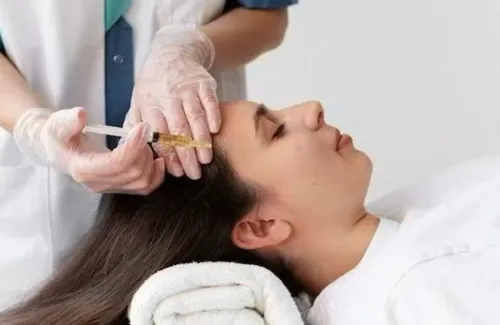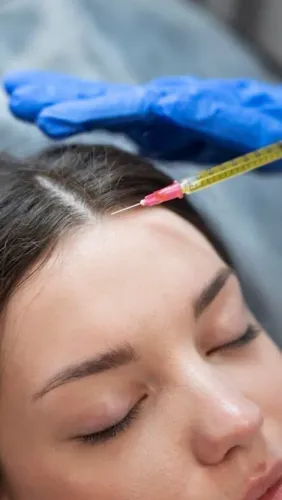

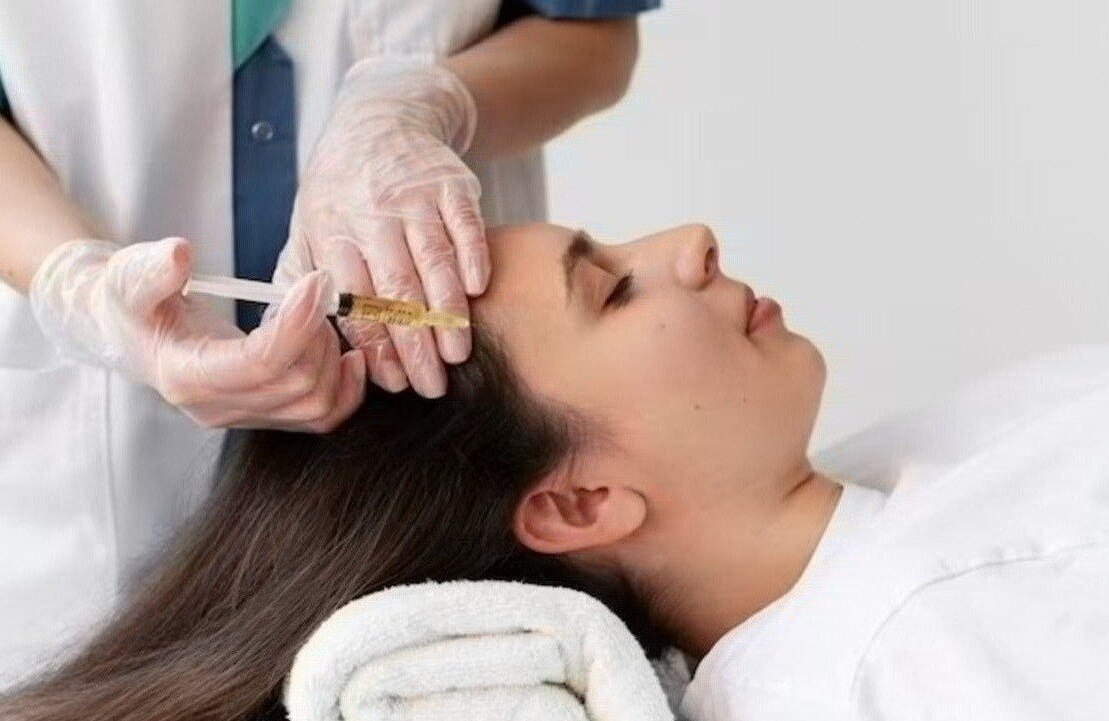
PRP is best studied for pattern hair loss, not for every condition described as an unhealthy scalp. You will be able to match symptoms to the right next step, judge PRP hair treatment suitability, and compare a Nashik clinic’s assessment and procedure before booking treatment.
Key takeaways
- Treat dandruff, infection and active scalp inflammation before PRP.
- PRP suits selected pattern hair-loss cases, not every scalp problem.
- Ask about diagnosis, blood tests, sterile injections and realistic session plans.
- Compare Nashik clinics by medical assessment, not package price alone.
What Does “Unhealthy Scalp” Mean Before PRP Is Considered?
“PRP for unhealthy scalp” is too vague to support a treatment decision because hair loss and scalp inflammation have different causes, treatments and prognoses. A clinician must identify the actual condition before recommending an injection.
- Pattern hair loss gradually reduces density in a characteristic distribution and is the main diagnosis with clinical rationale for PRP.
- Telogen effluvium causes diffuse shedding after fever, infection, surgery, major stress, rapid weight loss or childbirth, and can also reflect thyroid disease, iron deficiency or medicines.
- Alopecia areata causes distinct smooth patches and requires a different assessment.
- Seborrhoeic dermatitis causes scale and inflammation; scalp psoriasis causes thicker, sharply defined plaques.
- Tinea capitis is a fungal infection, while bacterial folliculitis produces inflamed follicles or pustules.
- An active scalp infection needs diagnosis-specific treatment before any cosmetic injection.
- Scarring alopecia can permanently destroy follicles, and PRP cannot reliably revive them.
Seek an examination for redness, burning, tenderness, scale, pustules or a smooth, shiny area where follicular openings have disappeared. PRP is not an established primary treatment for dandruff, dermatitis, psoriasis or infection. Injecting an inflamed or infected scalp can increase pain and procedural risk, while delaying treatment can allow inflammation or scarring to progress.
When Is PRP Hair Treatment Suitable for Scalp-Related Hair Loss?
PRP has its strongest rationale for androgenetic alopecia, also called pattern hair loss. Small clinical trials and meta-analyses report increases in hair density or thickness, although preparation systems, injection schedules and outcome measures differ.
| Diagnosis | PRP rationale | Required first step |
|---|---|---|
| Androgenetic alopecia | Strongest clinical evidence; density or thickness may improve | Confirm the pattern and follicle viability |
| Telogen effluvium | Does not remove the shedding trigger | Identify and address the underlying cause |
| Thyroid disease, iron deficiency or medicine-related shedding | PRP does not correct the untreated cause | Investigate and treat the trigger |
| Scarring alopecia | Cannot reliably revive permanently destroyed follicles | Assess inflammation and prevent further scarring |
Telogen effluvium causes diffuse shedding after fever, infection, surgery, major stress, rapid weight loss or childbirth. Thyroid disease, iron deficiency and some medicines can produce the same pattern, so injecting PRP before investigating them can delay effective treatment.
A clinician should take a medical history and examine the scalp before recommending treatment. Trichoscopy or dermoscopy often helps distinguish miniaturised follicles, active inflammation and scarring.
Depending on your presentation, ask whether testing is warranted, including:
- Complete blood count
- Ferritin
- Thyroid testing
Redness, burning, tenderness, scale, pustules or a smooth shiny area without follicular openings need assessment before cosmetic injections. A proper assessment of PRP hair treatment suitability starts with the diagnosis, not the presence of hair shedding alone.
What Results, Sessions and PRP Preparation Should You Expect?
If your diagnosis supports PRP, expect gradual improvement rather than an immediate cure. Published protocols commonly start with about three treatments, spaced roughly 3–4 weeks apart, followed by possible maintenance sessions. This is a practice pattern, not a universal schedule, and no session count guarantees a result.
Assess benefit after about 3–6 months, not after the injection. Hair follicles follow a cycle, so temporary shedding can continue while density changes develop. Ask for baseline and follow-up photographs taken with the same lighting, angle, hair length and parting, plus repeated hair-density assessment; freshly injected skin is a poor result measure.
Session count alone cannot compare PRP plans. Commercial systems produce different preparations, and studies are difficult to compare directly.
| Feature | Why it changes interpretation |
|---|---|
| Platelet concentration | Three sessions can deliver different platelet doses |
| Red-cell contamination and leukocyte content | The injected mixture can differ between systems |
| Activation method, injected volume and processing steps | These alter preparation and injection protocols |
PRP is not a guaranteed replacement for established medical treatment when that treatment fits your diagnosis. The clinician should explain whether PRP complements or follows that treatment, rather than presenting it as the only route.
What Risks and Medical Checks Matter Before a Scalp Injection?
PRP is not risk-free because it uses needles and injections into the scalp. Expect short-term injection pain or burning, tenderness, swelling, bruising or a headache; these effects usually settle, but ask how long they should last.
1. Tell the practitioner about previous unusual bleeding, easy bruising, clotting problems, platelet disorders, severe anaemia and any relevant systemic disease.
2. Provide a complete medicine list, including anticoagulants such as warfarin or apixaban and antiplatelet medicines such as aspirin or clopidogrel. Do not stop a prescribed medicine to “improve” PRP unless the clinician who prescribed it gives specific advice.
3. Postpone injection into an actively infected, inflamed or markedly irritated scalp. Less common risks include infection, prolonged inflammation, nerve injury, blood-vessel injury and worsening of an inflammatory scalp condition.
4. Confirm that blood collection and injection use sterile, single-use equipment. Ask how the blood is processed, including whether the preparation separates red cells and how the final PRP is handled.
5. Before consenting, obtain clear aftercare instructions and know whom to contact. Report worsening pain, spreading redness, pus or fever promptly because these signs can indicate infection or a significant inflammatory reaction.
A practitioner who dismisses these checks, promises guaranteed regrowth or recommends changing essential treatment without medical supervision has not provided a safe basis for consent.
How Can You Compare a Scalp-Problems Hair Clinic in Nashik?
Compare clinics by documented diagnosis and procedure quality, not by Nashik’s climate, pollution, water, or location. These factors do not determine biological suitability for PRP hair treatment for scalp problems in Nashik; diagnosis, follicle viability, medical history, and injection quality do.
Ask the practitioner:
- What diagnosis was documented, and was the scalp examined with trichoscopy or dermoscopy?
- Which alternatives were discussed, including established medical treatment, when appropriate?
- What platelet preparation, processing steps, red-cell and leukocyte content, injected volume, and session spacing will be used?
- Who performs the injections, and what sterile precautions protect against infection?
- What risks apply to your medical history and scalp condition?
- How will progress be photographed and measured after 3–6 months?
A clinic’s answers should distinguish a diagnosis-led plan from a PRP-first sales script.
| Clinic approach | What it shows | Your decision |
|---|---|---|
| Diagnosis-led | Examines follicles, records a diagnosis, and compares treatments | Suitable for further evaluation |
| PRP for every complaint | Skips investigation and presents one treatment as universal | Seek another opinion |
| Unclear protocol | Cannot explain preparation, volume, sterility, or follow-up | Do not consent yet |
You can evaluate SMART LOOK CLINIC as an option only if its treating practitioner provides this explanation and does not offer PRP for every scalp complaint. A credible plan also explains when PRP is the wrong choice.
Frequently asked questions
What does an unhealthy scalp mean before PRP is considered?
It can refer to dandruff, seborrhoeic dermatitis, psoriasis, folliculitis, fungal infection, scarring or another condition. A clinician must identify the cause before recommending PRP.
When is PRP hair treatment suitable for scalp-related hair loss?
PRP is considered after diagnosis when hair loss involves viable follicles, such as selected cases of androgenetic alopecia. It is not a substitute for treating active infection, inflammation or scarring.
What should you expect from PRP preparation and sessions?
Expect a scalp examination, medical history, review of medicines and a discussion of session timing, discomfort, aftercare and realistic response. Plans differ according to diagnosis and clinic protocol.
What medical checks matter before a scalp injection?
Discuss bleeding disorders, platelet conditions, anaemia, blood-thinning medicines, infection, autoimmune disease and allergies. Delay treatment when the scalp has an active infection or significant inflammation.
How can you compare a scalp-problems hair clinic in Nashik?
Compare the clinician’s diagnosis, explanation of alternatives, sterile injection process, consent documents, follow-up plan and transparent fees rather than choosing only by package price.