
PRP can support eyebrow follicles that are still present but weak, yet it cannot rebuild follicles destroyed by scarring or create a new brow shape. By checking the cause of thinning, the condition of the skin, and your desired result, you can decide whether PRP, medical treatment, camouflage, or transplantation fits your situation.
Key takeaways
- PRP helps when eyebrow follicles remain but are miniaturized or inactive.
- PRP cannot restore follicles destroyed by scarring or a completely smooth patch.
- Find the cause of eyebrow thinning before choosing injections.
- Compare PRP with medicines, cosmetic methods, and eyebrow transplantation.
When PRP Can Help Thin Eyebrows
Yes, PRP makes sense when eyebrow follicles are still present but miniaturized, weak, or inactive. It cannot create new follicles, so a completely smooth, scarred patch with destroyed follicles is unlikely to regrow from PRP alone.
PRP hair treatment for thin eyebrows is an off-label use. No FDA-approved platelet-rich plasma product is specifically approved to regrow eyebrow hair, and eyebrow research is limited compared with scalp research. Evidence comes mainly from small studies, case reports, and findings borrowed from scalp hair-loss treatment.
A proper assessment starts with standardized photographs and an examination of the eyebrow skin, follicle pattern, and donor area. The clinician should state whether the goal is to stimulate existing follicles or replace absent ones; those are different outcomes.
PRP is most suitable when you want to preserve your natural brow pattern rather than design a new arch. Improvement is gradual and measured in months, not days, with thicker existing hairs or reduced shedding appearing before any visible density change.
A smooth gap that needs a defined shape points toward another option, such as camouflage or transplantation.
Find the Cause Before Injecting PRP
A smooth patch is not automatically a PRP problem. Before choosing prp for eyebrow thinning, a clinician should decide whether follicles are still present and whether the loss is non-scarring or scarring. Standardized photographs, brow examination, scalp and body-hair review, and donor-area assessment help reveal the pattern.
| Cause or clue | What to check | Why it changes treatment |
|---|---|---|
| Alopecia areata | Smooth patches, exclamation-mark hairs, nail pits, or hair loss elsewhere | Localized disease is not established as a first-line PRP indication; a specialist may use intralesional corticosteroids |
| Thyroid disease or iron deficiency | Thyroid symptoms, fatigue, diffuse thinning; blood tests such as TSH and ferritin | Correcting the underlying problem may matter more than injecting PRP |
| Atopic dermatitis, seborrhoeic dermatitis, or psoriasis | Itching, scale, redness, flaking, or thick plaques | Control active inflammation before considering cosmetic stimulation |
| Medication effects | A new drug or dose change before shedding began | The prescriber may need to adjust treatment; do not stop it independently |
| Trichotillomania or repeated plucking | Broken hairs, uneven gaps, hand-to-brow pulling, or a history of over-plucking | Removing the trigger is essential, and damaged follicles may not respond to PRP |
Ask whether the skin shows scarring or active inflammation. Transplantation is generally deferred until scarring alopecia is medically controlled and stable, because grafts placed in active disease can grow poorly or be lost.
The eyebrow’s proximity to the eye also makes injection anatomy important. A diagnosis-led plan is safer than treating every sparse brow as a candidate for PRP.
What PRP Involves and When Results Appear
Expect a series rather than one injection: published hair studies commonly use three sessions about four weeks apart. Eyebrow studies have not established one agreed dose, platelet concentration, activation method, injection depth, or maintenance schedule. Treat the proposed plan as a clinic-specific protocol, not a universal standard.
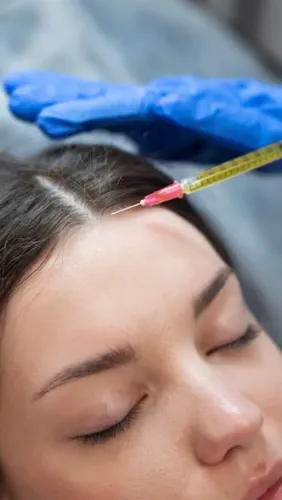
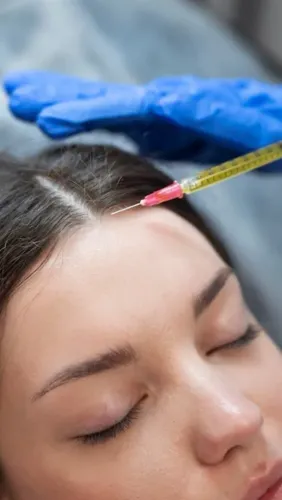
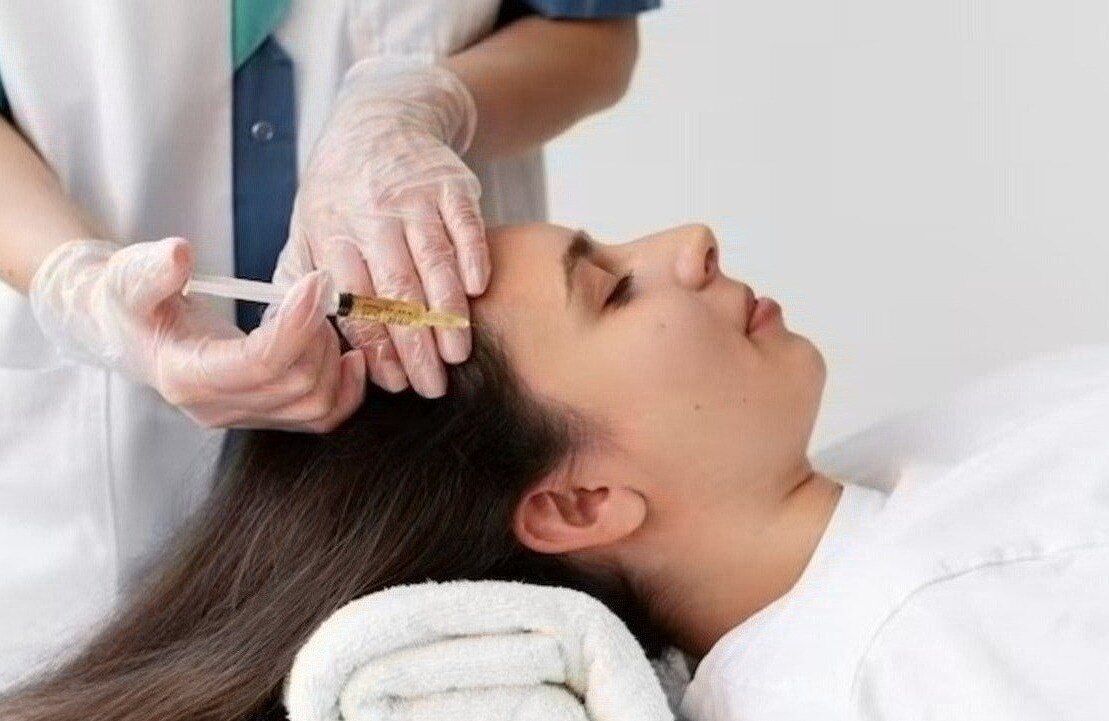
At each appointment, the clinician should confirm the brow’s pattern with consistent photographs, examine the eyebrow and donor area, draw blood, process the sample, and inject the platelet-rich portion into selected brow areas. PRP is intended to stimulate existing follicles; it does not replace follicles that are absent.
Ask for these details before consenting:
- Blood collection and processing method, including whether the sample is activated
- Platelet concentration or preparation target
- Injection sites, depth, and anaesthetic plan
- Number of sessions, interval between them, and criteria for stopping or continuing
New growth is measured in months, not days. Some people notice reduced shedding or fine regrowth after two to three months, but assess the response with matching photographs around three to six months after the series. Maintenance injections lack an agreed schedule, so do not accept an automatic recurring plan without a reason.
PRP for eyebrow hair is an off-label use, and no FDA-approved PRP product specifically regrows eyebrow hair.
Compare PRP With Other Eyebrow Restoration Options
The key choice is whether you want to support surviving follicles, conceal gaps, or replace missing follicles. PRP and medication target existing growth; camouflage changes appearance only; transplantation adds follicles. These are different eyebrow hair restoration options, not interchangeable ways to produce the same brow.
| Option | What it does | Main trade-off |
|---|---|---|
| PRP | Uses concentrated platelets to support existing follicles; eyebrow use is off-label, and no FDA-approved PRP product specifically regrows eyebrow hair. | It does not add a defined number of permanent hairs or precisely redesign the arch. |
| Medication | Topical minoxidil or prostaglandin-related products may be discussed for growth. Eyebrow use is not the same as approved scalp or eyelash use. | Eye exposure, irritation, unwanted hair outside the brow, and systemic effects make unsupervised use risky. |
| Camouflage | Pencil, powder, tint, or microblading changes the visible shape without growing hair. | It works immediately but needs maintenance and does not treat follicle loss. |
| Eyebrow transplantation | Moves donor follicles into sparse or absent areas and permits a defined shape. | It requires surgery and adequate donor hair; transplanted scalp hair grows faster, may differ in calibre or curl, and needs trimming. |
A proper comparison begins with standardized photographs and examination of the brows and donor area. Ask whether the recommendation aims to stimulate follicles that remain or replace follicles that are absent; that distinction determines whether PRP, medication, camouflage, or transplantation fits the problem.
Questions to Ask at an Eyebrow Hair Consultation
A suitable recommendation explains what PRP can realistically change in your brows, not simply promises regrowth. Ask these questions and expect specific answers:
- Have you taken standardized photographs of both eyebrows, including close-ups and matching lighting, so progress can be judged accurately?
- Do examination findings show non-scarring loss with surviving follicles, or scarring and absent follicles that PRP cannot replace?
- Which causes have you considered, including alopecia areata, thyroid disease, iron deficiency, dermatitis, psoriasis, medication effects, and repeated plucking?
- Is the goal to stimulate existing follicles, or do I need replacement follicles for missing areas?
- What evidence supports PRP for eyebrows specifically? There is no FDA-approved PRP product for eyebrow regrowth, and eyebrow research is smaller than scalp research.
- What injection method, number of sessions, interval, anaesthetic, and total cost do you recommend, and what result would count as failure?
- What risks apply around the eye, including pain, swelling, bruising, infection, bleeding, and injury to a nerve or blood vessel?
- If PRP fails, would camouflage or eyebrow transplantation suit my pattern better? If you are a hair transplant surgeon, explain the donor supply, shape limits, and why transplanted scalp hairs need trimming.
At SMART LOOK CLINIC, ask for a comparison based on your photographs rather than a routine package. A sound consultation also states that PRP preserves your existing pattern; it cannot promise a defined arch or a fixed number of permanent new hairs.
Frequently asked questions
When can PRP help thin eyebrows?
PRP can help when eyebrow follicles are still present but miniaturized, weak, or inactive. It cannot create new follicles in a completely smooth, scarred area where follicles were destroyed.
Why should you find the cause before PRP for eyebrow thinning?
Thinning can result from conditions such as alopecia areata, thyroid disease, nutritional deficiency, skin inflammation, over-plucking, or scarring. Treating the cause first helps determine whether PRP is appropriate.
What does PRP for eyebrows involve, and when do results appear?
A clinician draws a small blood sample, processes it to concentrate platelets, and injects the preparation into the eyebrow area. Results depend on the follicle condition and require time to assess during follow-up visits.
How does PRP compare with other eyebrow hair restoration options?
PRP is intended to support existing follicles. Medicines or treatment of an underlying condition may suit active hair loss, while eyebrow transplantation provides follicles for areas where natural follicles have been permanently lost.
What should you ask during an eyebrow hair consultation?
Ask what caused the thinning, whether follicles remain, how the clinician will assess the area, how many sessions are advised, what results are realistic, and whether eyebrow transplantation or another option fits better.