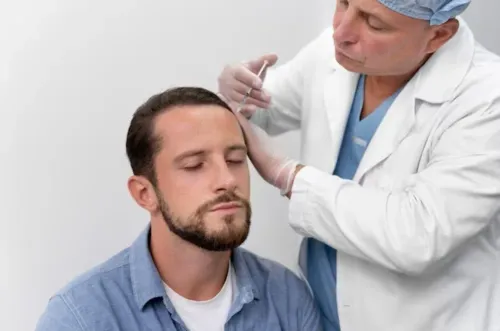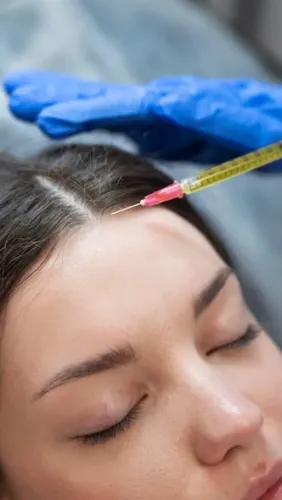

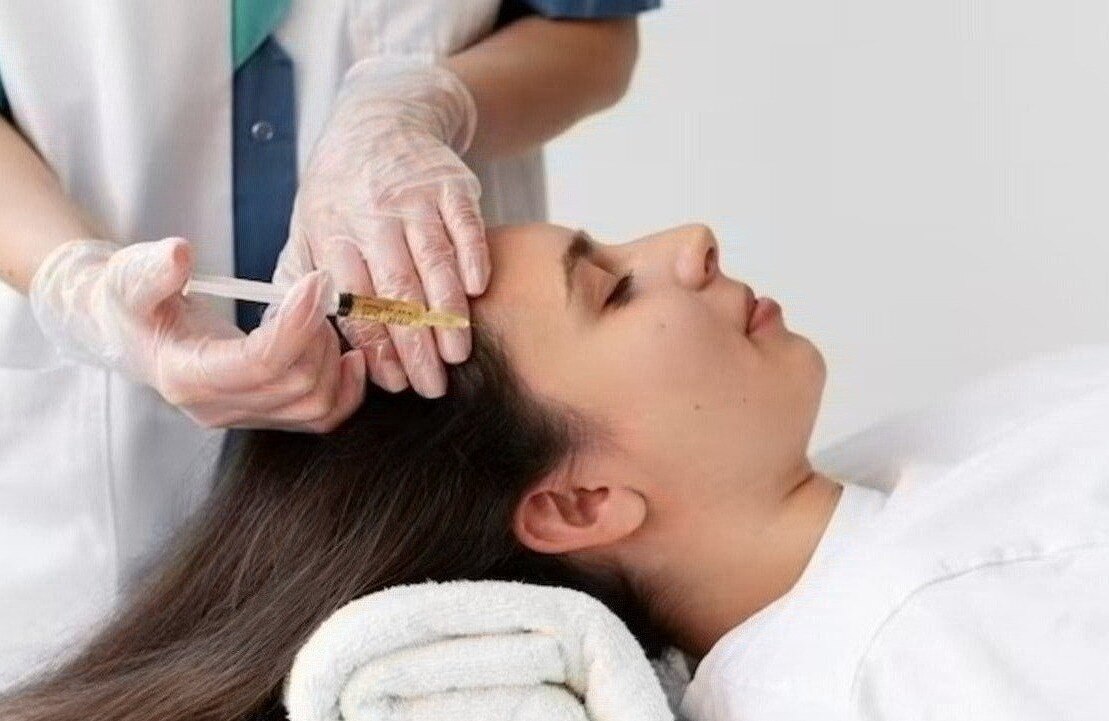
Uneven beard growth can result from natural asymmetry, weakened follicles, infection, alopecia areata, inflammation, or scarring, and PRP is not appropriate for every cause. You will learn how to recognise warning signs, what a clinician should examine, and when PRP is a reasonable option rather than a delayed diagnosis or unsuitable promise.
Key takeaways
- Compare older photographs to distinguish natural asymmetry from new beard hair loss.
- Ask for an examination before choosing PRP for uneven beard hair loss.
- PRP is not the first choice for every cause of patchy beard loss.
- Choose a Nashik clinician who diagnoses the cause before recommending treatment.
Is the beard truly losing hair, or has it always grown unevenly?
A beard that has always grown more densely on one side is natural asymmetry, not proof of hair loss. Compare older photographs: stable gaps since the beard first developed point toward inherited growth pattern, while a new or enlarging gap indicates an acquired problem.
1. Look at the patch edges and skin. A smooth, sharply outlined patch with normal-looking skin can suggest alopecia areata. Scale, crust, pustules, broken hairs, redness, itching, or inflamed follicles point toward tinea barbae, bacterial folliculitis, or pseudofolliculitis.
2. Check for scarring. Shiny skin or missing follicular openings raises concern for follicle destruction after a deep infection, burn, surgery, repeated ingrown hairs, picking, or other injury. PRP cannot reliably recreate follicles that scarring has destroyed.
3. Review changes beyond the beard. Thyroid or hormonal disorders, nutritional problems, grooming trauma, and simultaneous loss of scalp or eyebrow hair change the assessment. Sudden progression, pain, pus, extensive redness, scarring, or scalp-and-eyebrow loss requires diagnosis before any injection.
Calling PRP for uneven beard hair loss an uneven beard growth treatment based only on appearance can delay antifungal, anti-inflammatory, or other care. Uneven beard growth is a symptom, not a diagnosis; choose PRP only after a clinician identifies the cause and confirms viable follicles.
What should a clinician check before recommending PRP?
Before recommending beard hair loss PRP, the clinician must identify why the beard looks uneven and whether viable follicles remain. PRP is not a substitute for diagnosing infection, inflammation, or scarring.
1. Inspect the beard pattern and skin for smooth patches, scale, crust, pustules, redness, broken hairs, inflamed follicles, shiny skin, and missing follicular openings. These findings help separate alopecia areata, tinea barbae, folliculitis, pseudofolliculitis, and scarring.
2. Use magnification or dermoscopy to examine follicular openings and hair calibre. Miniaturised hairs with preserved openings support a different discussion from a smooth, scarred area where follicles have been destroyed.
3. Review when the loss began, whether it is spreading, and whether it followed infection, ingrown hairs, picking, burns, surgery, or grooming injury. Ask about autoimmune disease, thyroid symptoms, diet, eyebrow or scalp loss, family history, and previous treatments.
4. Arrange fungal microscopy or culture, a thyroid panel, nutritional blood tests, or a biopsy when the diagnosis is unclear. PRP cannot treat an untreated fungal infection, active inflammatory disease, or a scarring process.
5. Check for platelet disorders, significant anaemia, anticoagulant or antiplatelet medicines, immunosuppression, and active skin infection. These factors affect bleeding, platelet function, infection risk, and how a poor response is interpreted. Do not stop prescribed medicines without advice from the prescriber.
When can PRP help uneven beard hair loss, and what does treatment involve?
PRP is more plausible when beard follicles are weakened or miniaturised but remain viable, and the skin is neither scarred nor actively infected. It is not reliable for recreating follicles destroyed by scarring or filling a smooth patch where examination finds no follicular openings. Evidence is stronger for scalp androgenetic alopecia than patchy beard loss.
Beard-specific dose, platelet concentration, activation method, injection depth, and treatment interval remain non-standardised, so evidence for PRP for uneven beard hair loss is limited.
- Blood is collected from your arm using a sterile tube.
- The sample is processed in a centrifuge to separate platelet-rich plasma from other blood components.
- The clinician marks selected beard areas and injects the prepared plasma at planned points and depths.
- The team records baseline photographs and sets a review date to assess change.
Published protocols commonly use an induction course followed by possible maintenance treatment, but no clinic can justify one fixed schedule for every case. Ask what interval and number of sessions fit your diagnosis, rather than accepting a preset package.
Beard hair loss PRP should be judged by reduced shedding or improved calibre and density in responsive follicles, not guaranteed filling of a bare patch. Compare standardised photographs taken under the same lighting and angle at the defined review point; daily mirror checks exaggerate small fluctuations.
What treatment is more appropriate when PRP is not the first choice?
Choose the next treatment from the diagnosis, not from the patch’s appearance. Calling PRP an uneven beard growth treatment before identifying the cause can delay effective care.
1. Limited alopecia areata of the beard is commonly assessed for intralesional corticosteroid injections. A dermatologist may consider topical or systemic treatment based on the area involved, duration, and relapse risk. Spontaneous regrowth and relapse remain possible.
2. Tinea barbae requires disease-specific antifungal treatment. Bacterial folliculitis and pseudofolliculitis require control of infection and inflammation, not platelet injections. Treating an active infection with PRP can worsen inflammation or obscure the diagnosis.
3. Scarring requires assessment of whether the underlying disease is active and whether follicular openings have been destroyed. PRP cannot reliably recreate follicles lost to deep infection, burns, surgery, repeated picking, or severe ingrown hairs.
4. Consider a transplant only after the cause is identified and medically active disease is controlled. In alopecia areata, grafting an unstable area can produce a poor or temporary result because future relapse and spontaneous regrowth are possible. Discuss disease stability, FUE suitability, and donor-hair limits before proceeding.
PRP itself can cause temporary pain, tenderness, swelling, bruising, and headache, especially after facial injections. Infection, bleeding, or persistent inflammation is uncommon but becomes more relevant with poor sterile technique, active skin infection, or unsuitable patient selection.
How should you choose a clinician for PRP in Nashik?
Verify the clinician’s medical registration before booking; a location or job title alone does not establish suitability. Ask who makes the diagnosis and whether the examination includes dermoscopy or magnification when follicle openings, hair calibre, or scarring need closer inspection.
Request these details in writing:
- The PRP preparation, injection areas, planned session spacing, review point, expected outcome, total fees, and alternatives.
- The evidence supporting PRP for beard hair, not only studies of scalp androgenetic alopecia.
- Whether the clinician has ruled out alopecia areata, tinea barbae, bacterial folliculitis, pseudofolliculitis, natural asymmetry, and scarring.
- Whether fungal microscopy or culture, blood tests, or biopsy is needed before treatment.
Use this comparison when assessing a hair transplant surgeon for prp hair treatment and uneven beard hair loss:
| Check | Satisfactory answer | Warning sign |
|---|---|---|
| Diagnosis | Names the likely cause and explains the examination | PRP is offered from photographs alone |
| Follicles | Dermoscopy or magnification assesses viable openings | No inspection of the skin or follicles |
| Treatment plan | Preparation, areas, spacing, review, fees, and alternatives are documented | One fixed package or guaranteed filling |
| Evidence | Beard-specific evidence is discussed separately from scalp evidence | Scalp results are presented as proof for beard loss |
For someone comparing a hair transplant surgeon in Nashik, including SMART LOOK CLINIC, proceed only when the cause is understood, active infection or inflammation has been addressed, viable follicles remain, and the expected result is described without a guarantee.
Related services
PRP Loss still troubling you? Treat you hair loss with PRP Hair Treatment 𝐁𝐞𝐬𝐭 𝐒𝐮𝐜𝐜𝐞𝐬𝐬 𝐑𝐚𝐭𝐞 I 𝐀𝐟𝐟𝐨𝐫𝐝𝐚𝐛𝐥𝐞 𝐒𝐞𝐫𝐯𝐢𝐜𝐞𝐬 I... View service → |
PRP Therapy PRP Therapy (Platelet Rich Plasma) PRP Therapy (Platelet Rich Plasma) At Smart Look Clinic, Dr. Kiran Deshmukh offers advanced PRP Therapy, one of the most effective non-surgical... View service → |
Frequently asked questions
How can you tell natural uneven beard growth from beard hair loss?
Compare older photographs. Gaps that have stayed stable since beard development suggest natural asymmetry; new or enlarging gaps indicate acquired hair loss.
What should a clinician check before recommending PRP for uneven beard hair loss?
The clinician should assess when the gaps appeared, examine the skin and follicles, review medical history, and identify conditions such as alopecia areata, infection, inflammation, or scarring.
When can PRP help uneven beard hair loss?
PRP is considered after a clinician identifies a suitable non-scarring cause and confirms that follicles remain capable of producing hair. Treatment involves drawing blood, concentrating platelets, and injecting the preparation into selected beard areas.
What is more appropriate when PRP is not the first choice?
Treatment depends on the diagnosis. Medication may suit an inflammatory or autoimmune cause, while a beard hair transplant can address stable areas with absent follicles after evaluation.
How should you choose a clinician for PRP in Nashik?
Choose a hair transplant surgeon in Nashik who examines the cause of uneven beard hair loss, explains alternatives, discusses expected results, and provides a clear treatment plan.