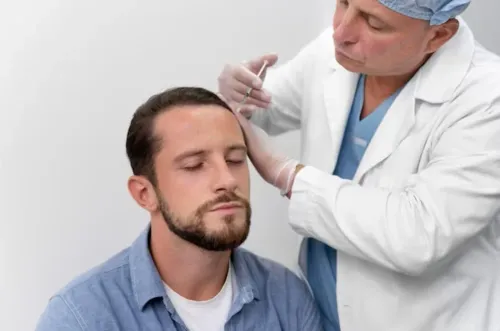

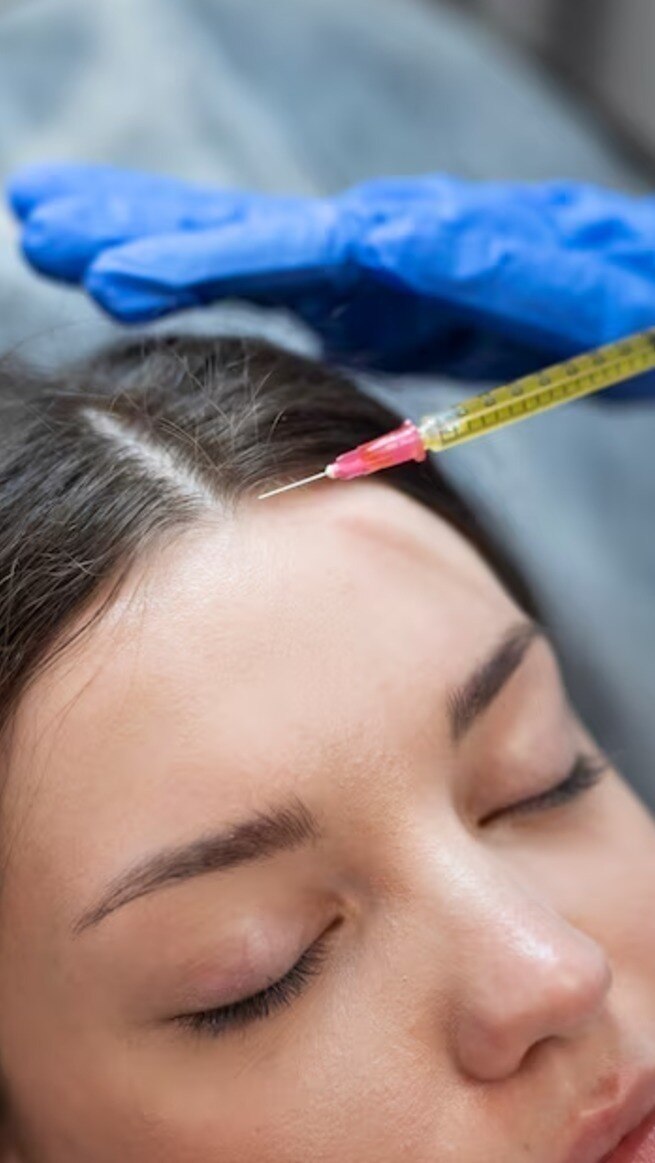
A slowdown after platelet-rich plasma injections does not prove that your follicles have become resistant. First compare objective evidence, then identify the type of hair loss, check for scalp disease and treatment risks, and decide whether to adjust care, change treatment or discuss transplantation.
Key takeaways
- Compare identical photographs and trichoscopy before judging PRP results.
- Investigate renewed shedding, including pattern hair loss and scalp conditions.
- Check injection timing, preparation, technique and follow-up before repeating PRP.
- Compare medical treatment, continued PRP and transplantation with a qualified clinician.
Confirm that PRP has actually stopped helping
“PRP hair treatment not working” does not prove that follicles have become resistant. Ask the clinician to compare photographs taken with identical lighting, distance, hairstyle and camera angle, and use trichoscopy when available. Record hair density, shaft thickness, shedding and the size of thinning areas instead of relying on memory.
| Finding | What it may mean | How to check |
|---|---|---|
| Stable density with no new loss | An expected pause in visible improvement | Repeat standardized photographs and trichoscopy |
| Thinning after maintenance stopped | Renewed androgenetic alopecia progression | Compare the maintenance date with density and shaft-size changes |
| No measurable improvement after the agreed course | Possible treatment failure or wrong diagnosis | Reassess the scalp and treatment protocol |
Review the original protocol: session count, interval, platelet concentration, activation method, injection depth and maintenance schedule. Published protocols differ substantially, so no universally accepted PRP dose or timetable exists. Many protocols begin with about three sessions spaced 2–4 weeks apart, followed by maintenance every 3–6 months; stopping maintenance can expose ongoing androgenetic alopecia.
Before another injection, agree on:
- A measurable endpoint, such as hair density or standardized photographs.
- A review date after the planned course.
- A stop-or-change rule if objective improvement is absent.
Repeated PRP without comparison adds cost and procedural risk while delaying a better diagnosis.
Find out what is causing the renewed shedding
A fresh diagnosis determines whether “prp treatment results stopped” reflects an incomplete original diagnosis or a new hair-loss condition. Ask for scalp examination with dermoscopy when available, alongside standardized photographs, to distinguish patterned androgenetic alopecia from telogen effluvium, alopecia areata, traction alopecia and scarring alopecia.
1. Tell the clinician about recent illness, major surgery, substantial weight loss, severe stress and every new medicine. A sudden shedding increase after one of these events points toward telogen effluvium; PRP will not remove the trigger. Provide your medication and health history, including supplements and existing conditions.
2. Ask whether testing is warranted. A complete blood count, ferritin and thyroid testing belong in the work-up when your history or scalp examination supports them, not as automatic tests for every person.
3. Stop and obtain dermatologic assessment before another injection if you have scalp pain, intense redness, pustules, crusting, heavy scaling, missing follicular openings or rapidly expanding smooth or scar-like patches. These signs point to inflammatory, infectious or scarring disease that requires its own treatment.
Injecting an undiagnosed scalp disorder can delay protection of remaining follicles. Do not treat renewed shedding as proof that you need stronger or more frequent PRP until the clinician identifies the cause.
Check PRP hair treatment problems before repeating an injection
Do not book another injection until you know whether PRP hair treatment problems, a medicine, or a health condition makes treatment unsafe or unsuitable. Injection pain, tenderness, swelling, bruising and a temporary headache can occur briefly after treatment.
Fever, spreading redness, pus, severe worsening pain or an allergic-type reaction needs prompt medical care, not a routine repeat appointment. Infection and injury to a nerve or blood vessel are uncommon but possible.
1. Tell the practitioner about every medicine, supplement and medical condition. Anticoagulants, antiplatelet medicines, platelet disorders, anemia, active infection, uncontrolled systemic disease and anti-inflammatory medicines can affect eligibility, bleeding risk or aftercare. Do not stop prescribed blood thinners unless the prescribing clinician tells you to.
2. Ask whether your scalp is safe to inject. Painful skin, marked redness, pustules, crusting, heavy scaling, missing follicular openings, or rapidly expanding smooth or scar-like patches need dermatologic assessment first. Injecting an undiagnosed inflammatory or infectious disorder can delay treatment that protects remaining follicles.
3. Ask who will prepare and inject the PRP, how the blood sample is processed, and which sterile precautions are used. Ask what the clinic will do if bleeding, infection, nerve injury, vessel injury or an allergic reaction occurs.
A clear safety explanation matters more than a promise of a stronger or more frequent injection.
Compare medical treatment, continued PRP and transplantation
After diagnosis and safety review, choose among medical treatment, a defined PRP plan, and transplantation—not another injection by default.
| Option | What it means | When it applies |
|---|---|---|
| Medical treatment | Topical or oral minoxidil may be discussed; appropriate men may discuss finasteride. Continued use is needed to maintain benefit, and each has adverse-effect considerations. | Androgenetic alopecia when medical history, sex, pregnancy potential and contraindications have been reviewed |
| Continued PRP | PRP remains an adjunct, with a specified maintenance interval and a measurable outcome. | When standardized photographs or trichoscopy show an objective benefit |
| Transplantation | Donor hairs are redistributed; untreated native hairs can continue to miniaturize. | When donor density, recipient-area diagnosis and stability of ongoing loss support surgery |
If PRP produced a documented improvement, ask the clinician to define the maintenance schedule, review date and success measure. Use hair density, shaft thickness or standardized photographs, not memory alone.
If the agreed course produces no objective improvement, change the plan instead of extending injections indefinitely. Repeating PRP can add cost and procedural risk while delaying treatment for the actual cause.
Before transplantation, confirm adequate donor density and a stable recipient-area diagnosis. Treating native hair loss remains part of the surgical plan, because a transplant does not stop progressive androgenetic alopecia.
Choose a qualified clinician for the next decision
A qualified clinician should make the next decision, not a clinic label, when you search for a hair transplant surgeon in Nashik. If you type “hair transplant surgeon if prp hair treatment for stops working,” verify the doctor’s medical registration and specialist training before discussing surgery.
Ask these questions during the consultation:
- Who examines you and writes the diagnosis?
- Who designs the hairline, harvests grafts, creates recipient sites and places grafts?
- Who treats complications, and how do you contact that person?
- Will you receive baseline photographs, dermoscopic findings when available and the expected time course?
- What plan will preserve your native hair, and what measurable endpoint will decide whether treatment worked?
| Clinic label | Evidence you need | Risk if missing |
|---|---|---|
| Hair clinic | Named, registered clinician and stated role | An unqualified operator may perform critical steps |
| Surgeon-led consultation | Diagnosis, donor assessment and written plan | Surgery may be recommended before the cause is clear |
| Transplant proposal | Graft plan linked to donor density and future loss | Native hair can keep thinning around transplanted grafts |
If transplantation is discussed, ask what happens if native hair continues to thin and whether medical treatment remains part of the plan. A consultation with SMART LOOK CLINIC is useful only when it supplies this diagnostic and follow-up detail instead of treating repeat PRP or surgery as automatic.
Leave with a review date and a clear stop-or-change rule.
Frequently asked questions
How can you confirm that PRP hair treatment has stopped helping?
Compare photographs taken with identical lighting, distance, hairstyle and camera angle. Record hair density, shaft thickness, shedding and thinning-area size, and use trichoscopy when available.
What can cause renewed shedding after PRP treatment?
Renewed shedding can result from progressive pattern hair loss, telogen effluvium, scalp inflammation, illness, medication changes or another untreated condition. Ask a clinician to assess the cause rather than assuming follicle resistance.
Which PRP hair treatment problems should you check before another injection?
Review the injection schedule, platelet preparation, treatment technique, scalp diagnosis, aftercare and follow-up photographs. Confirm that the clinician is measuring results consistently before repeating treatment.
Should you continue PRP, use medical treatment or consider transplantation?
The choice depends on the cause and extent of hair loss, donor hair supply, treatment response and your goals. Discuss the trade-offs with a qualified hair transplant surgeon before deciding.
How do you choose a qualified clinician after PRP stops working?
Ask about the clinician’s medical qualifications, experience diagnosing hair loss, trichoscopy assessment, PRP protocol, photographic tracking and approach to alternatives such as medication or transplantation.