
PRP may help weak or miniaturising beard follicles, but it cannot create follicles in a completely hairless or scarred patch. By the end, you will know how a surgeon assesses beard loss, what treatment involves, when PRP is a poor choice, and how to compare it with transplantation or medical care.
Key takeaways
- PRP supports viable beard follicles; it cannot create follicles in completely bare skin.
- Ask the surgeon to assess follicle viability, skin conditions, hormones, and medication history.
- Judge beard PRP after the planned treatment course and several months of growth.
- Choose transplantation when stable bare areas lack usable beard follicles.
Can PRP improve patchy beard or moustache growth?
PRP can improve sparse cheeks, a thin moustache, or weak jawline growth when viable but miniaturised beard follicles are present. It is proposed to support those existing follicles, not manufacture new ones.
Possible changes include thicker hairs, less shedding, stronger visible coverage, and improved density. These are potential improvements, not guaranteed new growth or a promise that every patch will fill.
Evidence for beard PRP remains limited and weaker than evidence for scalp androgenetic alopecia. Small observational reports and conclusions borrowed from scalp studies do not prove that PRP reliably restores patchy beard growth.
- PRP cannot create genetically programmed follicles in a completely hairless area, a congenital gap, or a scar.
- A smooth patch that appeared suddenly needs diagnostic attention because alopecia areata, infection, inflammation, trauma, or scarring may be responsible.
- Normal genetic density can also explain sparse cheeks or a thin moustache, making diagnosis more useful than an automatic injection plan.
PRP for beard hair in Nashik has the same biological limits as treatment elsewhere; location does not change which follicles exist or why they were lost. A surgeon should examine the patch before recommending sessions, particularly when the skin is smooth, sharply bordered, inflamed, or newly affected.
What does a surgeon check before recommending beard PRP?
A surgeon recommends beard PRP only after identifying why the area looks sparse. Examination separates weak follicles from genuinely empty skin, sudden disease, and scarring that PRP cannot reverse.
- Inspect beard density, follicle pattern, skin texture, and patch borders, including the cheeks, jawline, moustache, and chin.
- Examine the scalp and ask about beard and scalp loss, alopecia areata, infections, trauma, inflammation, family pattern, medical conditions, and medication use.
- Take photographs under consistent lighting, distance, angle, and facial-hair length so later density comparisons are meaningful.
- Order tests when the history suggests hormonal, nutritional, infectious, or systemic disease instead of injecting first.
A suitable candidate has visible but weak or miniaturising follicles and no active facial disease. PRP is the wrong first step for active acne, dermatitis, skin infection, untreated inflammatory disease, scarring alopecia, unexplained sudden beard loss, or a demand for immediate dense coverage.
A smooth, sharply bordered new patch needs diagnostic evaluation, not a photograph-based sales estimate.
Scalp PRP and beard PRP use broadly similar blood preparation, but facial treatment needs different injection mapping, shallow beard angles, dose planning, and protection of visible facial structures. A hair transplant surgeon beard treatment plan should therefore be based on examination.
A proper beard restoration consultation in Nashik should assess the beard and scalp in person, discuss alternatives, and explain when another specialist or treatment is more appropriate.
How is beard PRP performed, and when can you judge it?
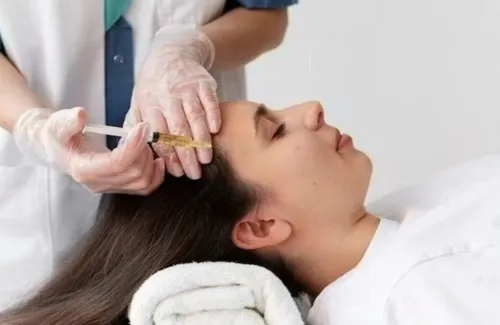
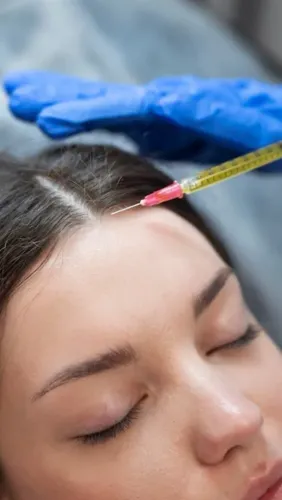
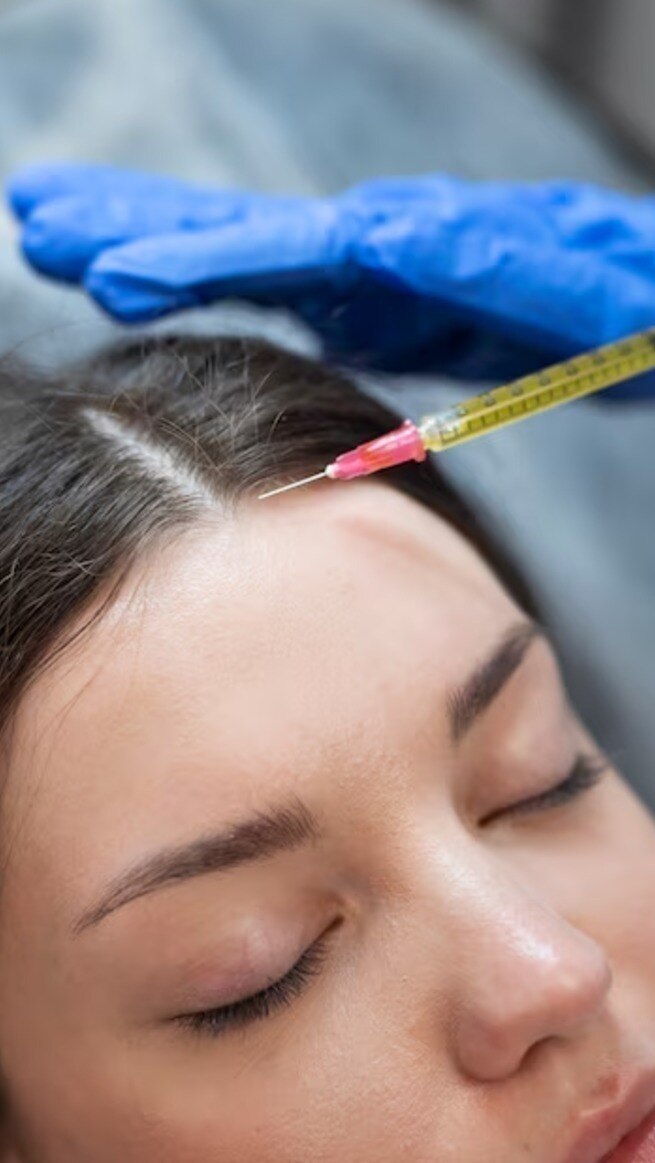
A beard PRP visit starts with blood collected into a sterile tube. The tube goes into a centrifuge, which separates platelet-rich plasma from red cells and other blood components. After the skin is cleansed, the surgeon maps selected beard or moustache areas and injects the prepared plasma at planned points.
| Stage | What happens | What it does not prove |
|---|---|---|
| Blood preparation | Centrifugation separates plasma from blood cells | It does not guarantee a specific platelet concentration |
| Injection | Mapped injections target selected beard or moustache zones | It does not create follicles in an empty area |
| Follow-up | Standardized photographs compare the treated areas over months | Early swelling or one early photograph cannot establish success |
Clinics differ in activation, single or double centrifugation, injection depth, volume, and scheduling. A plan may include several sessions spaced weeks apart, followed by review over several months. Ask the surgeon to state the proposed number of sessions and interval; reject a guaranteed growth percentage or fixed result.
Expect brief facial pain, pinpoint bleeding, tenderness, swelling, or bruising. Uncommon complications include infection, prolonged inflammation, fainting, and nerve or vessel injury from poor technique.
Before treatment, disclose blood thinners, bleeding disorders, active acne or dermatitis, allergies, and recent facial procedures. Never stop prescribed medicine without the prescriber’s advice.
Follow the clinician’s aftercare instructions. Avoid rubbing or contaminating injection sites, and use photographs taken under the same lighting, angle, distance, and beard length. Judge density only after the planned review period, not during early swelling.
When is beard transplantation or medical treatment a better choice?
PRP is a poor substitute when a beard area is genuinely empty. Before committing to sessions, compare it with these options:
| Option | What it does | Main limitation |
|---|---|---|
| Beard or moustache FUE | Removes follicular units from a finite donor area and places them into empty regions | Surgical wounds, donor limits, initial shedding, and precise angle, direction, and density planning |
| Minoxidil | Medication option for suitable patients with existing follicles | Results are not guaranteed; continued use and discussion of risks are required |
| Cause-directed treatment | Treats alopecia areata, fungal infection, hormonal disease, nutritional deficiency, medication-related loss, or inflammatory and scarring conditions | Requires diagnosis before choosing treatment |
FUE suits missing follicles because it adds grafts rather than trying to stimulate absent ones. Beard hairs grow at shallow, variable angles, so poor planning can produce an unnatural pattern even when grafts survive.
Minoxidil needs medical review for suitability and a plan for continued use; do not start it casually or assume facial use carries no risks. A smooth patch that appeared suddenly needs diagnosis, because PRP or transplantation alone can miss alopecia areata, infection, inflammation, or scarring.
PRP may be discussed as an adjunct around transplantation, but it is not a replacement for grafts and cannot guarantee graft survival. If you need fast, dense coverage, discuss transplantation rather than expecting PRP to create immediate change.
How do you evaluate a surgeon-led beard PRP consultation in Nashik?
A surgeon-led consultation earns your trust by examining the beard in person, not by selling a generic PRP package from a photograph. Ask who personally assesses you and performs the injections, what diagnosis supports PRP, and whether the clinician has relevant surgical training.
Use this checklist:
- Ask how blood is collected and processed, including centrifugation, activation, injection volume, and whether tubes and the centrifuge are sterile and single-use where applicable.
- Ask how injection points and shallow beard angles will be mapped around the cheeks, jawline, moustache, and visible facial structures.
- Request treatment records, baseline photographs, and follow-up photographs taken with consistent lighting and camera distance.
- Obtain a written plan stating session interval, review date, limitations, risks, total appointment time, aftercare, and alternatives.
| Surgeon-led consultation | Generic PRP package |
|---|---|
| Personal examination and diagnosis | Sales estimate or photograph review |
| Named preparation and injection method | Unspecified PRP process |
| Mapped beard treatment areas | Standard injection pattern |
| Defined review period and photographs | Vague success rate |
| Discussion of FUE and medical referrals | PRP presented as the only option |
Reject guaranteed percentages, guaranteed follicle counts, and unspecified success rates. Ask for measurable outcomes, such as standardized density photographs assessed after a defined review period.
Someone searching prp hair treatment beard hair for transplant surgeon in nashik can compare SMART LOOK CLINIC with other Nashik providers by checking examination quality, relevant training, evidence transparency, and willingness to discuss FUE or medical referrals. A sound consultation ends with diagnosis and options, not package pressure.
Related services
PRP Therapy PRP Therapy (Platelet Rich Plasma) PRP Therapy (Platelet Rich Plasma) At Smart Look Clinic, Dr. Kiran Deshmukh offers advanced PRP Therapy, one of the most effective non-surgical... View service → |
PRP Loss still troubling you? Treat you hair loss with PRP Hair Treatment 𝐁𝐞𝐬𝐭 𝐒𝐮𝐜𝐜𝐞𝐬𝐬 𝐑𝐚𝐭𝐞 I 𝐀𝐟𝐟𝐨𝐫𝐝𝐚𝐛𝐥𝐞 𝐒𝐞𝐫𝐯𝐢𝐜𝐞𝐬 I... View service → |
Frequently asked questions
Can PRP improve patchy beard or moustache growth?
PRP can support existing miniaturised beard follicles in sparse cheeks, moustaches, or jawlines. It cannot manufacture follicles where none exist.
What does a surgeon check before recommending beard PRP?
A surgeon examines the pattern of patchiness, follicle viability, skin and scalp conditions, medical history, medicines, and possible hormonal causes.
How is beard PRP performed, and when can you judge it?
Blood is drawn, processed to concentrate platelets, and injected into selected beard areas. Judge progress after the planned sessions and several months of growth, using consistent photographs.
When is beard transplantation or medical treatment a better choice?
Transplantation suits stable bare areas without usable follicles. Medical treatment fits cases linked to an underlying condition, medication, or hormonal problem after diagnosis.
How do you evaluate a surgeon-led beard PRP consultation in Nashik?
Choose a consultation that explains the diagnosis, expected limits, treatment schedule, risks, alternatives, follow-up, and how results will be measured before you pay.