
Thinning hair can result from pattern loss, temporary shedding, scalp disease, nutritional problems or hormone-related conditions, and each cause calls for a different response. By the end, you will be able to identify when FUE is suitable, compare it with medical treatment, and prepare specific questions for a consultation in Nashik.
Key takeaways
- Confirm the cause of thinning before choosing FUE.
- Treat active shedding before considering a transplant.
- FUE suits stable donor hair and clearly defined thinning.
- Compare diagnosis, surgeon experience, graft planning, recovery and follow-up.
Is your thinning caused by hair loss that needs treatment first?
Do not choose FUE until a clinician confirms why your hair is thinning. History, scalp examination and trichoscopy—magnified inspection of follicles and scalp—can separate permanent pattern loss from shedding that needs treatment first.
| Condition | Clues | Usual next step |
|---|---|---|
| Androgenetic alopecia | Gradual miniaturisation in a recognisable pattern | Confirm stability and discuss medical treatment or FUE |
| Telogen effluvium | Sudden diffuse shedding after illness, stress, weight loss, surgery or childbirth | Find and remove the trigger; assess regrowth over subsequent months |
| Alopecia areata | Smooth, sharply defined patches or eyebrow loss | Diagnose and treat the immune-related condition |
| Traction alopecia | Thinning along tight hairstyles, extensions or repeated pulling | Stop traction and assess whether follicles remain viable |
| Inflammatory scalp disease | Redness, scale, pain, pustules or scarring | Treat inflammation before considering surgery |
| Nutritional or endocrine cause | Diffuse loss with relevant dietary, menstrual or systemic symptoms | Investigate and correct the underlying disorder |
A sudden increase in shedding is a reason to investigate, not to transplant immediately. A clinician may request a complete blood count, ferritin or thyroid testing when your history and examination point to anaemia, low iron stores or thyroid dysfunction. Regrowth takes months after the trigger resolves.
The hair fall treatment comparison therefore starts with the cause, not a package price or graft count. FUE redistributes donor follicles; it does not correct active shedding or untreated miniaturisation.
When is FUE suitable for thinning hair?
FUE for thinning hair is suitable when your diagnosis is established, the donor area contains enough stable follicles, and the recipient area can be covered without exhausting future supply.
Follicular unit excision describes removing individual follicular units from the donor area; it does not guarantee better implantation, a scar-free result, or permanent protection for untreated native hair.
Use this fue transplant suitability checklist:
- Confirm a defined diagnosis, such as androgenetic alopecia, rather than unexplained shedding.
- Check donor density and miniaturisation with examination and trichoscopy. Stable hair calibre matters more than a high graft estimate alone.
- Define the recipient area clearly. Diffuse thinning that extends into the donor zone can leave too few reliable follicles for useful coverage.
- Delay surgery if you have active scalp inflammation, infection or another untreated scalp disease.
- Confirm that the proposed graft count covers the area while preserving donor reserves for future pattern loss.
Women with diffuse patterned thinning need particular caution. Their loss can affect much of the scalp, leaving too few stable donor follicles for a cosmetically useful transplant; medical treatment and evaluation for contributing conditions often come first.
A conservative, age-appropriate hairline protects your options. A very low hairline uses limited grafts and can look unnatural as recession continues. FUE redistributes donor hair, while untreated native hair can keep miniaturising, so a long-term medical and surgical plan matters.
How do medicines and other hair-fall treatments compare with FUE?
If the cause is active or unclear, treatment usually comes before FUE. Medicines address the biological process; FUE redistributes resistant donor follicles into a thinner area. It is invasive, donor-limited and cannot stop future miniaturisation of untreated native hair.
| Option | Main benefit | Main limitation |
|---|---|---|
| Topical minoxidil | Non-surgical support for pattern loss | Requires continuous use; early increased shedding can occur, and visible improvement usually takes several months |
| FUE | Creates coverage using harvested donor follicles | Uses a limited donor supply and does not prevent further native-hair loss |
| Finasteride | Can slow or improve selected male pattern loss | Prescription medicine, unsuitable for every shedding pattern; sexual and mood-related adverse effects require discussion |
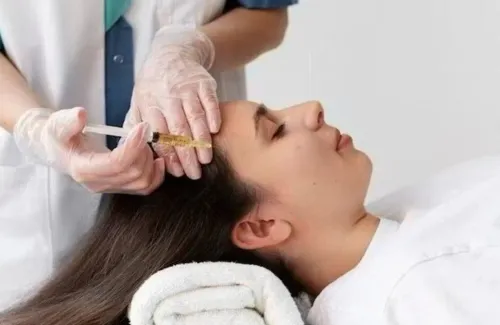
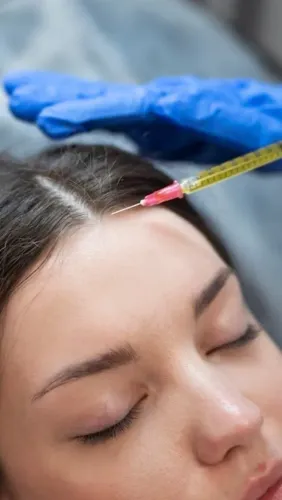
| PRP | Injection-based option that may support selected cases | Preparation methods, schedules and outcome measures vary; it is not a guaranteed transplant replacement |
Finasteride is not a general hair-fall medicine. A clinician must assess whether it fits your diagnosis and risk profile; pregnant women or women who may become pregnant must not handle crushed or broken tablets because of fetal risk. PRP also cannot be compared with FUE as an equivalent procedure.
Choose treatment first when shedding is sudden, diffuse, medically triggered or still progressing. Consider both when medication stabilises pattern loss while FUE fills a defined area; continue medical treatment after surgery if advised, because transplanted hair does not protect nearby native hair.
For thinning hair options in Nashik, use this hair fall treatment comparison:
- Ask what the medicine is treating and how long you must continue it.
- Ask how donor hair and native-hair loss will be monitored.
- Reject any plan that promises FUE alone will stop future thinning.
What trade-offs should you expect from an FUE plan?
FUE can redistribute resistant donor follicles into a defined thinning area, but it cannot create unlimited hair or stop untreated native hair from miniaturising. FUE transplant suitability depends on graft planning, donor density, hair calibre, recipient area and preservation of reserves for possible future procedures.
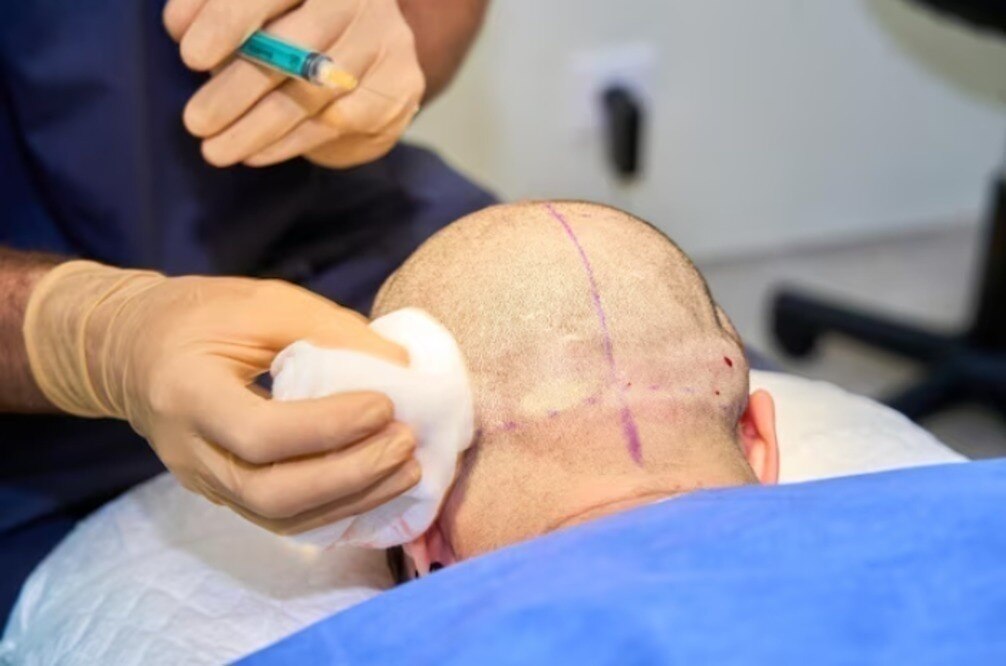
FUE leaves multiple small circular scars. Overharvesting can visibly thin the donor area, even when individual scars are hard to notice. Recipient-site creation and implantation also affect direction, angle, density and survival; the procedure name alone does not guarantee a natural result.
| Immediate appearance | Durable result |
|---|---|
| Visible coverage can reflect swelling, short stubble or temporary density. | Transplanted hairs commonly shed before regrowing, and shock loss can temporarily affect grafted or nearby native hairs. |
| The first few weeks can look worse than expected. | Judge the cosmetic result after many months, not during early shedding. |
A very low hairline uses limited grafts and may look unnatural as age-related recession continues. A conservative, age-appropriate hairline usually protects donor supply and remains more credible over time.
Ongoing pattern loss can require medical treatment before and after surgery because FUE does not protect untreated native hairs. This matters particularly for women with diffuse patterned thinning, who may lack enough stable donor follicles for useful coverage. The best fue for thinning hair plan preserves donor reserves instead of spending them for short-term density.
How should you compare thinning-hair options and clinics in Nashik?
A safe comparison of thinning hair options in Nashik starts with documented findings, not a package price or advertised graft number. Use the same questions at every consultation, including one for a FUE hair transplant or hair fall treatment in Nashik.
- Who makes the diagnosis, and what condition are they treating?
- What are the donor density and miniaturisation measurements, and how were they recorded?
- Who performs donor harvesting, recipient-site creation and graft implantation?
- What graft count is proposed, and why is that number sufficient without overharvesting?
- How was the hairline designed for your age, facial proportions and likely future recession?
- What is the plan for continuing native-hair loss, postoperative shedding and scheduled follow-up?
| Option | What it does | When it fits |
|---|---|---|
| FUE | Redistributes resistant donor follicles; it does not stop native-hair miniaturisation | Established pattern, adequate stable donor supply and defined recipient area |
| Medical treatment | Targets the biological process but requires ongoing use | Active pattern loss, early thinning or a need to preserve native hair |
| Further investigation | Looks for an unclear pattern, scalp disease or another cause | Diffuse donor-area thinning, active inflammation or sudden unexplained change |
| Combination | Protects native hair while adding coverage | Surgery is suitable but future loss remains a concern |
At a consultation with SMART LOOK CLINIC, use this checklist to test whether the recommendation is FUE, medical treatment, further investigation or a combination. Choose the route that matches diagnosis, donor supply, expectations and long-term preservation—not the procedure label.
Frequently asked questions
How can you tell whether thinning needs hair-fall treatment before FUE?
A clinician uses your history, scalp examination and trichoscopy to distinguish pattern loss from active shedding or scalp conditions that need treatment first.
When is FUE suitable for thinning hair?
FUE is suitable when thinning reflects stable pattern hair loss, you have enough healthy donor hair, and the proposed graft plan matches your goals.
How do medicines compare with FUE for thinning hair?
Medicines and other non-surgical treatments address hair shedding or follicle miniaturisation without surgery, while FUE redistributes grafts from a donor area to thinning zones.
What should you compare when choosing a thinning-hair option or clinic in Nashik?
Compare the diagnosis, treatment alternatives, surgeon involvement, donor-area assessment, graft estimate, risks, recovery instructions and follow-up plan.