PRP is not a universal answer to hair loss: its value depends on the diagnosis, the follicles that remain, and the quality of the treatment plan. By the end, you will know how PRP is prepared, how to compare it with medicines and transplantation, and which questions reveal whether a proposed plan is appropriate for you.
Key takeaways
- Start by identifying the cause and pattern of hair loss.
- Ask what the PRP vial contains and how the sample was prepared.
- Set review dates and track density, shedding, and photographs.
- Choose transplant only when suitable donor follicles remain.
Start with the cause of hair loss, not the treatment label
Hair loss has a cause, and PRP fits only some causes. Early or moderate androgenetic alopecia is the clearest candidate because miniaturized follicles remain. PRP cannot revive a destroyed follicle or restore a missing donor supply.
| Condition | PRP suitability | First step |
|---|---|---|
| Early or moderate androgenetic alopecia | Consider if follicles remain | Confirm miniaturization and discuss medicines or PRP |
| Sudden telogen effluvium | Treat the trigger first | Review recent illness, stress, medication, nutrition, and bleeding history |
| Alopecia areata | Needs diagnosis-specific care | Examine patches and broken hairs; consider medical treatment |
| Traction alopecia | Remove ongoing tension | Stop tight hairstyles and assess follicle damage |
| Active scalp inflammation | Delay injections | Treat infection, scaling, or inflammation |
| Scarring alopecia | PRP is not the first step | Obtain prompt specialist assessment before permanent loss progresses |
| Advanced smooth baldness | Limited regrowth potential | Assess transplant candidacy or cosmetic alternatives |
| Untreated thyroid or iron problems | Correct the disorder first | Order targeted tests when history or examination supports them |
A scalp examination and trichoscopy can show miniaturization, broken hairs, inflammation, scaling, or scarring. Choose blood tests from those findings and your history, not from a fixed panel. Medication effects, illness, nutritional deficiency, and scalp disease can keep shedding active despite PRP.
For hair regrowth options in navi mumbai, use this rule: identify the cause, establish whether follicles are viable, then choose treatment.
What happens during a PRP appointment—and what the vial should contain
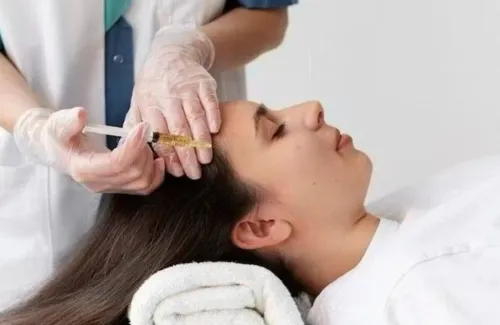
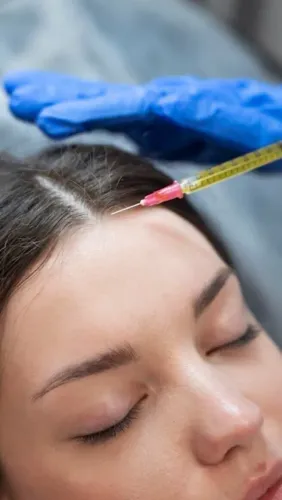
Blood is drawn into a sterile tube, processed by centrifugation or another separation method, and prepared for injection into mapped thinning areas. The clinician cleanses the scalp, applies local anaesthetic when appropriate, and places multiple injections at the planned depth; blood processing, numbing, and injection time vary by protocol.
The vial should be identifiable as platelet-rich plasma, not simply “concentrated plasma.” Ask how it compares with platelet-poor plasma (PPP), which may be removed or retained.
| Feature | What to compare | Why it matters |
|---|---|---|
| Platelet concentration | Measured concentration or count, not “high concentration” | Affects how much platelet material reaches the scalp |
| Final volume | Millilitres injected after processing | A smaller volume is not automatically more concentrated |
| Separation | Single or double centrifugation, or another named method | Processing changes the platelet and plasma content |
| Activation | No activation, calcium-based activation, or another documented method | Activation can alter release of platelet-derived factors |
| Injection depth | Intradermal or subcutaneous placement, with a stated technique | Depth changes where the product is delivered |
If you are comparing PRP hair treatment for options in Navi Mumbai, ask:
- Who draws the blood and who performs the injections?
- Is the tube single-use, and how are preparation surfaces and instruments kept sterile?
- Will you receive the preparation method, platelet concentration, final volume, and activation method in writing?
- Does the clinician map thinning areas before injection and document baseline photographs?
- What happens if the preparation contains mostly platelet-poor plasma or you show no response?
A protocol described only as “advanced” cannot be compared reliably with a documented one.
Build a PRP treatment plan with review points and measurable outcomes
A common starting pattern is three PRP sessions spaced about four weeks apart, followed by maintenance every three to six months. This is a practice pattern, not a universal standard; your plan must match the diagnosis, follicle viability, and preparation protocol.
1. Record the preparation method, including blood processing, platelet-rich versus platelet-poor plasma handling, activation, injection depth, and the person performing injections. State the initial session dates and maintenance policy before treatment begins.
2. Set a review date at three to six months after the initial series. Judge progress with photographs taken using the same lighting, camera angle, hair length, and parting; trichoscopy or a documented hair-count method provides stronger evidence than visual memory.
3. Separate reduced shedding from visible new growth. A fall in daily shedding can indicate improvement before density changes, while androgenetic alopecia may continue without maintenance. Do not judge success the next morning or count every fallen hair.
4. If shedding continues at review, reassess the diagnosis, medicines, nutrition, thyroid status, scalp inflammation, and adherence before simply adding sessions. Change the strategy to address the cause, or discuss minoxidil, medical treatment, scalp therapy, or transplant assessment when appropriate.
Expect tenderness, swelling, bruising, or a temporary headache after injections. Infection and prolonged inflammation need medical review. Tell the clinician about aspirin, anticoagulants, bleeding disorders, and active scalp infection; do not stop prescribed blood thinners without the prescribing clinician’s advice.
Choose between nonsurgical treatment and transplant based on the remaining follicles
PRP fits a nonsurgical plan when follicles are miniaturized but still present, as in early or moderate androgenetic alopecia. It cannot revive a destroyed follicle or create donor hair. Choose treatment according to diagnosis, medication risks, the need for continued use, and whether the scalp still contains viable follicles.
| Option | Main role | Ongoing use and cautions |
|---|---|---|
| PRP | Supports miniaturized native follicles | Often requires repeat sessions; evidence for native-hair thinning differs from evidence for graft survival |
| Topical minoxidil | Preserves or thickens existing hair | Benefit fades after stopping; scalp irritation and unwanted facial hair can occur |
| Medically supervised oral medicines | Treat pattern hair loss systemically | Continue under medical review; risks include sexual, hormonal, blood-pressure, or pregnancy-related concerns, depending on the medicine |
| Low-level light devices | Adjunct for some pattern hair loss | Requires regular use; response depends on device, diagnosis, and follicle viability |
| Scalp treatment | Treats dandruff, inflammation, infection, or dermatitis | Necessary when scalp disease drives shedding; PRP will not correct untreated inflammation |
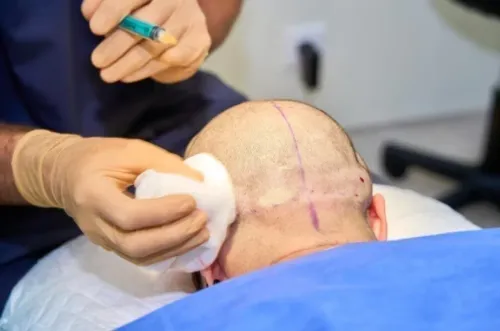
Surgical versus nonsurgical hair restoration involves different trade-offs. A transplant is invasive, requires donor and recipient healing, and adds hair over months; final density depends on donor density, hair calibre, scalp laxity, pattern stability, and bald-area size.
It redistributes follicles, usually from a more resistant donor region, so it cannot create a new supply or stop miniaturization in untreated native hair. A stable bald zone with adequate donor hair may justify surgery, while early diffuse thinning usually favours preservation and thickening.
PRP may accompany surgery, but claims about graft survival or final density must not be presented as proof of PRP for native-hair thinning. Medical maintenance may remain necessary after transplantation.
Use a consultation checklist before booking treatment in Navi Mumbai
A fixed session package is not a treatment plan. Use a PRP consultation in Navi Mumbai to test whether the proposed injections match your diagnosis, remaining follicles, and measurable goals.
1. Ask for the diagnosis and the examination findings. Request the scalp and trichoscopy results, including miniaturisation, inflammation, scaling, broken hairs, or scarring.
2. Confirm the baseline record: standardised photographs, hair-parting views, trichoscopy images, or a documented hair-count method. Ask when the same measurements will be repeated.
3. Ask how many sessions are planned, how far apart they will be, and when the first review will occur. Confirm the maintenance schedule and the change in plan if shedding continues or there is no response.
4. Ask whether the preparation retains or removes platelet-poor plasma, how platelet-rich plasma is separated and activated, and what injection depth and local anaesthetic the protocol uses.
5. Confirm who draws the blood and performs injections. Ask how sterile equipment, scalp cleansing, bruising, infection, prolonged inflammation, and follow-up are handled, plus the aftercare instructions.
6. Ask whether medicines, low-level light therapy, scalp treatment, or transplantation better fit your pattern and bald-area size. Tell the clinician about aspirin, anticoagulants, bleeding disorders, and active scalp infection; never stop a prescribed medicine without the prescribing clinician’s advice.
At SMART LOOK CLINIC, use these questions to test the proposed plan rather than treating a quoted session count or promotional result as evidence. The useful outcome is a diagnosis-linked plan with checkpoints.
Related services
PRP Therapy PRP Therapy (Platelet Rich Plasma) PRP Therapy (Platelet Rich Plasma) At Smart Look Clinic, Dr. Kiran Deshmukh offers advanced PRP Therapy, one of the most effective non-surgical... View service → |
PRP Loss still troubling you? Treat you hair loss with PRP Hair Treatment 𝐁𝐞𝐬𝐭 𝐒𝐮𝐜𝐜𝐞𝐬𝐬 𝐑𝐚𝐭𝐞 I 𝐀𝐟𝐟𝐨𝐫𝐝𝐚𝐛𝐥𝐞 𝐒𝐞𝐫𝐯𝐢𝐜𝐞𝐬 I... View service → |
Frequently asked questions
Who is a suitable candidate for PRP hair treatment?
People with early or moderate androgenetic alopecia are clearer candidates when miniaturized follicles remain. PRP cannot revive destroyed follicles or create a new donor supply.
What should you ask about the PRP vial?
Ask what the vial contains, how your blood was processed, and whether the injected material is your prepared platelet-rich plasma rather than an unspecified product.
How should you measure a PRP treatment plan?
Set review points before treatment and compare standardized photographs, shedding, hair density, and follicle changes over time.
How do you choose between PRP and a hair transplant?
Base the decision on the cause of loss, the condition of remaining follicles, and the available donor supply. PRP is nonsurgical; transplantation requires suitable donor follicles.
Related services
Laser Hair Growth Therapy At Smart Look Clinic, Dr. Kiran Deshmukh offers advanced Laser Hair Growth Therapy, a safe and non-invasive solution to stimulate hair regrowth and... View service → |
Beard & Moustache Transplant Beard & Moustache Transplant A thick, well-shaped beard and moustache are a symbol of style, masculinity, and confidence. At Smart Look Clinic, Dr. View service → |