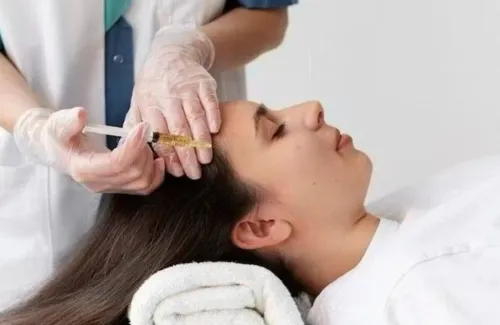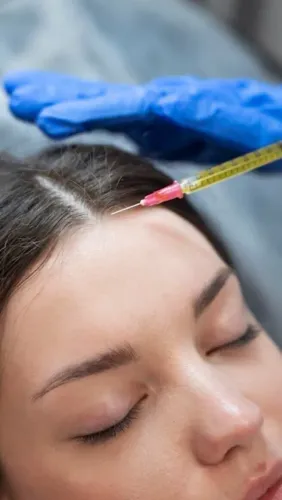
FUT can supply many grafts through one strip incision, but it also creates a linear donor scar and does not automatically provide the single-hair units or growth patterns that facial work demands. By the end, you will be able to compare FUT with FUE and other beard transplant options, identify the trade-offs that matter for your face and haircut, and prepare better questions for a surgeon.
Key takeaways
- FUT provides many grafts but leaves a linear donor-area scar.
- Choose FUT only when graft volume outweighs scar concerns.
- Compare FUT with FUE, body-hair grafts, and non-surgical options.
- Ask about graft count, hair direction, scarring, and expected density.
What FUT Involves When the Destination Is Your Face
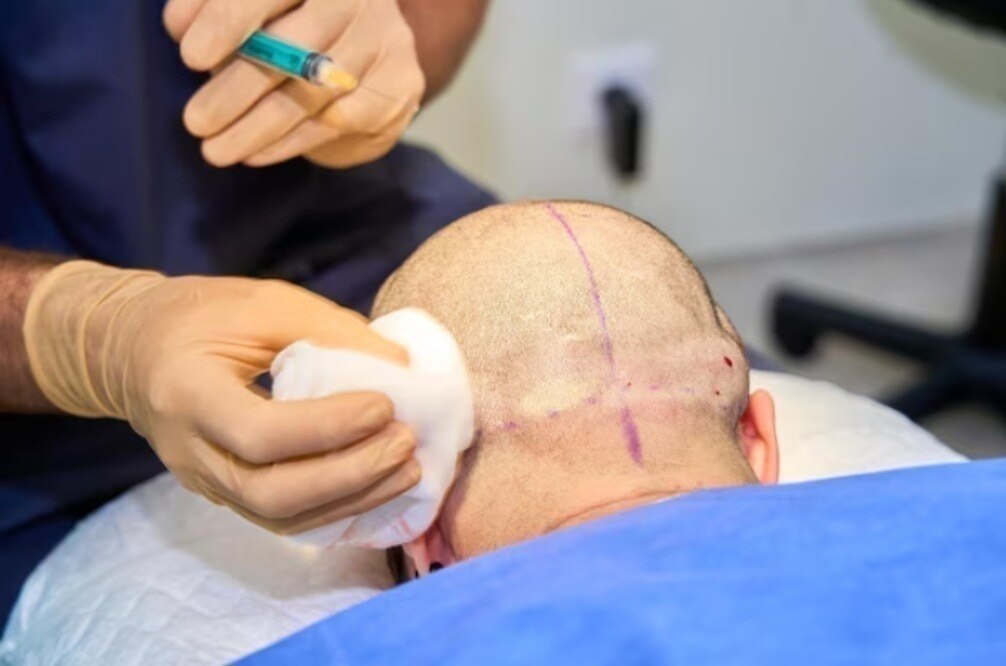
A FUT beard transplant starts with removal of a strip of donor scalp skin, usually from the back or sides of the head. The surgeon closes the donor wound, then separates the strip into follicular units under magnification before selecting suitable grafts for implantation into the beard or moustache.
Scalp units often contain two or more hairs, but moustache borders and many beard areas look most natural with predominantly one-hair units. Microscopic dissection can separate multi-hair units, although extra handling increases the risk of transection. The final match also depends on differences in hair calibre, curl, colour, growth speed, and follicular-unit composition.
Facial skin is thin and mobile, so recipient-site design cannot simply copy a scalp transplant. The surgeon must control:
- Depth: An excessively deep graft can become buried or contribute to cyst-like problems; a superficial graft can create a visible bump, dry out, or fail.
- Angle and direction: Moustache hairs need precise placement along the upper-lip border, while beard hairs require region-specific direction.
- Hair length: Transplanted scalp hair retains scalp-like growth characteristics, so it may grow faster or longer than native facial hair and require regular trimming.
Facial hair restoration with FUT is technically possible, but graft characteristics—not the strip alone—determine whether the result looks natural.
When the Strip-Harvest Advantage Justifies Its Scar
FUT for beard and moustache restoration is worth considering when you need many grafts and have a dense, stable donor area with enough scalp looseness for safe closure. A FUT beard transplant can remove one strip and produce a substantial graft supply for extensive beard loss, major scar camouflage, or staged reconstruction.
FUT makes more sense when:
- The treatment covers a large facial area rather than one small defect.
- Donor density is high, with little miniaturisation and strong long-term stability.
- You accept a linear scalp scar in exchange for efficient harvesting.
- Your preferred hairstyle leaves enough length to conceal that scar.
The trade-off is scar pattern: FUT leaves one linear mark, while FUE leaves many small circular marks. The FUT scar becomes easier to see with very short hair, tight scalp skin, limited donor laxity, low donor density, or a personal history of poor scarring.
If you need only a targeted moustache repair or a small cheek gap, strip removal and closure can be disproportionate to the result.
A strip is not automatically a supply of ideal facial-hair grafts. Scalp follicular units often contain two or more hairs, while moustache borders and many beard areas need predominantly single-hair units. Separating multi-hair grafts under magnification adds handling and transection risk, so FUT is technically possible, not automatically preferable.
FUT, FUE, and the Other Ways to Restore Facial Hair
FUT, FUE, and non-surgical approaches solve different facial-hair problems. FUT removes one scalp strip, separates it into follicular units under magnification, and can supply many grafts efficiently; FUE extracts units individually, leaving scattered circular marks and allowing precise harvesting for small areas.
| Option | Main advantage | Main trade-off or best use |
|---|---|---|
| FUT | High graft yield from one incision | Linear scar and wound closure; better suited to extensive loss |
| FUE from scalp | Selective harvesting for targeted areas | Many small circular marks; useful for moustache repairs or cheek gaps |
| Beard or neck donor hair | Texture and calibre may resemble facial hair more closely | Requires adequate, stable donor density |
| Camouflage or medical treatment | Avoids surgery | Useful when donor supply is poor, skin disease is active, or a credible match is unlikely |
Both surgical methods can cause swelling, crusting, temporary shedding, and several months of waiting before regrowth becomes visible. Shaving visibility depends on the scar pattern and how short you wear your hair: a linear FUT scar can show clearly with a close cut, while FUE marks are dispersed.
Staged restoration can protect facial blood supply and improve control over density, especially in scarred skin or larger reconstructions. Scar camouflage, cosmetic fibres, temporary makeup, and styling may make more sense than surgery when coverage is limited.
Treat active acne, infection, inflammatory scalp disease, or another underlying cause before choosing grafts; adding hair without addressing the condition can produce poor growth or recurring loss.
How a Surgeon Decides Between Moustache and Beard Reconstruction
The surgeon decides between moustache and beard reconstruction by matching the cause, donor supply, skin condition, and design demands to the area being rebuilt.
Start by identifying whether sparse growth comes from congenital thinness, alopecia, a burn, a cleft-related defect, trauma, or a scar. Confirm that the pattern is stable, then measure donor density, miniaturisation, hair calibre, curl, colour, and long-term stability. Inspect acne, infection, inflammatory skin disease, previous scars, and any history of hypertrophic or keloid scarring.
Scar tissue has poorer blood supply, so it may need conservative or staged grafting and a lower expected yield. Estimate the graft count before choosing FUT.
Moustache restoration surgery requires the tightest design control. Around the philtrum, upper-lip border, and lateral moustache, each graft must follow the local direction and shallow angle; a wrong azimuth can create bristly, conspicuous hairs. Cheeks, jawline, and chin need different spacing, density, and directional planning.
Ask these questions before proceeding:
- Will visible borders use mostly single-hair units?
- How will the surgeon prevent excessive density or an artificial hairline?
- What donor hair will be used, and will its texture, colour, curl, or growth speed match native facial hair?
- How will scar tissue affect graft survival and staging?
- What is the plan if growth is patchy, or transplanted hair does not match the surrounding beard?
The Questions That Should Decide Whether You Proceed
Proceed only when the proposed graft yield solves a substantial facial-hair need and the scar, donor limits, and design trade-offs fit your priorities. FUT is not automatically better or worse than FUE; the correct choice depends on the pattern you want restored.
| Option | Donor approach | Main advantage | Main drawback |
|---|---|---|---|
| FUT | One scalp strip; linear scar | Efficient harvest for many grafts | Scar visibility with short hair |
| FUE | Individual follicle extraction; scattered marks | Useful for targeted areas | May require longer harvesting for large sessions |
| Beard or neck donor | Selected facial-hair follicles | Potentially closer texture match | Density and suitability may limit supply |
Ask these questions before agreeing:
- Where will the donor hair come from, and is that area likely to miniaturise?
- How many grafts are planned, and what percentage will be single-hair units?
- Will FUT leave a visible linear scar at your preferred haircut length?
- Can you see the planned moustache border, beard outline, angles, spacing, and directions?
- What recovery should you expect, including swelling, crusting, and temporary shedding?
- When should shedding end, visible regrowth begin, and final assessment occur?
- Could you need staged sessions for density, asymmetry, or scar camouflage?
- How will the surgeon manage poor growth, folliculitis, ingrown hairs, cysts, unnatural direction, or asymmetry?
A consultation with SMART LOOK CLINIC can help compare strip harvesting, FUE, beard or neck donor hair, staged treatment, and non-surgical camouflage for your pattern.
Related service
Beard & Moustache Transplant Beard & Moustache Transplant A thick, well-shaped beard and moustache are a symbol of style, masculinity, and confidence. At Smart Look Clinic, Dr. View service → |
Frequently asked questions
What does a FUT beard transplant involve?
A surgeon removes a strip of donor scalp skin, closes the wound, separates the strip into follicular units, and implants selected grafts into the beard or moustache area.
When is FUT worth considering for facial hair restoration?
FUT is worth considering when you need a larger graft supply and accept the linear donor-area scar in exchange for efficient strip harvesting.
How does FUT compare with FUE for beard and moustache restoration?
FUT removes a strip and leaves a linear scar, while FUE extracts individual follicular units and leaves small scattered extraction marks. The better option depends on graft needs, donor hair, hairstyles, and scar tolerance.
What should you ask before choosing moustache restoration surgery?
Ask about the recommended graft count, donor-area scar, planned hair direction and angle, expected density, alternative beard transplant options, and the surgeon’s plan for protecting existing facial hair.