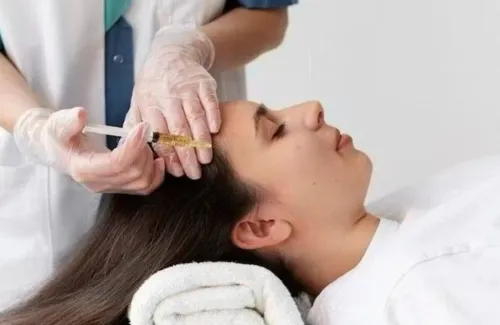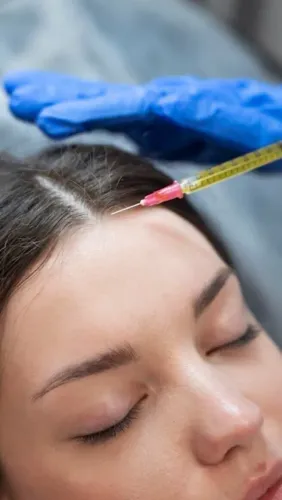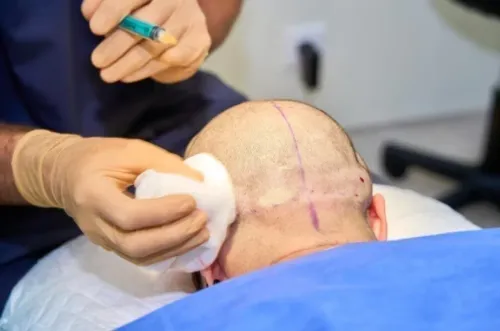
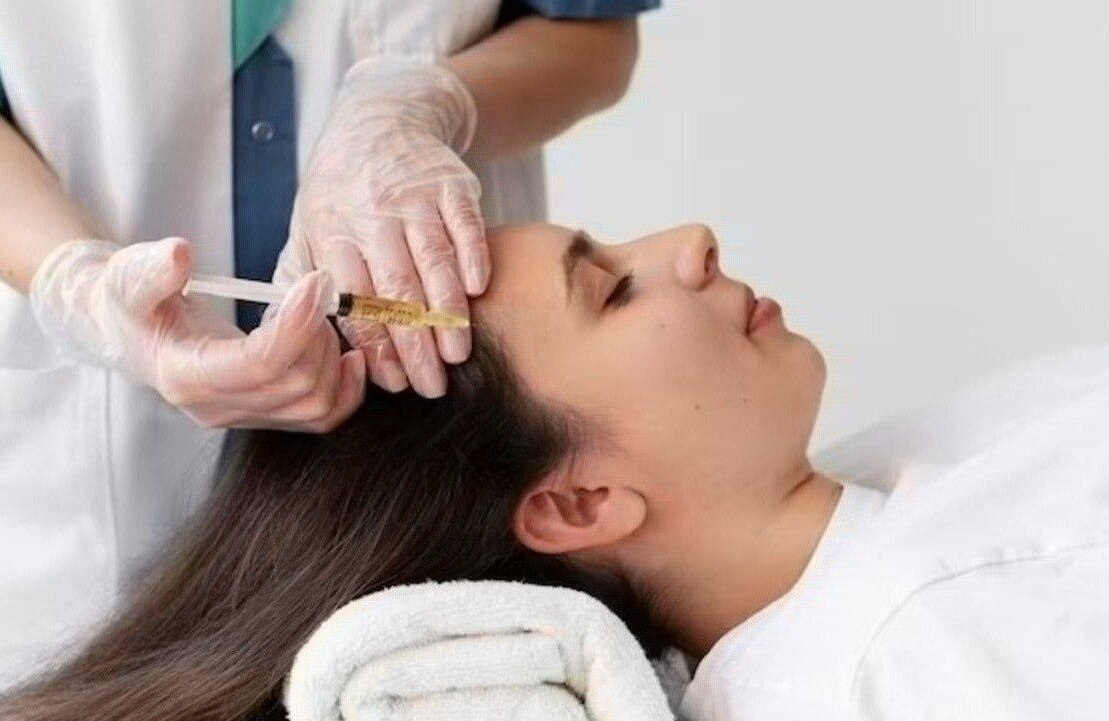
After a transplant, PRP is used to address specific concerns such as ongoing miniaturisation in native hair, not as an automatic lifelong requirement for moved grafts. You will be able to match a maintenance plan to the actual cause of hair loss, assess progress over the correct timeframe, and compare clinics safely.
Key takeaways
- PRP mainly supports vulnerable native hair, not transplanted grafts.
- Schedule maintenance sessions from your surgeon’s assessment, not a fixed calendar.
- Compare hair-regrowth clinics near you by medical oversight and safety checks.
- Track shedding, density, photos, and scalp symptoms before judging results.
What is PRP maintaining after a hair transplant?
PRP after hair restoration is an adjunct, not a lifelong requirement for transplanted grafts. Its maintenance role is mainly to support vulnerable, non-transplanted native hair that continues to miniaturise from androgenetic alopecia. A transplanted follicle is not automatically dependent on repeated injections because it was moved.
Before booking, identify the problem the proposed treatment is meant to maintain:
- Ongoing thinning in native hair, where PRP may complement established medical treatment but does not replace it.
- Postoperative shedding, which can occur after transplantation and does not prove graft failure. PRP cannot guarantee graft survival or prevent the normal delay before new growth appears.
- Poor density after growth has matured, which requires examination rather than an automatic injection plan.
- A scalp condition such as infection, inflammation, or scarring, which needs diagnosis and targeted treatment instead of routine PRP.
The phrase prp hair treatment maintenance after hair for restoration in navi mumbai should lead to a clinical assessment, not a fixed package. Sudden diffuse shedding, patchy bald areas, scaling, pain, redness, or scarring need medical review first. PRP cannot reliably reverse scarring alopecia or treat an active scalp infection.
Newly transplanted hairs often shed and can take several months to re-emerge. Growth continues to mature for about 9–12 months, so PRP should not be used to judge graft results before that timeline has been considered.
When should PRP maintenance sessions take place?
A three-month appointment is a protocol choice, not a universal rule. PRP maintenance sessions in navi mumbai should be timed according to the problem being treated: continuing miniaturisation of native hair, postoperative shedding, slow density improvement, or a diagnosed scalp condition.
- Confirm the target before booking. Ask whether the session is intended for native-hair loss, transplanted-area support, or another scalp problem. Sudden diffuse shedding, patchy loss, scaling, inflammation, or scarring needs diagnosis before routine PRP.
- Separate shedding from failed growth. Transplanted hairs can shed after surgery, then remain quiet for several months before re-emerging. PRP does not guarantee graft survival or remove this normal delay.
- Use the maturation window when judging timing. Hair growth and calibre can continue improving for about 9–12 months after restoration, so early thinness does not automatically justify more frequent injections.
- Compare the proposed interval with the protocol. Published approaches often use about three sessions one month apart, followed by maintenance every 3–6 months or every 6–12 months. These ranges are protocol-dependent, not an established standard.
- Reassess before repeating. Compare photographs, density, hair calibre, shedding pattern, and scalp findings rather than booking indefinitely. Ongoing native-hair miniaturisation may need established medical treatment alongside or instead of PRP.
A clinic recommending “hair regrowth maintenance near me” should explain why its interval fits your diagnosis and recovery stage. Different platelet preparations and injection methods also prevent one schedule from applying to everyone.
How can you tell whether PRP is working?
To judge PRP after hair restoration, establish a baseline before treatment. Record hair density and hair caliber with consistent photographs and, when available, trichoscopy. Keep lighting, camera distance, hair length, parting, and hairstyle consistent at every review.
Compare the same scalp zones at three to six months or later, not after a few days. Follicles grow slowly, while early fullness can come from injection-related swelling, temporary hair-cycle effects, or easier styling.
| Finding | What it may indicate | How to check |
|---|---|---|
| More visible scalp coverage | Possible density improvement | Compare the same parted area under fixed lighting |
| Thicker-looking strands | Possible caliber improvement | Use trichoscopy or magnified images, not appearance alone |
| Fullness soon after injection | Swelling or styling effect | Reassess after swelling has settled and hair is washed normally |
| Different-looking photographs | Position, light, hair length, or parting change | Repeat images with identical settings |
A clinic should show measurements rather than rely on “it looks better.” Ask whether the comparison concerns transplanted grafts, native-hair miniaturization, or postoperative shedding; each produces a different result.
Current evidence supports possible gains in density or thickness, but small studies use different platelet concentrations, activators, injection depths, session numbers, and outcome measures. Research does not establish one superior PRP preparation or maintenance interval, so a promised result without documented measurements is not proof that treatment is working.
What safety checks should happen before each session?
Before each session, a qualified registered medical practitioner should confirm that PRP matches the problem being treated and that you are fit for blood collection and scalp injections. This matters after a transplant: autologous blood is not risk-free, and platelet or clotting problems can change the plan.
Before booking PRP maintenance sessions in Navi Mumbai, ask the clinician to review:
- Any platelet disorder, thrombocytopenia, clotting disorder, severe anaemia, or active scalp infection.
- Every medicine and supplement, especially aspirin, clopidogrel, warfarin, apixaban, and anti-inflammatory painkillers. Do not stop prescribed treatment without the prescriber’s advice.
- Fever, open wounds, dermatitis flare, recent illness, allergies, and previous reactions to injections.
- Whether you should eat, hydrate, wash your scalp, avoid alcohol, or pause topical products. Do not assume fasting or medication changes are necessary.
| Symptom | Expected after treatment | Contact the clinic when |
|---|---|---|
| Injection pain or tenderness | Mild discomfort that settles | Pain worsens, persists, or limits normal activity |
| Redness, swelling, or bruising | Local changes around injection sites | Redness spreads, swelling increases, or the area feels hot |
| Headache | Mild and short-lived | Severe, persistent, or accompanied by vomiting |
| Fever, pus, or increasing pain | Not expected | Seek prompt medical review; breathing difficulty requires urgent care |
How do you choose a hair-regrowth clinic near you in Navi Mumbai?
Distance is not a quality measure for hair-regrowth maintenance near me in Navi Mumbai. Compare clinics on diagnosis, practitioner responsibility, PRP protocol, and measurable follow-up rather than convenience or advertised success rates.
| Provider check | What to verify | Warning sign |
|---|---|---|
| Diagnosing practitioner | A qualified, registered medical practitioner examines you and identifies native-hair miniaturisation, postoperative shedding, infection, scarring, or another cause | PRP is recommended without scalp assessment |
| Performing practitioner | Ask who takes the blood, prepares the sample, and injects it | Staff cannot name the treating practitioner |
| PRP preparation | Confirm centrifuge method, platelet concentration target, activator use, injection depth, and session plan | “Advanced PRP” is the only protocol detail |
| Outcome tracking | Baseline photographs, hair-calibre or density assessment, and reviews at roughly 3–6 months or later | Immediate fullness is presented as regrowth |
| Native-hair plan | Discuss established treatment for androgenetic alopecia alongside PRP | PRP is offered as the only long-term option |
PRP is an adjunct after transplantation, not a lifelong requirement for moved follicles. It cannot reliably treat scarring alopecia or active infection, and sudden diffuse shedding, patchy loss, scaling, inflammation, or scarring needs diagnosis first.
- Which practitioner will diagnose me and perform every injection?
- What problem is this schedule treating, and what evidence supports the interval?
- How will you record baseline density, hair calibre, and photographs?
- What medical treatments or investigations will you discuss for continuing native-hair loss?
- What result would make you stop PRP rather than continue maintenance sessions?
Frequently asked questions
What does PRP maintain after a hair transplant?
PRP is mainly used to support non-transplanted native hair that continues to miniaturise from androgenetic alopecia. Transplanted follicles are not automatically dependent on repeated PRP injections.
When should PRP maintenance sessions take place in Navi Mumbai?
Set the timing with your hair-transplant surgeon after reviewing healing, shedding, native-hair loss, and treatment response. Do not follow a fixed schedule without an assessment.
How can you tell whether PRP is working?
Compare standardised scalp photographs, hair shedding, visible density, hair calibre, and scalp symptoms over time. Use the same lighting, angle, and hair length for each comparison.
What safety checks should happen before each PRP session?
The clinic should review your medical history, medicines, scalp condition, infection or inflammation, bleeding risk, and changes since the previous session before drawing blood or injecting.
How do you choose a hair-regrowth clinic near you in Navi Mumbai?
Choose a clinic with qualified medical oversight, a documented consultation, sterile injection practice, clear aftercare, transparent session planning, and follow-up that measures your response.