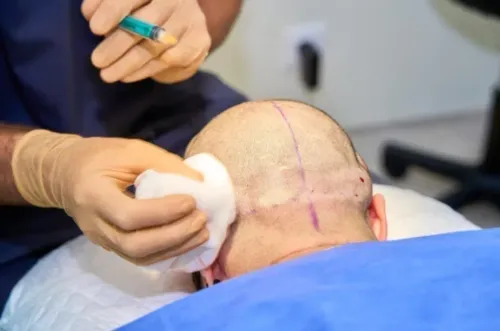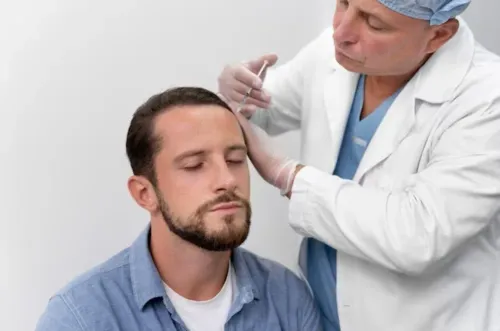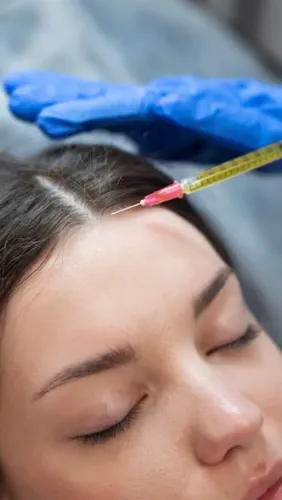

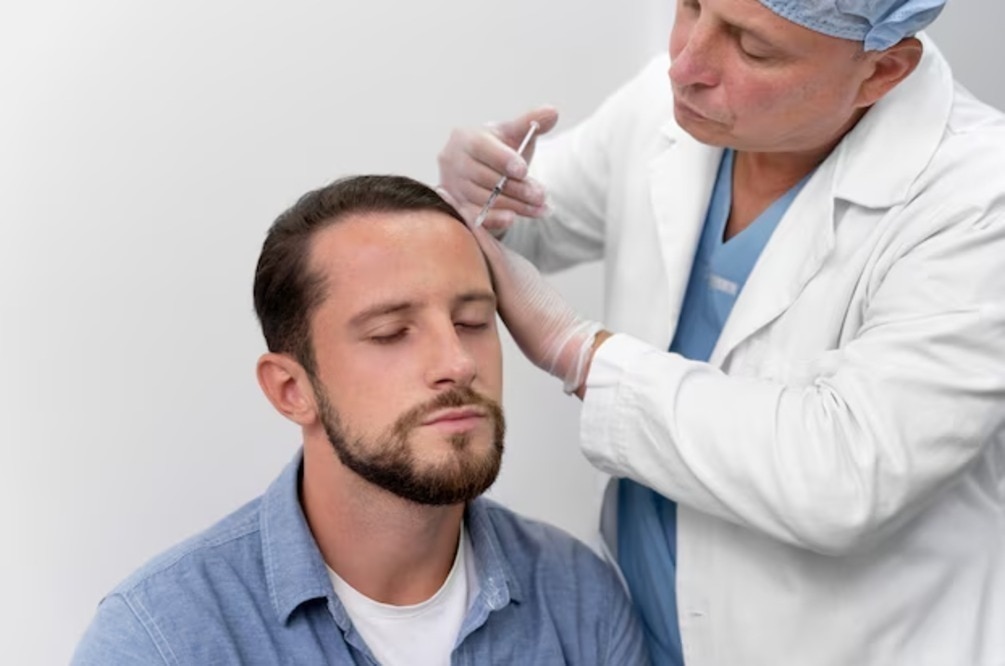
PRP can be injected into the beard area by a qualified hair transplant surgeon, but it does not add new follicles the way a beard transplant does. You will be able to distinguish suitable PRP candidates from people who need diagnosis or follicular-unit transplantation, compare treatment protocols, and prepare safer questions for a consultation.
Key takeaways
- PRP supports existing beard follicles; it cannot fill completely bare skin.
- Ask whether patchiness comes from alopecia areata, scarring, hormones, or naturally sparse growth.
- Compare platelet concentration, injection sites, session spacing, costs, and before-and-after evidence.
- Choose a beard transplant when you need permanent follicle placement in bare areas.
Can PRP actually improve beard growth?
Yes, a hair transplant surgeon can technically provide PRP for beard growth. The clinician draws your blood, centrifuges it, and injects the platelet-containing plasma into selected facial areas. PRP is an injection treatment intended to support existing follicles; it does not move follicles into bare skin.
| Treatment | What it does | Main limitation |
|---|---|---|
| PRP | Injects processed blood plasma around existing beard follicles | Cannot reliably create follicles where none exist |
| Beard transplant | Relocates living follicles from a donor area into the beard | Requires surgery and adequate donor supply |
Beard-specific evidence remains limited to small studies, case reports, and extrapolation from research on scalp androgenetic alopecia. No firmly established beard-growth protocol defines a fixed success rate, dose, platelet concentration, or session schedule, so an advertised result needs a stated protocol and a measured endpoint.
The phrase prp hair treatment from hair transplant surgeon for beard growth describes a treatment option to assess, not proof that new follicles will appear in naturally bare or permanently scarred skin.
If facial hair is absent because follicles were destroyed by scarring, PRP cannot replace them; follicular-unit beard transplantation addresses that different problem by adding living follicles.
What must a beard restoration consultation diagnose first?
Patchiness must be diagnosed before PRP because the same appearance can reflect inflammation, infection, autoimmune hair loss, or follicles that no longer exist. A beard restoration consultation should record the pattern, duration, progression, symptoms, previous treatments, medicines, and relevant medical history before selecting an injection.
| Condition | Clues | Why it changes the choice |
|---|---|---|
| Alopecia areata barbae | Sharply defined, smooth patches | This autoimmune condition is not automatically treated first with PRP; extent, duration, relapses, and examination findings guide treatment. |
| Fungal infection | Scaling, broken hairs, or affected skin | Infection needs diagnosis and antifungal treatment; injecting an active infection is the wrong starting point. |
| Bacterial folliculitis | Pustules, redness, tenderness, or inflammation | Treat the follicular infection and inflammation before considering a growth-support procedure. |
| Permanent follicle loss | Smooth scarred skin after trauma or traction | PRP cannot reliably create follicles destroyed by scarring; transplantation may be the relevant option. |
Low beard density does not automatically mean androgen deficiency. Medication effects, and less common endocrine or nutritional disease, also belong in the assessment. Ask the clinician to compare:
- Observation when the pattern is stable or diagnosis remains uncertain.
- Treatment of an underlying disorder when infection, inflammation, medication effects, or systemic disease is found.
- Topical or injected medicines when appropriate, based on the diagnosis.
- PRP as an option rather than a guaranteed first-line treatment.
- Beard transplantation when follicles are absent or permanently destroyed.
How can you compare PRP protocols and realistic results?
Two clinics advertising PRP are not necessarily offering the same procedure. For anyone comparing prp for beard growth in nashik, the city does not define the treatment: blood-processing systems differ, so “PRP works” is incomplete without a written protocol and a measured endpoint.
| Variable | Protocol option 1 | Protocol option 2 |
|---|---|---|
| Processing | Single-spin | Double-spin |
| White-cell content | Leukocyte-rich plasma | Leukocyte-poor plasma |
| Platelet result | Measured concentration reported in the record | Concentration not measured or not disclosed |
| Activation | Calcium chloride or another stated activator | No activation or method not disclosed |
| Injection technique | Stated volume and injection depth | Volume or depth omitted |
| Treatment schedule | Defined number of sessions and interval | “As needed” sessions |
Ask for a plan that answers these questions:
- How will density or hair caliber be measured, and will the same lighting, camera distance, and facial angle be used?
- When will baseline and follow-up photographs be taken?
- How many sessions are proposed, and how many weeks separate them?
- Is maintenance expected, and what is the total cost including follow-up?
- What happens if no improvement appears after the planned course?
PRP cannot reliably create follicles where none exist or where scarring has permanently destroyed them. A visible increase in density must be distinguished from thicker existing hairs, improved photographs, or temporary growth; without that distinction, advertised results cannot be compared fairly.
When is a beard transplant a better fit than PRP?
If a beard area is naturally sparse or its follicles were permanently destroyed by scarring, follicular-unit beard transplantation is the established surgical method for adding follicles. PRP supports existing follicles; it cannot reliably create follicles in bare or scarred skin.
| Option | What it does | Best fit |
|---|---|---|
| PRP | Injects platelet-containing plasma from your blood around existing follicles | Selected cases with viable, weak-growing follicles |
| Beard transplant | Moves living follicles from a donor area into the beard | Stable areas that lack sufficient follicles |
A hair transplant surgeon’s beard consultation should establish whether scalp donor hair is available and how its limited supply will constrain beard design. It should also assess whether donor hair caliber and curl match the intended beard pattern.
Ask about these surgical trade-offs before consenting:
- Transplanted scalp hair can retain scalp-like growth characteristics, so you may need regular trimming.
- Graft survival is not guaranteed, leaving uneven density or requiring another procedure.
- Incorrect placement can create an unnatural growth direction.
- Folliculitis can develop around transplanted follicles.
- Extraction or implantation can leave visible scarring.
- Additional procedures may be needed to refine density, symmetry, or direction.
PRP can serve as an adjunct in selected situations, including around existing follicles or after treatment chosen by the clinician. It is not a substitute for moving follicles into an area that lacks them.
A beard consultation should therefore compare observation, treatment of an underlying condition, PRP, and transplantation rather than treating every patch as a transplant candidate.
How should you vet a clinic offering facial PRP in Nashik?
A safe choice for PRP hair treatment in nashik starts with the clinician, not the advertised package or city label.
1. Verify the clinician’s medical registration and relevant training in injections, hair disorders, and facial anatomy. Ask who will draw your blood and who will inject the PRP; do not assume the advertised hair transplant surgeon performs every step.
2. Confirm that the diagnosis follows a facial examination. The clinician should assess beard pattern, skin, follicles, scarring, scaling, pustules, and broken hairs rather than move directly from a sales script to a session.
3. Give a complete medical history before treatment. Discuss anticoagulant or antiplatelet medicines, bleeding or platelet disorders, anemia, active infection, immune problems, and dermatologic disease. Never stop a prescribed medicine without advice from the clinician who prescribed it.
4. Ask what to expect after injection: pain, tenderness, redness, swelling, and bruising are common short-term effects. Ask how the clinic handles infection, prolonged inflammation, bleeding, or injury to nearby facial structures, and what symptoms require urgent review.
5. Compare Smart Look Clinic with another provider using documents, not reputation alone. Ask both for the written PRP protocol, treatment endpoint, alternatives, follow-up plan, number and timing of sessions, maintenance expectations, and total cost.
A plan for prp for beard growth in nashik is incomplete if it does not state what happens when improvement does not appear.
Frequently asked questions
Can PRP actually improve beard growth?
PRP may support weak or miniaturised existing beard follicles, but it cannot create follicles in completely bare skin.
What must a beard restoration consultation diagnose first?
The consultation should assess follicle density and rule out alopecia areata, scarring, infection, hormonal causes, and other scalp or skin conditions.
How can you compare PRP protocols and realistic results?
Compare the platelet preparation, injection technique, treatment schedule, total cost, side effects, and time-stamped before-and-after photos.
When is a beard transplant a better fit than PRP?
A beard transplant suits stable bare areas that lack usable follicles and need permanent placement of donor hairs.
How should you vet a clinic offering facial PRP in Nashik?
Ask who performs the injections, how blood samples are processed, which sterile supplies are used, how complications are handled, and whether results show comparable beard cases.