
PRP can support treatment for selected types of hair loss, but it is not a universal remedy for dandruff, infection, psoriasis, or scalp inflammation. By the end, you will know which diagnoses make PRP worth discussing, what a proper evaluation involves, and which questions to ask before paying for a treatment series or combining it with transplantation.
Key takeaways
- Confirm the hair-loss diagnosis before agreeing to PRP injections.
- PRP has stronger evidence for pattern hair loss than scalp discomfort.
- Compare PRP with medicines, observation, and transplantation—not in isolation.
- Ask about risks, treatment sessions, expected results, and maintenance.
When is PRP appropriate for a scalp problem?
PRP can be reasonable for selected follicle-related hair-loss diagnoses, but the diagnosis must come before the injection. A hair transplant surgeon may use PRP for scalp problems as an adjunct, with the strongest research involving androgenetic, or pattern, alopecia—not every cause of shedding or scalp discomfort.
| Goal or finding | What it means | Is PRP the usual starting point? |
|---|---|---|
| Hair density | Pattern thinning with viable follicles | Discuss as an adjunct after diagnosis |
| Itch or scale | Possible dermatitis, psoriasis, or another inflammatory condition | Identify and treat the cause first |
| Pain, redness, or pustules | Possible infection or active folliculitis | Injection may be inappropriate until controlled |
| Sudden shedding | Could reflect illness, medication, nutritional deficiency, or another trigger | Investigate the cause before PRP |
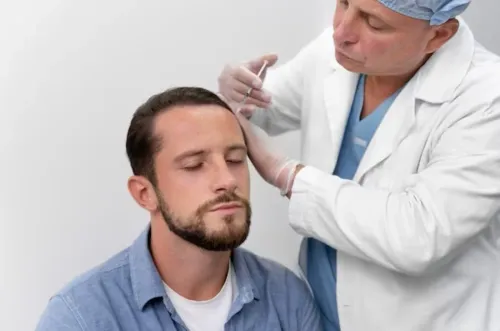
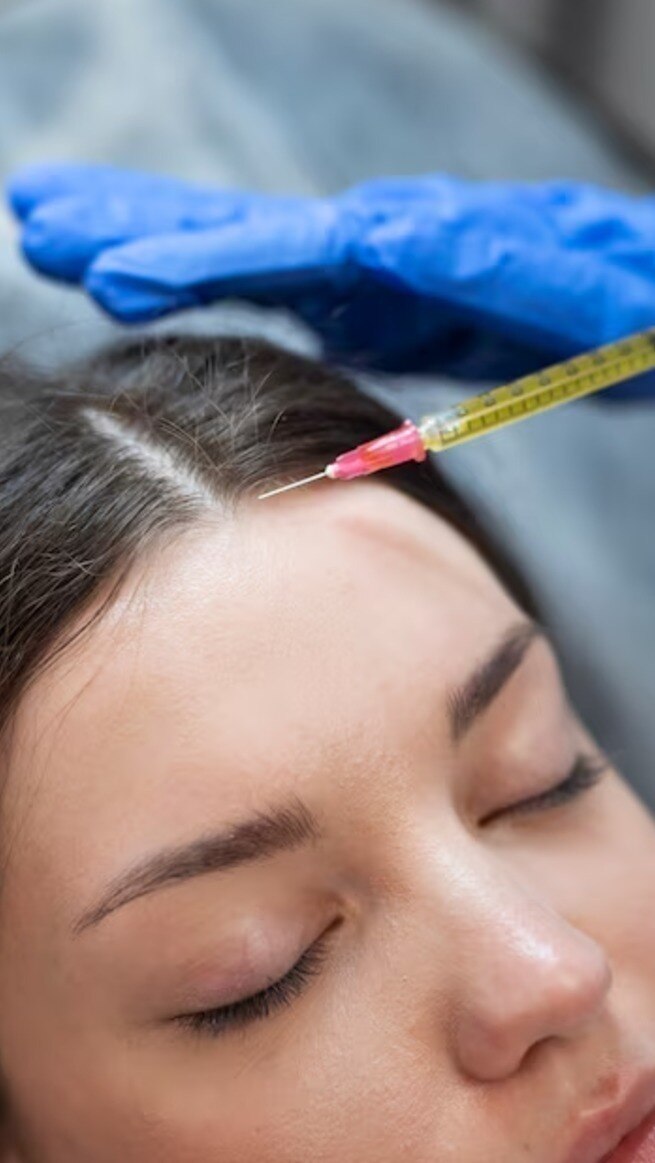
PRP is made from your blood: a sample is processed to concentrate platelets, then injected into the scalp. Systems differ in platelet concentration, leukocyte content, activation method, injection depth, dose, and treatment interval, so evidence from one preparation or schedule cannot automatically be applied to another clinic’s protocol.
Ask which diagnosis is being treated, what hair-density outcome will be measured, and why PRP fits that diagnosis. It is usually an adjunct rather than an automatic replacement for minoxidil, finasteride, dutasteride, or treatment of an underlying medical cause. A rash, pustular process, active inflammation, or unexplained rapid shedding needs evaluation before any injection.
What does PRP for scalp health actually treat?
PRP for scalp health mainly targets hair outcomes, not scalp disease. Studies usually measure hair counts or density in selected patients with androgenetic, or pattern, alopecia; they do not prove that PRP treats every cause of itch, scale, redness, pain, or sudden shedding.
| Target | What studies usually measure | What PRP does not do |
|---|---|---|
| Pattern alopecia | Hair count or density | Does not create new donor follicles |
| Seborrheic dermatitis, psoriasis, or contact dermatitis | Symptoms and inflammation | Does not remove an allergen or control autoimmune inflammation |
| Tinea capitis or bacterial folliculitis | Infection and pustules | Does not eradicate fungus or bacteria |
| Alopecia areata | Possible hair regrowth | Small studies do not establish PRP as a replacement for established therapy |
Alopecia areata needs particular caution. Limited studies suggest possible benefit, but extensive, rapidly changing, or atypical loss still requires evaluation and condition-specific treatment rather than PRP alone.
Do not inject through an active rash, pustular process, suspected infection, or unexplained inflammation. Treat the scalp problem first, then reconsider whether PRP has a defined role. Pain or barrier damage also needs a diagnosis; improving hair density will not repair the cause.
A clinician should identify the condition and state the measurable goal before calling an injection “PRP for scalp health.”
How should PRP be compared with medicines and hair transplantation?
PRP should not automatically replace minoxidil, finasteride, dutasteride, or treatment for an underlying medical cause. Randomized trials and meta-analyses in pattern hair loss generally report higher hair density or hair counts than baseline or placebo, but results vary widely. They do not establish one superior PRP preparation or treatment schedule.
| Option | What it offers | Limits and decision points |
|---|---|---|
| PRP | An adjunct for selected pattern-loss patients with viable, miniaturized follicles | It cannot create donor supply or reliably restore a completely bald, scarred, or biologically inactive area; compare sessions, maintenance, time and total cost |
| Minoxidil | A medicine used to support existing follicles | Benefits require continued use, and response varies; discuss it in the PRP versus scalp treatment comparison |
| Finasteride or dutasteride | Medicines that address androgen-driven pattern loss | Suitability, adverse effects and monitoring require a clinician’s review; PRP is not an automatic substitute |
| Underlying-cause treatment | Management of a medical trigger identified by diagnosis | PRP cannot correct the cause; treating it takes priority |
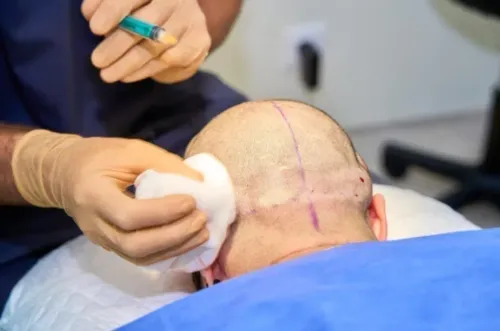
| Hair transplantation | Redistribution of follicles from a stable donor area | It cannot succeed without donor planning and appropriate recipient tissue; PRP around surgery has not been proven to guarantee graft survival or final density |
For transplantation, judge the fundamentals before any perioperative PRP claim: accurate diagnosis, stable donor planning, atraumatic graft handling, recipient-site design and postoperative care. Choose among options by diagnosis, available follicles, loss stability, coverage goal, time to visible change, maintenance burden and total cost—not by a promise of a fixed number of new hairs.
What should happen during a hair restoration surgeon scalp consultation?
A hair restoration surgeon scalp consultation should decide whether the problem calls for PRP, medical treatment, transplantation, or referral—not start with an injection. The clinician should assess the pattern and speed of loss, scalp symptoms, family history, medication use, donor density, and recipient-area condition.
Dermoscopy or trichoscopy can reveal miniaturised hairs, broken hairs, pustules, scaling, and follicular openings that are hard to judge by eye. If scarring is suspected or the diagnosis remains uncertain, one or more scalp biopsies may be necessary.
Pattern loss must be separated from inflammatory or scarring alopecia. Active inflammation can permanently destroy follicles, cause transplant failure, or worsen after surgery, so undiagnosed rash, pustules, sudden shedding, or rapidly progressive loss requires diagnosis or referral before transplantation.
- Ask: “What diagnosis are you treating?” PRP suits selected follicle-related loss; medicines or referral may better address a medical, inflammatory, or infectious cause.
- Ask: “What measurable outcome will you track?” Agree on hair counts, density photographs, shedding, or symptom change.
- Ask: “How many sessions, at what interval, and when will response be judged?” Record the schedule before treatment.
- Ask: “What maintenance is expected?” PRP is not automatically a replacement for minoxidil, finasteride, dutasteride, or cause-specific care.
Review platelet disorders, significant anemia, injection-site infection, bleeding risk, anticoagulant or antiplatelet medicines, immune status, and relevant medications because they can change safety or timing. In Nashik, SMART LOOK CLINIC is one setting where this diagnosis-first discussion can guide treatment without assuming every patient needs PRP or transplantation.
What risks, results, and commitments should you confirm before PRP?
One PRP injection is not a permanent restoration. Before booking, confirm what improvement is expected, how it will be measured, and what happens if the response is poor.
Scalp PRP commonly causes needle pain, tenderness, swelling, redness, bruising, or a headache for a short time. Less common risks include infection, bleeding, nerve or blood-vessel injury, and persistent pain.
The platelet material comes from your own blood, so allergy to the platelets themselves is less concerning; additives and topical anaesthetics create separate allergy or irritation risks.
Ask the clinician to specify:
- The exact preparation: blood volume, centrifuge system, platelet and leukocyte concentration, activation method, and whether additives are used.
- The injection protocol: dose, injection depth, number of sites, anaesthetic used, and aftercare instructions.
- The treatment plan: number of sessions, interval between sessions, and the earliest time at which response will be judged.
- The commitment: optional maintenance sessions, monitoring photographs or hair counts, and the total cost of the full plan.
Do not accept “PRP” as a sufficient description; protocols differ, so results from one system cannot be assumed for another. Delay treatment until an active rash, pustules, infection, or unexplained inflammation has been diagnosed and addressed.
Proceed only when the diagnosis is clear, the target outcome is measurable, and the expected benefit is realistic. Never use PRP or transplantation to conceal a rash, sudden shedding, or rapidly progressive loss.
Frequently asked questions
When is PRP appropriate for a scalp problem?
PRP is most relevant after a diagnosis of follicle-related hair loss, especially androgenetic or pattern alopecia. It is not a universal treatment for scalp itching, infection, scarring, or unexplained shedding.
What does PRP for scalp health actually treat?
PRP for scalp health is used as an adjunct for selected hair-loss conditions. It does not directly treat every cause of scalp discomfort or replace treatment for infection, inflammation, or scarring.
How should PRP be compared with medicines and hair transplantation?
Compare PRP with medicines and transplantation by diagnosis, evidence, cost, number of sessions, maintenance, recovery, and the amount of permanent hair loss. Medicines may help preserve existing hair, while transplantation redistributes donor follicles.
What should happen during a hair restoration surgeon scalp consultation?
A hair restoration surgeon should review your history, examine the scalp and donor area, identify the likely diagnosis, discuss alternatives, and explain whether tests or a dermatologist referral are needed before PRP.
What risks, results, and commitments should you confirm before PRP?
Confirm injection pain, bleeding, bruising, infection risk, session schedule, recovery instructions, expected timeline, possible lack of response, maintenance needs, and the total treatment plan before starting.