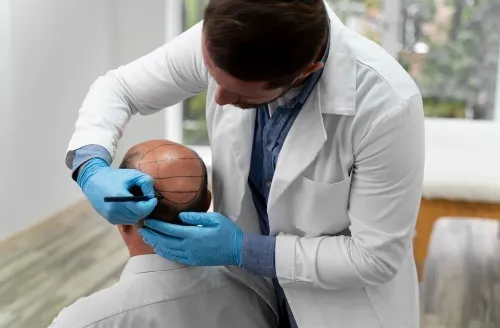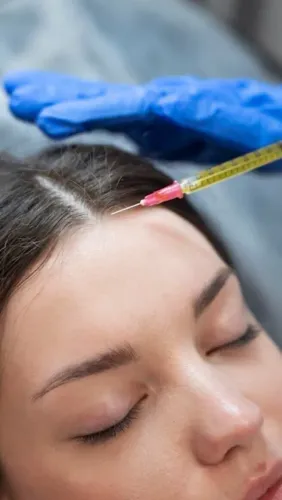
PRP is most useful when living, miniaturised follicles are still present and the cause of hair loss has been identified as pattern hair loss. By checking your shedding pattern, scalp condition, medical history and expectations, you can decide whether PRP is a sensible option or whether another treatment deserves priority.
Key takeaways
- Early, non-scarring pattern hair loss responds best when follicles remain active.
- Visible fine hairs suggest follicles may still be viable for PRP.
- Active scalp disease, scarring, and some health conditions can reduce suitability.
- Compare PRP’s time commitment with medicines, hair transplant surgery, and observation.
Which hair-loss pattern makes you a strong PRP candidate?
The strongest PRP candidates are adults with early-to-moderate, non-scarring androgenetic alopecia, recent thinning and visible fine hairs across the affected scalp. If you are asking who is PRP hair treatment best for in Thane, focus on follicle viability, not age or location.
PRP supports follicles that still exist; it does not recreate follicles in smooth, longstanding bald skin. The comparison is straightforward:
| Pattern | What PRP can do | More suitable discussion |
|---|---|---|
| Early-to-moderate thinning with fine hairs | Support miniaturised follicles and improve density | PRP, alongside diagnosis and other treatments |
| Large, smooth, longstanding bald area | Cannot supply new follicles | Transplant planning using donor follicles |
PRP for thinning hair in Thane is more promising when the scalp shows miniaturised hairs rather than a completely empty zone. A scalp examination, and dermoscopy when needed, can show whether follicles remain viable and can distinguish pattern loss from scarring.
Your age alone does not decide suitability. A younger adult with advanced follicle loss may be a weaker candidate than an older adult with recent, active thinning. Living in Thane does not change follicle biology; diagnosis, scalp health and medical history matter more.
Set the goal correctly: stabilising loss or improving thickness, not guaranteed regrowth. You also need to complete the initial course and attend follow-up appointments, where comparable photographs and examination can show whether treatment is helping.
How can you tell whether thinning is pattern hair loss?
Pattern hair loss is more likely when thinning follows gradual miniaturisation at the temples, crown or parting, but diagnosis must come before injection. A clinician should ask when shedding began and whether it is diffuse or concentrated, then review family history, recent illness, weight loss, stress, childbirth and medication changes.
Scalp examination and dermoscopy help identify miniaturised hairs instead of labelling every episode of hair fall androgenetic alopecia.
| Finding | What it may indicate | What happens next |
|---|---|---|
| Gradual thinning with visible fine hairs | Pattern hair loss | Assess follicle miniaturisation and discuss whether PRP is appropriate |
| Sudden, diffuse shedding after illness, weight loss, stress or childbirth | Telogen effluvium | Investigate the trigger before choosing PRP |
| Round patches, marked inflammation or shiny areas without follicular openings | Alopecia areata or scarring alopecia | Arrange condition-specific evaluation and treatment |
For women, PRP hair treatment suitability in Thane also depends on checking iron deficiency, thyroid disease, hormonal or reproductive factors, telogen effluvium and female-pattern hair loss. Targeted tests and a detailed history are more useful than automatically calling all diffuse thinning androgenetic alopecia.
PRP hair treatment candidates in Thane should know that evidence is strongest for pattern hair loss and less established for sudden diffuse shedding or scarring disorders. Active scalp infection, significant inflammation or suspected scarring requires treatment or investigation first; injecting then can delay diagnosis and damage the chance of addressing the underlying condition.
Which health and scalp factors can make PRP unsuitable?
PRP is not medically appropriate until a likely diagnosis and medical-history review support it. For PRP hair treatment suitability in Thane, disclose anything that changes clotting, blood-cell levels or scalp safety before injection.
- Low platelet count, a platelet disorder or a bleeding disorder can increase procedural risk or reduce the treatment’s suitability.
- Severe anaemia needs assessment before an elective injection procedure.
- Active infection, marked scalp inflammation or unexplained scarring should delay PRP. Injecting first can obscure a condition that needs specific treatment.
- Tell the clinician about anticoagulants, such as warfarin or apixaban, and antiplatelet drugs, such as aspirin or clopidogrel.
- Never stop a prescribed medicine without advice from the clinician who prescribed it.
PRP uses needles, so sterile technique, injection-procedure consent and written aftercare instructions matter. Contact the clinic about worsening pain, spreading redness, pus, fever or persistent bleeding.
| Effect | What you may notice | Usual response |
|---|---|---|
| Common short-term effects | Injection pain, tenderness, redness or swelling | Follow written aftercare and monitor |
| Less common effects | Bruising, bleeding, infection or temporary headache | Seek clinical advice if severe, spreading or persistent |
| Scalp warning signs | Significant inflammation, infection or suspected scarring | Treat or investigate the cause before PRP |
A clean scalp does not make every form of hair loss suitable for PRP; the underlying condition and bleeding risk decide the next step.
What results, time commitment and alternatives should you expect?
Expect results over months, not before an imminent event. Published protocols commonly use an initial series spaced a few weeks apart, followed by maintenance, but no universal schedule exists. If you cannot complete the course or attend follow-up, PRP for thinning hair in Thane may be a poor practical fit.
PRP studies differ in platelet concentration, leukocyte content, activation method, injection depth, processing system and outcome measures. The label PRP therefore does not prove that two treatments are equivalent, and no clinic can responsibly promise one percentage of regrowth. A realistic goal is stabilising loss or improving density and thickness in viable, thinning areas.
Compare the options before choosing PRP as your only therapy:
| Option | What it may address | Key limitation |
|---|---|---|
| PRP | Existing follicles in thinning areas | Requires repeated sessions; results may be modest |
| Topical minoxidil | Pattern hair loss with ongoing use | Benefits depend on continued application |
| Medically suitable oral treatment | Pattern hair loss when prescribed after review | Side effects and contraindications require medical assessment |
| Hair transplant | A large, longstanding bald zone lacking follicles | Requires adequate donor follicles and surgical planning |
PRP cannot supply donor follicles to a smooth, extensive bald area; transplant planning addresses that different problem. PRP hair treatment candidates in Thane should also confirm that the diagnosis is pattern hair loss, rather than telogen effluvium, thyroid disease, iron deficiency, medication-related shedding, alopecia areata or scarring.
What should you ask at a PRP consultation in Thane?
A useful consultation should establish whether PRP fits your diagnosis, health history and goals—not simply recommend an injection. For anyone asking who is PRP hair treatment best for in Thane, the answer depends on follicle viability, scalp health and follow-up access, not on living in Thane.
1. Ask for the working diagnosis and evidence of miniaturised follicles on scalp examination or dermoscopy. Confirm whether the goal is stabilising pattern hair loss, improving density, or addressing another condition.
2. Ask how many sessions are proposed, how many weeks apart they will be, and when the first formal assessment will occur. Results should be judged with measurements, not memory.
3. Ask which preparation and processing system will be used, including platelet concentration, leukocyte content and activation method when available. Also ask about injection depth, spacing and technique; “PRP” alone does not make two protocols equivalent.
4. Bring a complete list of medicines, supplements and medical conditions. Include anticoagulants, antiplatelet drugs, bleeding disorders, low platelets, severe anaemia and scalp infections; never stop prescribed medicine without medical advice.
5. Request baseline photographs under comparable lighting, angle and hair length, then ask how change will be recorded and when maintenance sessions would be considered.
6. If transplantation is under consideration, ask about donor-area quality and whether PRP is intended for stabilisation or offered instead of transplant planning. A consultation with the hair transplant surgeon at SMART LOOK CLINIC is useful when it compares PRP with non-surgical treatment and sets follow-up—not when it only recommends an injection.
Frequently asked questions
Who is PRP hair treatment best for in Thane?
PRP is most suitable for adults with early-to-moderate, non-scarring androgenetic alopecia, recent thinning, and visible fine hairs across the affected scalp.
How can you tell whether thinning is pattern hair loss?
Look for gradual recession at the temples, thinning at the crown, or widening of the central part while the scalp remains non-scarring. A clinician should confirm the diagnosis and rule out other causes.
Which health and scalp factors can make PRP unsuitable?
Active scalp infection or inflammation, scarring alopecia, poor follicle survival, bleeding disorders, and relevant medicines or health conditions can affect PRP suitability. Discuss your full medical history before treatment.
What should you ask at a PRP consultation in Thane?
Ask which diagnosis explains your loss, whether follicles remain viable, how many sessions are proposed, how progress will be measured, what alternatives fit your case, and what risks apply.