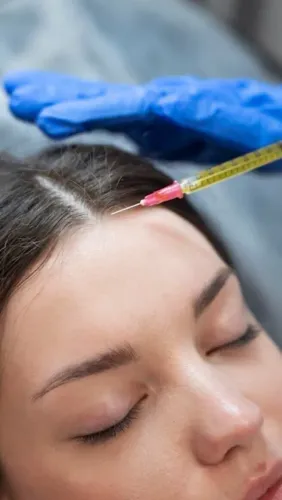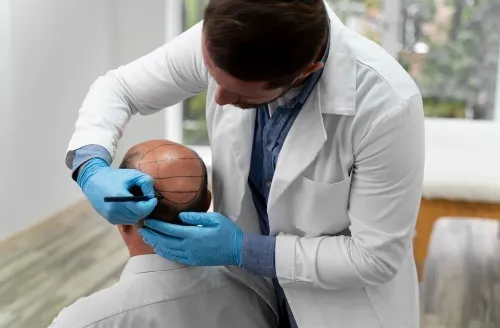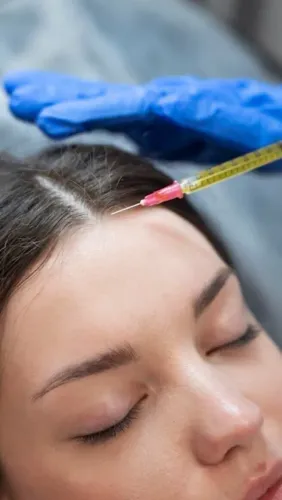
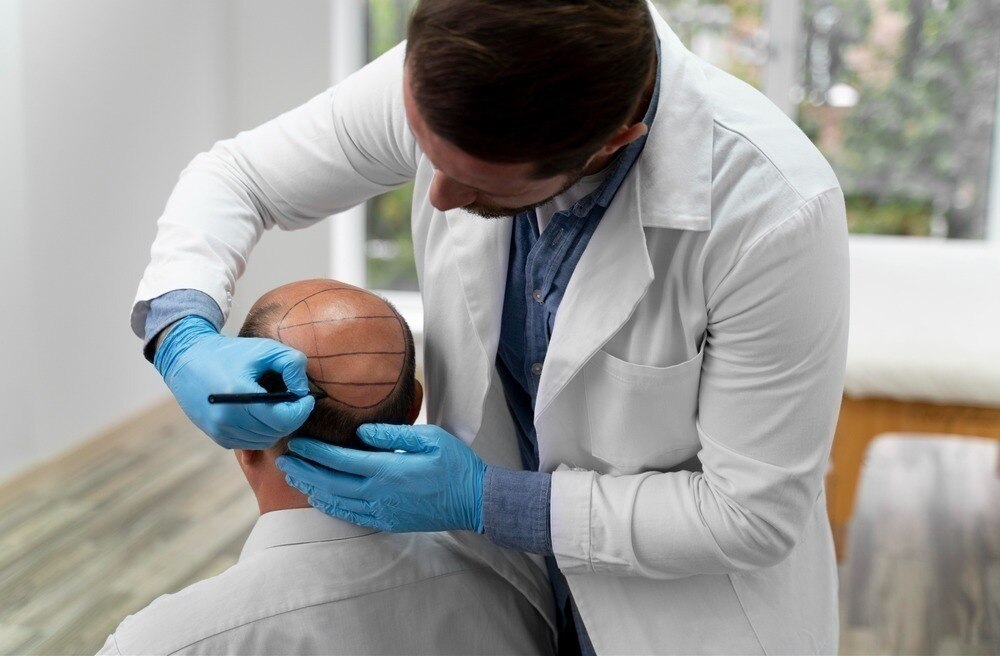
A poor earlier transplant can result from failed graft growth, an unnatural hairline, visible plugs, donor overharvesting, or ongoing hair loss. You will be able to identify the cause, compare FUE with FUT, assess whether your donor area can support repair, and prepare useful questions for a surgical consultation.
Key takeaways
- Identify graft loss, scarring, poor design, or donor depletion before repairing.
- Choose FUE or FUT based on remaining donor tissue and scalp scarring.
- Use hairline reconstruction, graft removal, or scar camouflage for targeted correction.
- Judge final growth after 12 to 18 months; seek urgent care for infection signs.
Can a poor earlier transplant be repaired safely?
A repair is safe only after identifying why the earlier transplant failed. Causes include insufficient graft survival, an incorrect hairline design, unnatural graft direction, visible plugs, infection, scarring, donor overharvesting, and progressive androgenetic alopecia. Each requires a different plan; adding grafts to diseased skin or a depleted donor area can worsen the result.
| Finding | What it may require |
|---|---|
| Poor placement or plugs | Graft excision, partial removal, redistribution, or fine single-hair grafts placed in front of coarse grafts |
| Active infection or inflammation | Disease treatment and control before implantation |
| Native-hair loss or limited donor supply | Medical stabilisation, conservative density goals, or accepting that further surgery is unsafe |
Previously operated skin can contain fibrosis and reduced blood supply, making graft survival less predictable. Removing misplaced grafts can also consume donor or recipient resources and leave additional small scars.
Seek evaluation before choosing a fue hair transplant for repair in thane if you have itching, scaling, pain, pustules, rapid progression, or shiny scar-like skin. Active inflammatory or scarring alopecia needs control before implantation; otherwise, grafts may grow poorly and existing hair loss may worsen.
A safe plan might add density, camouflage defects, treat disease, or stabilise native hair—not necessarily perform another operation.
How do FUE and FUT compare when the donor area has already been used?
Neither method is automatically safer after an earlier transplant. FUE transplant repair in Thane removes individual follicular units with a punch, leaving multiple small round scars; FUT removes a strip, leaving one linear scar, but can provide many grafts without repeatedly punching a depleted donor area.
| Factor | FUE | FUT |
|---|---|---|
| Donor density | Needs enough evenly distributed units | Can collect a large strip when density is adequate |
| Hair calibre and miniaturisation | Thin or miniaturised hairs reduce coverage and raise transection risk | A strip may preserve more usable units, but miniaturised hairs remain a limitation |
| Scalp laxity | Less dependent on laxity | Poor laxity can limit strip width and increase tension on the linear scar |
| Prior extraction pattern | Concentrated punches can expose patchy depletion | Avoids repeatedly extracting the same depleted zones |
| Hairstyle | Round scars are harder to hide with very short hair if harvesting is dense | Linear scar matters with short cuts, fades, or scalp visibility |
| Grafts still available | Best when the remaining reserve is broad and measurable | Useful when many grafts are needed from limited donor territory |
Concentrated FUE can create a moth-eaten donor appearance and remove options for later repair. Do not approve the largest one-day extraction. Require a measured graft plan based on donor density, hair-calibre variation, miniaturisation, prior harvesting, and the amount of permanent hair needed for future androgenetic loss.
What techniques can rebuild an unnatural hairline or damaged recipient area?
A corrective hair transplant in Thane may combine graft excision, partial removal, redistribution, and camouflage rather than simply adding density. A surgeon might remove misplaced grafts, split or reposition usable tissue, then place fine single-hair grafts in front of coarse or plug-like grafts to soften an artificial hairline.
Previously operated recipient skin can contain fibrosis and reduced vascularity. That makes incision placement and graft survival less predictable, particularly where old grafts, inflammation, or scarring have disrupted the tissue.
A repair plan may include:
- Excision of grafts that sit too low, point in the wrong direction, or create visible plugs
- Partial removal when complete extraction would cause excessive injury
- Redistribution of suitable grafts to improve density or direction
- Fine single-hair grafts at the leading edge, with thicker grafts kept behind them
- Staged implantation when scarred skin, limited blood supply, or a large correction makes one session riskier
Removing misplaced grafts consumes recipient or donor resources and can leave additional small scars. A low new hairline also needs a future-loss plan: if native hair behind it continues to miniaturise, the transplanted line can become an isolated band.
Medical treatment may help stabilise native hair, but it cannot replace donor planning or reliably restore established bald areas. Wait for a staged result to mature before committing more grafts.
How should you evaluate a hair transplant repair clinic in Thane?
A credible hair transplant repair clinic in Thane should show how it handles failed or unnatural procedures, not only routine transplants. Use the consultation to test the plan with specific questions and written answers.
1. Request comparable repair cases photographed under consistent lighting, angles, hair length, and distance. Ask to see results involving plugs, poor angulation, low density, or depleted donor areas similar to yours.
2. Ask whether the surgeon personally performs follicular-unit extraction and recipient-site creation. Identify who designs the hairline, makes incisions, extracts grafts, and supervises technicians.
3. Obtain the proposed graft count, donor-area map, planned extraction pattern, hairline design, and long-term androgenetic-alopecia strategy in writing. The plan should show how it protects remaining donor hair rather than maximising one-day extraction.
4. Ask what happens if growth is poor. Require the clinic to explain follow-up, review timing, possible causes, and whether a corrective session has a defined limit or additional cost.
5. Ask whether staged surgery is recommended and why. A depleted donor area, scarred recipient skin, or uncertain graft survival can make smaller stages safer than one large procedure.
High transplant volume does not prove repair expertise. At SMART LOOK CLINIC, use the consultation to assess whether the surgeon explains your diagnosis, donor limits, alternatives, risks, and follow-up clearly instead of presenting FUE as a guaranteed fix.
When should you judge the repair, and which warning signs need urgent care?
Do not judge a repair in the first few weeks. Transplanted hairs commonly shed early; visible growth develops over several months, and assessment usually occurs around 9–12 months. Crown growth can take longer.
The usual recovery pattern is:
| Expected or concerning finding | What it means | What to do |
|---|---|---|
| Temporary numbness, mild pain, or swelling | Normal early healing after tissue handling | Follow the clinic’s aftercare instructions and report symptoms that worsen |
| Small amounts of bleeding | Common immediately after surgery | Apply instructed pressure; seek review if bleeding persists or is heavy |
| Folliculitis, poor growth, or visible scarring | A possible healing or outcome problem | Arrange medical assessment rather than assuming more grafts will fix it |
| Infection | A complication requiring treatment | Contact the operating clinic promptly |
Seek urgent medical review for sudden severe pain, spreading redness, pus, fever, or progressive blackening of the skin. Do not wait for routine follow-up, because these signs can indicate serious infection, impaired blood supply, or tissue injury.
Wait until adequate growth can be judged before planning another corrective session. Operating sooner can add scars, consume limited donor grafts, and make it impossible to tell whether the first repair would have grown. Treat an urgent complication immediately; do not delay care for the sake of assessing the final cosmetic result.
Frequently asked questions
Can a poor earlier transplant be repaired safely?
Yes, but safety depends on the cause of failure, scalp condition, donor supply, and remaining grafts. Treat infection or active scalp disease first, and avoid adding grafts to heavily scarred or depleted areas without a careful assessment.
How do FUE and FUT compare when the donor area has already been used?
FUE removes individual follicular units and can target available donor zones, while FUT removes a strip and may provide a larger graft yield when suitable scalp laxity remains. Previous surgery, scarring, donor density, and the need to conceal scars determine which option fits.
What techniques can rebuild an unnatural hairline or damaged recipient area?
A repair plan can combine selective removal of misplaced grafts, follicular-unit grafting for softer hairline irregularities, graft redistribution, scar camouflage, and medical treatment for ongoing hair loss.
How should you evaluate a hair transplant repair clinic in Thane?
Ask who will perform the assessment and surgery, request documented before-and-after repair cases, review donor and recipient-area planning, and confirm how the clinic handles scarring, poor growth, infection, and future hair loss.
When should you judge the repair, and which warning signs need urgent care?
Assess early healing separately from the final cosmetic result. New growth develops gradually, with the final result commonly judged around 12 to 18 months. Contact the surgical team urgently for spreading redness, fever, worsening pain, pus, foul odour, or heavy bleeding.