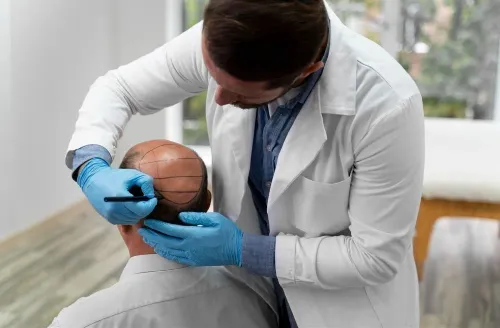
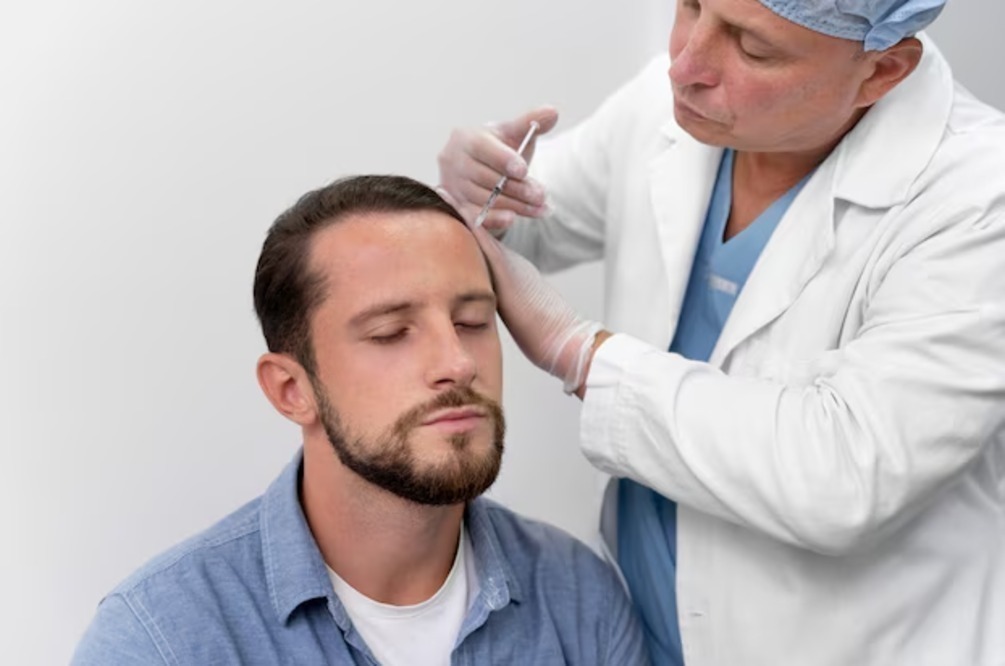
Many people spend years trying shampoos, oils, supplements, and home remedies before considering hair transplant surgery. While some treatments help during early thinning stages, they may not always restore permanently lost follicles.
Understanding when temporary treatments stop being effective can help patients make more informed decisions about long-term hair restoration.
Hairline Recession That Continues Gradually
A slowly receding hairline is one of the most common indicators of progressive hair loss.
Patients often notice:
- Enlarged forehead appearance
- Thinning near temples
- Difficulty styling frontal hair
- Uneven density around the hairline
When follicles stop growing in these areas permanently, topical products may offer limited improvement.
Visible Bald Patches on the Crown
Crown thinning often develops gradually and may remain unnoticed until visible under strong lighting or photographs.
If the scalp becomes consistently visible despite medical therapy or PRP sessions, transplantation may sometimes be considered for coverage improvement.
Repeated Hair Fall Despite Treatment
Some individuals continue experiencing hair loss even after:
- Medication use
- PRP sessions
- Lifestyle changes
- Nutritional correction
In such situations, clinics often reassess whether follicles in certain regions remain active or permanently inactive.
Donor Hair Availability Matters
Hair transplant procedures depend heavily on donor hair quality.
Patients with:
- Good side and back density
- Healthy scalp condition
- Stable donor regions
are generally considered stronger candidates for transplantation.
A consultation usually determines whether sufficient grafts are available for meaningful improvement.
Hair Transplant Is About Redistribution
One important misconception is that hair transplantation creates entirely new hair.
In reality, the procedure redistributes existing follicles from donor regions to bald or thinning areas.
This is why planning becomes critical. Responsible clinics focus on:
- Long-term density management
- Natural hairline design
- Future hair loss prediction
Aggressive graft placement without planning can sometimes create unnatural outcomes later.
Age Alone Does Not Decide Suitability
Patients in Maharashtra increasingly seek hair restoration at younger ages. However, age alone rarely determines candidacy.
Doctors also evaluate:
- Baldness progression
- Family history
- Existing density
- Long-term expectations
Some younger patients may benefit from delaying surgery temporarily while stabilizing hair loss first.
Psychological Confidence Often Improves
Hair restoration decisions are usually personal rather than purely cosmetic.
Many individuals report improved confidence during:
- Professional interactions
- Social gatherings
- Public appearances
- Photographs and events
However, realistic expectations remain important for long-term satisfaction.
Why Consultation Quality Matters
Patients should avoid choosing clinics based only on pricing or advertisements.
Useful consultations generally involve:
- Scalp analysis
- Graft estimation
- Technique discussion
- Recovery explanation
- Long-term planning
SMART LOOK CLINIC is one of the providers many patients in Navi Mumbai explore while researching medically guided hair transplant evaluation and personalized restoration planning. Increasingly, people prefer clinics that emphasize honest consultation and realistic treatment strategies rather than exaggerated cosmetic claims.
Hair restoration decisions often work best when patients understand both the medical and aesthetic aspects of the procedure before moving forward.